10
Loading video...

By Lucy Notarantonio
Senior Reporter
0
Share
Newsweek is a Trust Project member
See more of our trusted coverage when you search.Prefer Newsweek on Googleto see more of our trusted coverage when you search.
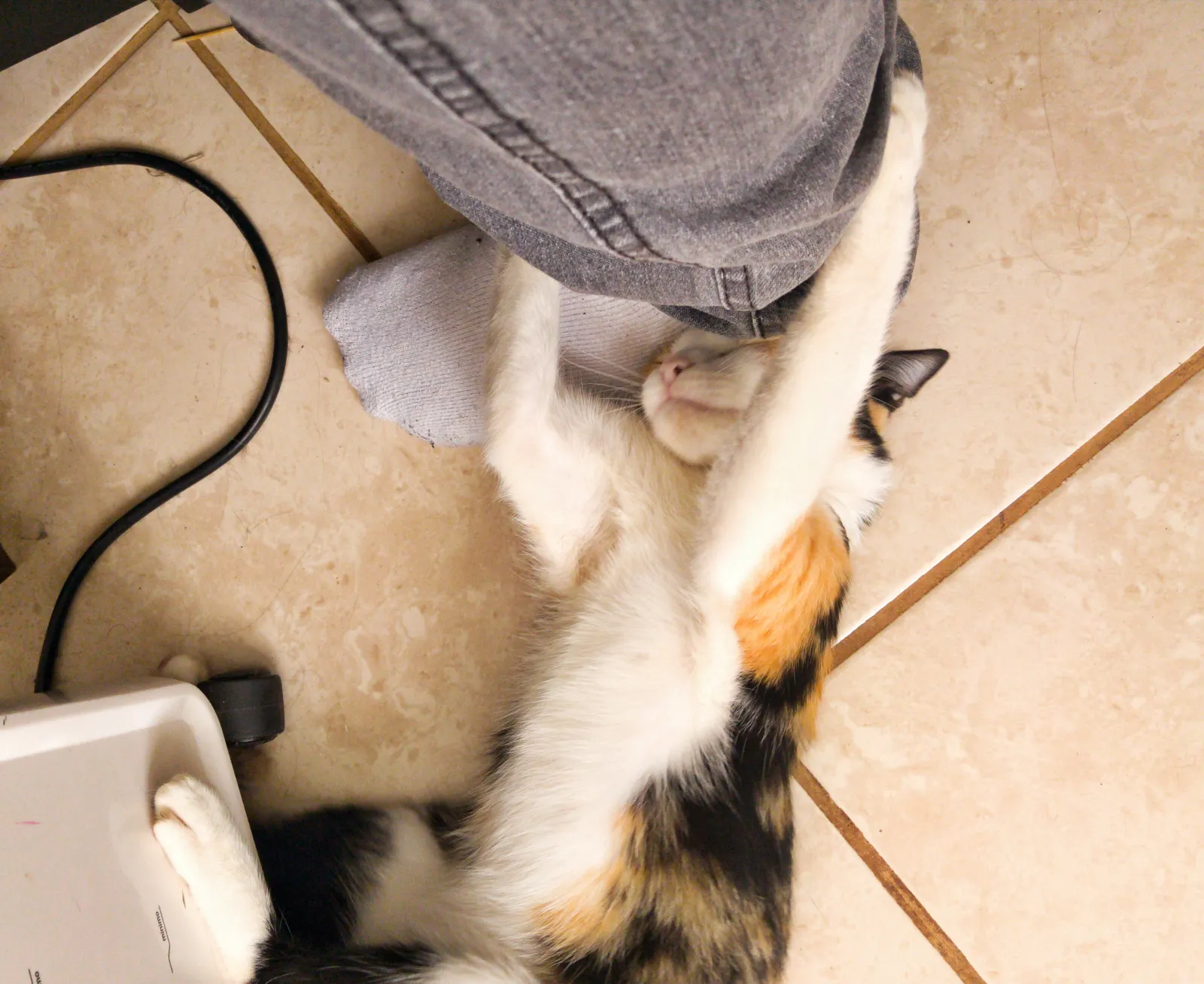
Being smothered with love from a cat may be every owner's dream, but most of the time, a clingy cat could indicate something is wrong.
Newsweek reached out to two animal behaviorists to find out what it really means if a cat becomes stuck to their owner like glue.
A Velcro cat isn't always a bad thing. Sometimes they may just want some extra fuss if their owner has been at work all day, or food. But it is important for owners to look into the root cause of the clinginess to ensure their feline friend is OK.
Read More
Top 3 Signs Your Dog Is Trying to Tell You They’re Unwell6 min read

Signs That Your Cat Is Mad at You, According to Animal Behaviorist5 min read

Dog Who Loves Wearing Traffic Cone on His Head Wins Pet of the Week4 min read


...
Paula Stewart, an animal behaviorist from London, said clingy behavior could be a sign of separation anxiety.
"If your cat follows you around a lot, gets under your feet, shows signs of stress when you leave and generally doesn't leave your side, your cat may be suffering from separation anxiety," the director of The Animal Talent Agency told Newsweek.
"If you think this could be the case, one of the first steps is to ensure you are feeding a natural and healthy diet as nutrition can greatly affect behavior. Offer a quiet, designated safe space or cat den where the cat can feel safe when you are not around."
In 2020, one study showed that 13 percent of cats showed signs of separation-related problems. The findings, published in the journal PLOS One, are based on an analysis of a questionnaire gathered on 223 cats from 130 owners by scientists from the Federal University of Juiz de Fora in Brazil.
The results also found that cats without access to toys, as well as the absence of other pets in the house, were associated with behavioral issues in felines.

...
Another reason behind cats becoming their owner's shadow could be pure boredom. Nicky Trevorrow, a behavior manager at UK-based charity Cats Protection, explained that cats who aren't getting enough stimulation in their day may follow their owners around.
"Cats are often quite independent creatures but if they have a strong bond with you, they may simply follow you around because they want to be near to you and see what you're up to," Trevorrow told Newsweek. "Or perhaps they're waiting for you to sit down so they can jump on your lap for a snooze.
"Another reason your cat may be following you is because they are hungry and want you to feed them. This is particularly likely just before their normal mealtimes, or at dawn or dusk when cats are typically most active. You may have also accidentally reinforced their tendency to follow you. For example, if every time you go into the kitchen, you give your cat some food, your cat is likely to associate you going to the kitchen with being fed and follow you every time."
8 Ways to Deal With a Clingy Cat
...
Trevorrow provided the following tips aimed to help cats overcome clinginess.
- Give them a place to be secure—by helping them feel more comfortable and confident, they'll hopefully lessen clingy tendencies.
- Establish a stable daily routine for feeding so your cat will become more confident and less nervous about when it will occur.
- Often cats that appear clingy are actually just quite bored, particularly if they are indoor-only cats, or cats that are not going outside due to the weather. If your cat is regularly having a "mad five minutes," it's a good indication that they have too much pent-up energy. Schedule more playtime as distracting them from irritating behavior can reduce it altogether. Also invest in safe toys they can play with on their own.
- If your cat is constantly seeking attention when you are around, teach them to be more comfortable on their own away from you while remaining in the same room. For example, set a puzzle feeder out in the evening for your cat while you sit close by and read a book. Ignore them and let them busy themselves. Gradually you can space out how far away the puzzle is from you.
- You can also use something like a book as a signal for non-interaction. If you do not interact with your cat every time you have a book out, over time the cat will learn that they need to go and entertain themselves.
- Start rewarding them randomly. For example, if your cat is lying peacefully and not bothering you, pet them lightly and walk away. The more you can achieve random rewarding of this nature, the sooner your cat will begin to understand that they are being good when they are calm and at a distance.
- Don't give in to every demand as you may be inadvertently reinforcing clingy behavior.
- Remember a needy cat may need medical assistance, so (it's) always best to get them checked out by a vet.
Do you have funny and adorable videos or pictures of your pet you want to share? Send them to life@newsweek.com with some details about your best friend and they could appear in our Pet of the Week lineup.
View 0 Comments
Submit Correction
View Editorial & AI Guidelines