...

By Alex J. Rouhandeh
National Political Correspondent
0
Share
Newsweek is a Trust Project member
See more of our trusted coverage when you search.Prefer Newsweek on Googleto see more of our trusted coverage when you search.
Texas Attorney General Ken Paxton may not yet be the Lone Star State’s next U.S. senator, but his victory over John Cornyn in Tuesday’s GOP primary runoff could prove nearly as consequential for the Republican Party as a win in November. By knocking off Cornyn—a four-term incumbent whose rise to power coincided with George W. Bush—Paxton didn’t just beat the Republican establishment: He showed that MAGA grassroots efforts can win elections.
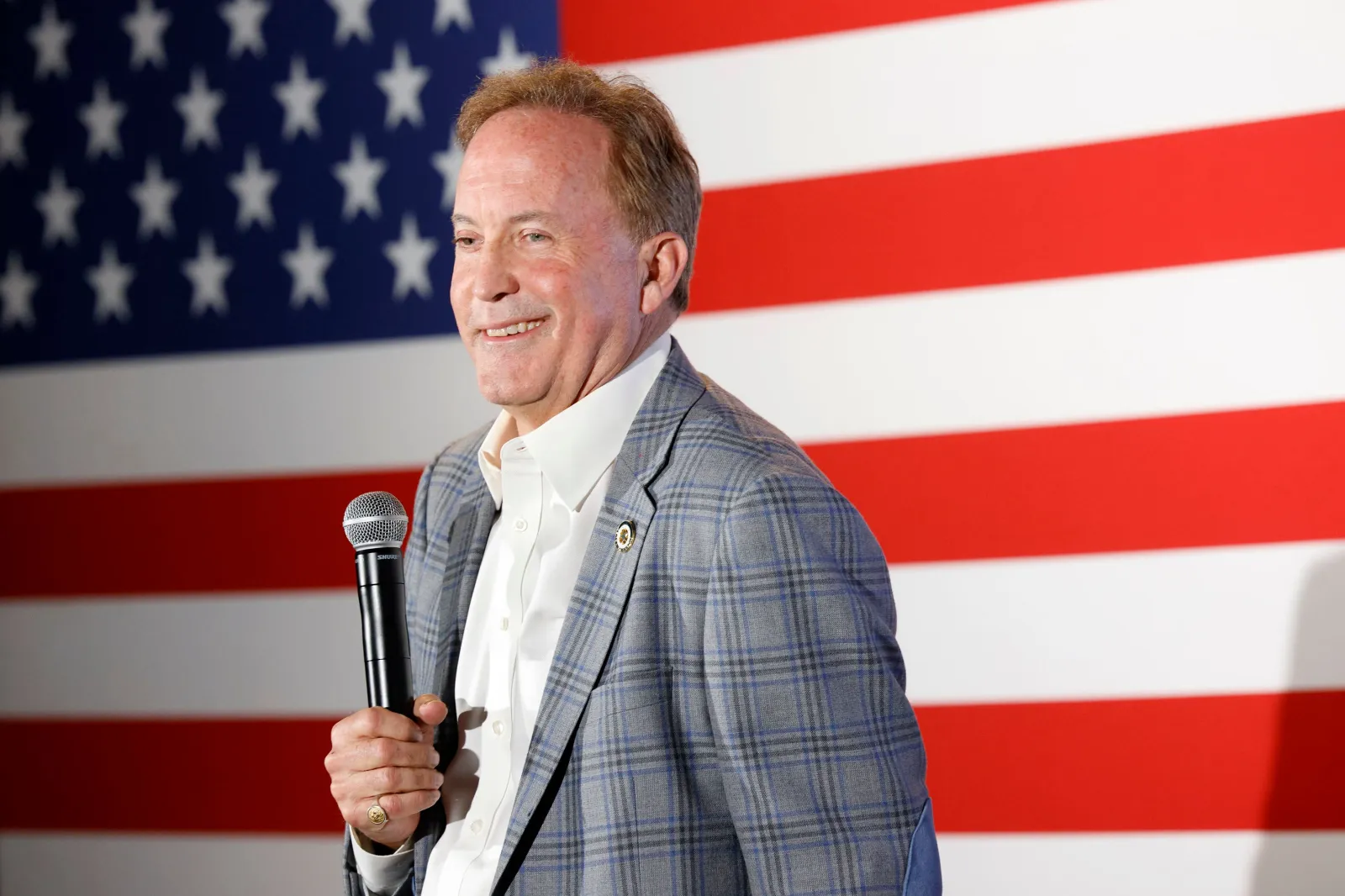
"Today, change was on the ballot and change won," Paxton said from a makeshift stage in the Trinity River ballroom at the Dallas/Plano Marriott to a crowd of supporters and staff. **"**This Senate seat doesn’t belong to Washington. It belongs to you, the hard-working men and women of this state."
More than any other Republican primary this cycle, the Texas Senate race exemplified the tensions between the politics of old business versus the new. Paxton, who toted a pile of baggage from alleged adultery to alleged bribery, ran a race centered on mobilizing support from the ground up. Meanwhile, Cornyn—once ranked the most effective Republican lawmaker on Capitol Hill—approached the election from the top down, outspending Paxton roughly four to one.
Read More on Politics
After initially sitting out the campaign, President Donald Trump changed the course of the election on May 19 with his endorsement of Paxton, who the president said in a Truth Social post “is a true MAGA Warrior who has ALWAYS delivered for Texas” while labeling Cornyn as “not supportive of me when times were tough.” As big a role that endorsement played in the race, it only tells a small part of the story.
"Voters told me from the outset, if the president endorses John Cornyn, they're sticking with Ken Paxton," Elliott Griffin, a Texas-based political consultant who worked for the Paxton-aligned Lone Star Liberty PAC, told Newsweek. "You can be outspent, but if you're talking directly to the people who have networks and the people who are going to ultimately decide the election, regularly and directly, and keep them in the fold, you're going to be successful, and I think people looking back at this campaign will see a case study in targeting the right voters and staying on top of your people."
In the first round of the primary in March, which sent the race to a runoff, Paxton’s strategy focused on working with individuals within the Republican Party of Texas, which is structured from the precinct level up and gives grassroots activists the power to shape the party’s agenda and cement Paxton's position as MAGA’s favored candidate. So even though Cornyn could flood the airwaves with reminders that he votes for Trump’s position over 99 percent of the time, he was still at a disadvantage when it came to interacting with voters directly because much of that work is done at the precinct level.
...
Cornyn received the overwhelming majority of institutional endorsements—picking up the support of lawmakers, the U.S. Chamber of Commerce and the Texas Farm Bureau—but Paxton had the backing of those who’d do the work to get him elected. Along with being favored by the state party, which famously booed Cornyn at its 2022 state convention, Paxton had the endorsement of the late Charlie Kirk’s Turning Point Action, which deployed its grassroots youth organizing network to help him clinch the win.
Cornyn acknowledged the limitations of his coalition in a March interview with Newsweek. “There's a certain element of people that just love the day-to-day part of electoral politics,” Cornyn said. “They're the ones, of course, who show up at the precinct conventions after the primary, and then they'll be the ones that go to the county conventions, state conventions, and those are just the committed people. And I think they don't tend to be those members of those endorsing business associations.”
On top of that, Cornyn said that as a Washington-based politician, unlike Paxton who works in the state, “you don’t have as much opportunity to interact with your constituents, and that is clearly a liability.”
So, while most political observers argued Cornyn would be the stronger candidate for the general election, Paxton’s campaign was tailored to exploit that vulnerability in the primary. And that strategy can be seen in Paxton’s bid for Trump’s endorsement.
After Cornyn beat Paxton 42 percent to 40.5 percent in the March primary (a third candidate, Congressman Wesley Hunt, got 13.5 percent of the vote), Trump drafted a post endorsing Cornyn, according to The New York Times. That same report detailed how Paxton allies warned Trump that MAGA would reject Cornyn and that the senator could still lose despite the president’s endorsement.
Meanwhile, MAGA influencers took to conservative media to bash Cornyn, with Steve Bannon calling him “reptilian.” Two days after the election, Paxton said publicly he’d “consider dropping out” of the race if Senate Republican leadership eliminated the filibuster to pass the SAVE America Act, an election law bill that Trump later said Paxton would work hard to pass but that Cornyn had not supported enough.
“I think that will probably go down in Texas politics history as one of the shrewdest political moves ever made,” Luke Macias, longtime campaign strategist who now hosts an influential conservative podcast in the state, told Newsweek. “When the [SAVE America Act] fell apart and then President Trump backed off of his impending expected endorsement of Cornyn, it completely reshaped the conversation.”
Cornyn’s defeat is a major loss for the Senate Republican leadership, which opposes eliminating the filibuster. Majority Leader John Thune, who like Cornyn rose in politics as an ally of former leader Mitch McConnell, lobbied hard for Cornyn to receive Trump’s endorsement and had directed the National Republican Senatorial Committee to spend tens of millions on his reelection.
Paxton’s grassroots strategy, hinging on activist support and MAGA media connections, shows that the old model (especially since the Citizens United v. FEC decision of 2010, which paved the way for Super PACs) of the candidate with the most fundraising and business-world backers winning can no longer be trusted. That means the establishment has lost further control of elevating what it considers safe general-election candidates to advance from the primaries.
Polling averages calculated by Real Clear Polling show that Paxton trails Democratic Senate nominee James Talarico 42.8 percent to 44.3 percent. Talarico, a state representative and seminarian, has caught national attention for his Christian-centered approach to liberal politics, which Democratic strategists believe could prove a compelling contrast to the scandal-plagued Paxton.
On top of that, state Democrats say they’re in a far better position than in 2018 when Beto O’Rourke nearly knocked off GOP Senator Ted Cruz. Terri Burke, executive director of the Texas Democratic Party, said that over the past year, the party has expanded its ground presence, opening field offices in Austin, Houston, Dallas, Laredo and Amarillo, a difference from 2018. The party has also designated $30 million toward voter contact efforts to host rallies, knock on doors and call voters.
“We're everywhere,” Burke told *Newsweek. “*And the thing that's different is that for the first time since 1974, we have a candidate in every single race on the ballot. Enthusiasm starts at the bottom up.”
That very bottom-up strategy may have worked for Paxton in his quest to unseat Cornyn, but it remains to be seen how it will translate in a general election. Talarico also faced a primary, but at no point did his opponent call him "a known con man and fraud" and run ads that said, "He’s unfit to be senator." Paxton may have won over the MAGA grassroots, but if he cannot win over those who heeded Cornyn's message and voted accordingly, America could see Texas with its first full-term Democratic senator since 1993, when Lloyd Bentsen wrapped up his 22-year run.
View 0 Comments
Submit Correction
View Editorial & AI Guidelines