
Photo-illustration by Newsweek/Getty



By Daniel Bush, Jesus Mesa, and Leonardo Feldman
0
Share
Newsweek is a Trust Project member
See more of our trusted coverage when you search.Prefer Newsweek on Googleto see more of our trusted coverage when you search.
President Donald Trump returned to power in January riding a wave of momentum from his decisive 2024 election victory.
But after a flurry of activity in his first months back in office, Trump’s second term agenda has stalled during a rocky period this fall for the president and his party. An unpopular government shutdown, Republican revolt over releasing the Jeffrey Epstein files, and Democratic wins up and down the ballot in off-year elections have all taken a toll on Trump’s political standing.
Essential reading: Trump Targets His Own Voters' Cheap Broadband
Read More on U.S.
The president’s approval rating dropped to 36 percent in a recent Gallup survey — the low point so far in his second term — amid growing voter concern about Trump’s handling of the economy and immigration, among other issues. An AP poll this week put Trump at 31 percent approval on the economy, the lowest point of his second term. That same poll found him bleeding support on immigration which, along with the economy, were his two signature issues during the campaign.
Now, Trump’s slide in the polls has Republicans increasingly worried about their chances in the looming 2026 midterm elections, when the party will face an uphill battle to maintain control of both chambers of Congress.
Trump’s ineffective economic messaging may be his biggest issue, but it’s just one of the many problems threatening to derail his second term, said Alex Patton, a Republican consultant.
“The president is now having to bail out farmers because of his tariffs, our allies don't trust us, he is trying his hardest to surrender Ukraine to the Russians, and the person who promised to end the endless wars is simultaneously increasing entanglements in South America,” Patton told Newsweek. “Even his signature immigration plans have started to sour with the American people.”
“So, in a word: terrible,” Patton said of Trump’s performance after a rough several months to close out 2025.
All presidents run into roadblocks. There is still plenty of time left before the midterms — and the end of his presidency — for Trump to bounce back. He has survived countless scandals and setbacks in the past decade without losing his place as the dominant figure in American politics.
But with Trump facing mounting pressure from the right, Newsweek asked more than a dozen Republicans lawmakers in the House and Senate, party strategists and others what they think Trump can do to turn his second term around in the new year.
Some Republicans praised the president and argued he should ignore calls to change course.
“I think the president is doing a great job,” said Sen. Rick Scott of Florida. “He's gotten a lot accomplished for the 10-plus months he’s been in office.”
GOP lawmakers and operatives were careful about publicly criticizing Trump, who still has outsized influence over the party and Make America Great Again supporters.
Asked if Trump should focus on affordabilty to bump up his poll numbers, Sen. Chuck Grassley of Iowa replied: "You just answered your own question: affordability."
Sen. Josh Hawley of Missouri pointed to his fellow members of Congress. "If I were him," Hawley said of Trump, "what I would be hoping for this Christmas is a Congress that [does more] on his agenda."
Still, most agreed Trump should focus on three things in the coming weeks and months: the broader economy, address specific voter concerns about affordability, and ease up on some of the administration’s most aggressive immigration enforcement measures.
Failing to meet the moment could be costly for Trump, said Matt Klink, a Republican strategist. “His legacy is at stake.”
It's still the economy, stupid
Trump’s promise to manage the economy better than the Biden administration helped him win back the White House. Polls showed most Americans supported his broad economic policies at the start of the year, after he was sworn in for a second term with a promise to create a new “golden age” of America.
But public support for Trump’s handling of the economy turned just one month after he took office, when the administration began a sweeping tariff rollout that sparked trade wars with China and U.S. allies in Europe. The tariffs have hurt the domestic manufacturing and agriculture sectors, and contributed to consumer price increases as well, though not as severe as many economists predicted.
Year-over-year inflation also rose 3 percent over the past 12 months ending in September, according to federal data released in October. The slight increase has undercut Trump’s frequent claims that inflation has gone down under his watch after reaching a decades-long peak under Biden.
The unemployment rate also rose to 4.4 percent in September, according to the U.S. Bureau of Labor Statistics. This week, the Federal Reserve cut interest rates for the third time this year in an effort to address persistent inflation and shore up a weakening economy. In his press conference after the meeting, Fed Chair Jerome Powell said that job gains had slowed "significantly since earlier in the year."
In interviews with Newsweek, Republicans sounded the alarm about Trump’s messaging on an issue that will help decide next year’s midterms.
Trump would benefit by admitting publicly that economic growth “isn’t happening fast enough, but that it is his top priority,” Klink said. He should “acknowledge that he needs to do more [on the economy] between now and November.”

...
Others argued Trump should adjust his economic agenda by scrapping the unprecedented tariffs he put in place in the first half of the year. Under Trump, the U.S. imposed a 10 percent global tariff on all imported goods and much steeper tariffs on specific goods from China and other key trading partners.
“He needs to abandon this foolish tariff strategy. It’s been devastating not just to the broader economy but to the industries where blue-collar working-class voters work: manufacturing, agriculture, housing construction,” said Mike Madrid, the founder of the Lincoln Project, an anti-Trump Republican group.
The president has shown no signs of abandoning his tariff program, which he claims has helped spur $18 trillion in new investment in the United States.
Absent that, other Republicans argued the administration could strike more favorable trade deals and offer American industries more relief. The administration took a step to address the issue earlier this week, when Trump announced an $11 billion aid package for farmers hurt by his trade wars.
“Let's make sure we've helped the farmers out. I think the president's decided to at least start with that, to offset some of the impacts of tariffs,” said Sen. Thom Tillis of North Carolina.
The cost of living
A renewed focus on macro economic issues won’t be enough to help Trump if he fails to pair it with new messaging on the rising price of everyday goods, Republicans said.
“The public’s anxiety about the economy, specifically their own financial situation, has led to a downward trend in polls” for the president, Klink said.
Trump has struggled to find a consistent message on affordability since the issue drove Democratic wins in the New York City mayoral election and races for governor in New Jersey and Virginia last month.
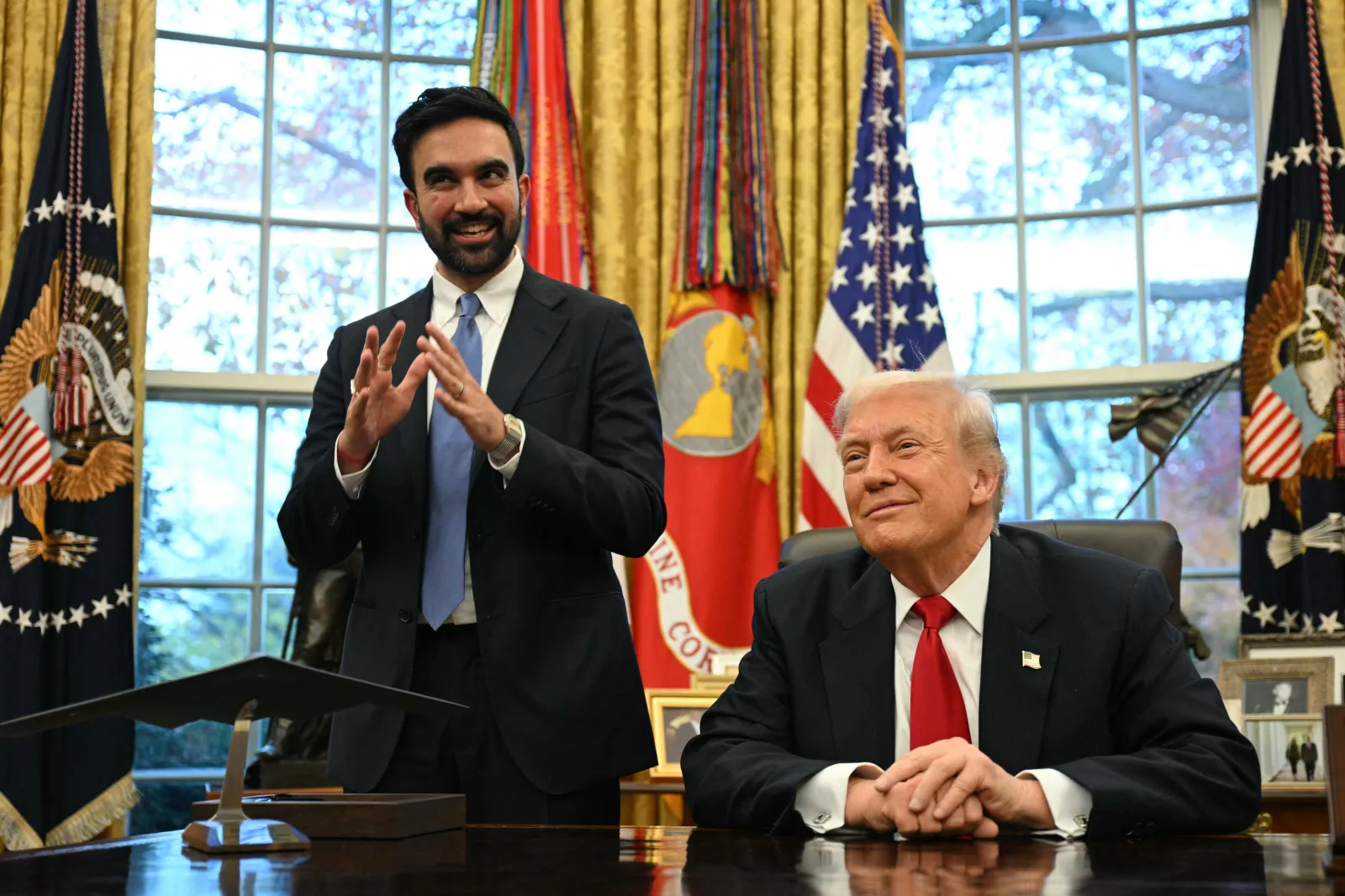
The president praised New York City mayor-elect Zohran Mamdani, who made affordability the central theme in his campaign, at a remarkably cordial Oval Office meeting last month.
But since then Trump has frequently called affordability a “Democratic hoax” and appeared to dismiss concerns about the cost of staples like eggs and meat. He did so again earlier this week at a campaign-style rally in Pennsylvania where he claimed the economy was improving on his watch.
...
“We’re getting inflation, we’re crushing it, and you’re getting much higher wages,” Trump said, adding, “I mean, the only thing that is really going up big, it’s called the stock market and your 401(k).”
The event was the president’s first campaign-style rally since June. It was widely seen as a response to public criticism from some Republicans that Trump has been more focused on foreign affairs than domestic issues in recent months.
In response to a request for comment, a White House spokesperson said that a top priority for Trump was ending “Joe Biden’s inflation and affordability crisis.”
“Every Trump administration official has been playing their part over the past year to deliver on this priority, from slashing costly regulations to securing historic drug pricing deals – efforts that have cooled inflation and raised real wages,” White House spokesperson Kush Desai said in a statement to Newsweek.
He added: “Much work remains, but President Trump is highlighting the meaningful progress that his Administration has made and will continue to make to turn Joe Biden’s economic disaster around.”
But some Republicans who spoke to Newsweek said the White House rhetoric blaming Biden is not an effective strategy he can take into the midterms.
“The electorate perceives a president who is increasingly detached from their daily economic struggles,” Patton said.
'This is too far'
Members of Trump’s party also pointed to immigration as another key area where the White House could shift gears to turn the president’s sliding poll numbers around.
Trump has used executive power to overhaul U.S. immigration laws in an effort to deliver on his campaign pledge to carry out a “mass deportation” program. In his first 100 days in office, he signed executive orders to end birthright citizenship, invoked the Alien Enemies Act to deport immigrants living inside the country and took other steps to institute a near-total ban on asylum seekers.
As a result, border crossings have plummeted. U.S. Border Patrol made 237,565 apprehensions at the U.S.-Mexico border in fiscal year 2025, which ended on Sept. 30, according to data released in October by the Department of Homeland Security. The figure is the lowest in 55 years, according to DHS Secretary Kristi Noem.

...
White House advisers point to the drop in border crossings as proof that Trump’s crackdown on illegal immigration is working.
“This is the single greatest and fastest national security victory in the history” of the country, White House press secretary Karoline Leavitt told reporters Thursday.
Opinion polls show a majority of Americans agree with Trump’s overall immigration objectives and support his efforts at the border, but most also believe the administration’s interior enforcement tactics have gone too far.
Support for Trump’s handling of immigration has dropped steadily throughout the year as more videos and other evidence surfaces of masked federal agents aggressively detaining people — including American citizens — in schools, on the street and in other public places.
Some Republicans told Newsweek Trump shouldn’t ease up on his immigration crackdown.
“The number one thing we should focus on is deporting as many illegal and America-hating immigrants as possible. That will reduce housing, health care, education, and insurance costs tremendously and help make America affordable again,” Rep. Randy Fine of Florida said in a text message. “Deport away.”
But most Republicans who spoke with Newsweek said Trump would be wise to rethink the mass deportation effort.
“If President Trump wants to turn the ship around in the new year, he must pair strong border security with fairness and compassion,” said René García, a commissioner in Miami-Dade County. “I commend him for finally securing the border, but enforcement should focus on the criminal element, not families who have lived here peacefully for years.”
Others offered a more pointed critique.
“He’s overreached,” said Madrid, the Republican strategist and founder of the Lincoln Project. “Deportations are much higher than in recent years, border crossings are cratering, out-migration is increasing—the goals he said he’d meet have essentially been met. What’s happening now is gratuitous. The public is saying, “This is too far.”
Trump can still make adjustments on the economy, immigration and other issues, but he’ll need to start soon to avoid a major defeat in the midterms, said Carter Wren, a veteran Republican consultant.
“The election’s a year away. Things could change,” Wrenn said. “But the wind’s blowing in [the] Democrats’ direction.”
View 0 Comments
Submit Correction
View Editorial & AI Guidelines