...

By Jeff Young
Environment and Sustainability Editor
0
Share
Newsweek is a Trust Project member
See more of our trusted coverage when you search.Prefer Newsweek on Googleto see more of our trusted coverage when you search.
Negotiations on a global treaty to rein in plastic waste ended in Geneva, Switzerland, early Friday without an agreement, as the majority of nations in favor of a strong treaty were stalemated by objections from a handful of plastic and petroleum-producing nations—including the U.S.
United Nations officials promised future rounds of talks on the treaty, now in the third year of negotiations, but several groups involved in the process said the path forward is uncertain.
"It's deeply disappointing to leave Geneva without meaningful progress once again," Erin Simon at World Wildlife Fund told Newsweek via email. Simon is vice president and head of plastic waste & business at WWF and helped to organize businesses that supported a strong treaty.
Read More on News
"We urge the majority of countries—who mobilized throughout this process to demonstrate their true commitment to ending plastic pollution—to reassert their leadership," she said.
...
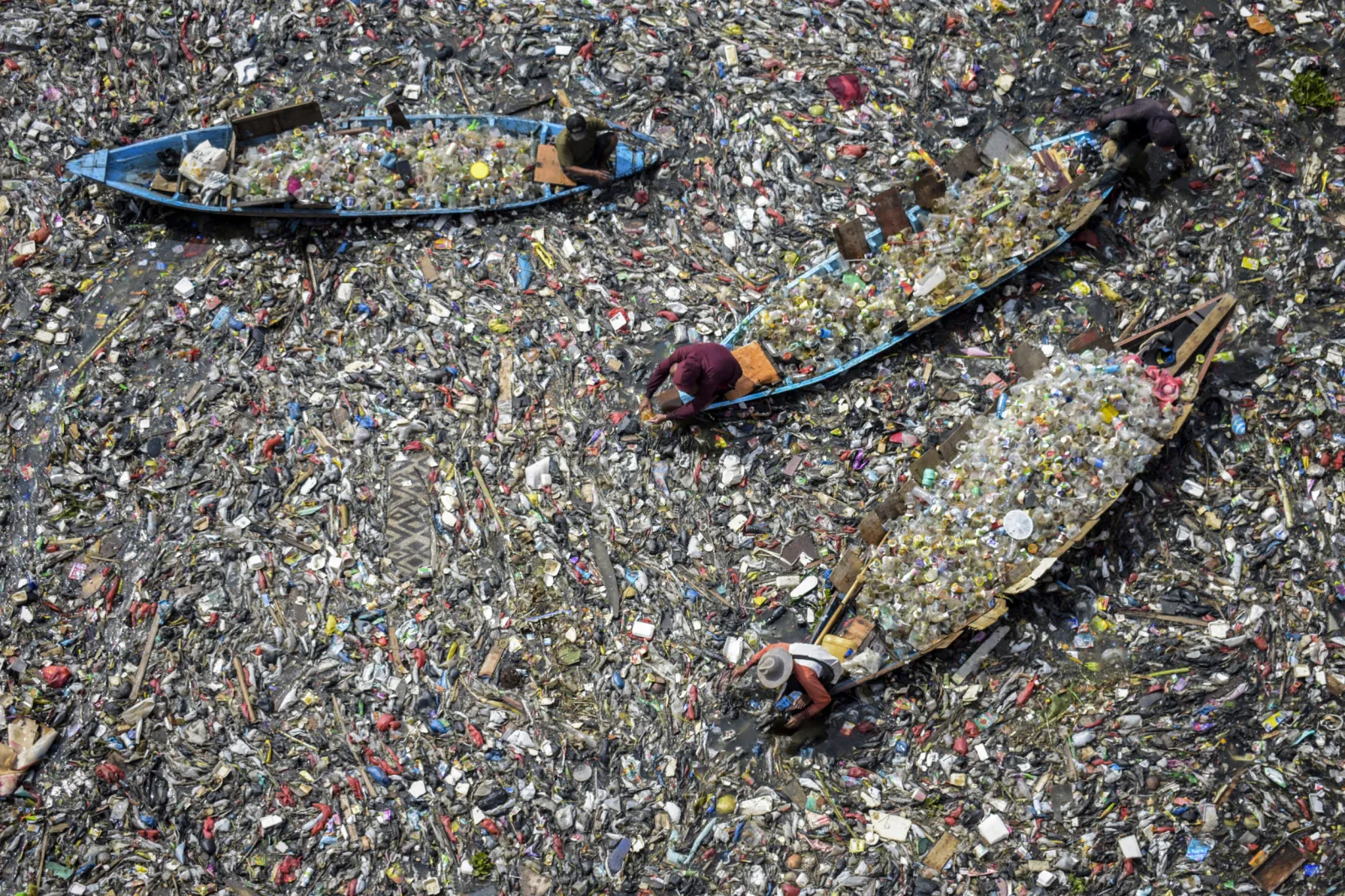
Marine scientists estimate that the equivalent of a garbage truck full of plastic waste enters the world's oceans every minute, killing marine wildlife and weakening ecosystems. A recent study of trash in rivers in eight countries around the world found that two-thirds of the waste clogging rivers is plastic.
Human health concerns are growing with more discoveries about the effects of microplastics and exposure to potentially toxic chemicals used in some plastics. Because most plastics are derived from petroleum products, the world's plastic industry is also a major contributor to climate change, responsible for an estimated 5 percent of global industrial greenhouse gas emissions—more than the aviation sector.
The treaty offered the potential to address all of those concerns while stimulating economic activity around improved waste collection and recycling and the development of alternative materials.
Nearly ninety countries demanded that the treaty cut the global production of plastics, and 120 supported strong controls on chemicals of concern in plastics. Major oil-producing countries, including Saudi Arabia, Russia and the U.S., however, preferred a treaty text that relied only on national measures that would be undertaken at the discretion of each country.
The American Chemistry Council, the trade group whose 10 members include many of the country's petrochemical and plastics companies, issued a statement that "applauds the leadership of U.S. negotiators" and their role in the talks.
"America's plastic makers remain committed to advancing a circular economy for plastics," ACC President and CEO Chris Jahn said in a statement. "A global agreement to end plastic pollution will help drive investment in innovation and infrastructure in the U.S. and worldwide."
Civil society and environmental groups deemed the outcome "an abject failure," as the Center for International Environmental Law's Director of Environmental Health, David Azoulay, said in a statement.
"Some countries did not come here to finalize a text, they came here to do the opposite: block any attempt at advancing a viable treaty," Azoulay said. "It's impossible to find a common ground between those who are interested in protecting the status quo and the majority who are looking for a functional treaty that can be strengthened over time."
Several groups praised the countries that voted against the weak treaty text.
"No treaty is better than a weak treaty that creates an illusion of progress and could discourage stronger action," Renée Sharp, director of plastic and petrochemical advocacy at Natural Resources Defense Council, said in a statement. "Now it is up to the majority of countries wanting global action to find a way forward towards a strong treaty in future negotiations."
What Now for Circular Economy Investment?
Rob Kaplan is the founder and CEO of Circulate Capital, an investment fund manager based in Singapore. Circulate is a leading investor in circular economy infrastructure such as recycling supply chains in South Asia and Latin America, and also invests in "disruptive innovation" such as bio-based plastic alternatives and improved paper packaging.
Kaplan told Newsweek that Circulate has about $265 million of assets under management and most of that capital comes from large corporate sources such as Coca-Cola, Danone, PepsiCo, Procter and Gamble and Unilever—companies that want to strengthen supply chains and waste management.
"I think the treaty was probably a once-in-a-generation opportunity to get some kind of global consensus on this topic that could create massive benefits around the world," Kaplan said, adding that those benefits could extend beyond health and the environment to economic impact. "Having an ambitious treaty, we felt, would be a huge catalyst for capital."
Kaplan said that even without a cap on plastic production, which had always seemed unlikely, other less controversial areas of agreement could have been helpful. Extended Producer Responsibility (EPR) policies that call on companies that use or produce plastic to fund waste management have already been successful in several countries, he said, and a global agreement could have built on that success to standardize and codify EPRs.
Likewise, a treaty could have created a global approach to mandatory targets for recycled content in plastic packaging, something that Kaplan said has "really been rocket fuel for driving circularity" in some markets.
But even without the treaty, Kaplan said he remains bullish on circular economy, and that he thinks the treaty process has galvanized companies, countries and communities to act.
"So much momentum had been put into the treaty over the last two or three years that there's still a pent-up energy, so we can drive that forward," he said.
The coalition of "high ambition" countries grew throughout the treaty negotiations, civil society groups rallied around the health effects of chemicals of concern in plastics and business groups embraced many elements of a strong treaty.
Kaplan said that momentum will now find other outlets among "coalitions of the willing" at the national and sub-national levels.
"I am expecting that there will be a home for sort of microcosms of the treaty elements," he said.
Newsweek will host a panel discussion on innovative solutions to plastic pollution as part of "Powering Ahead," a day-long event on September 25 during Climate Week NYC. Follow this link to register for the event.
View 0 Comments
Submit Correction
View Editorial & AI Guidelines