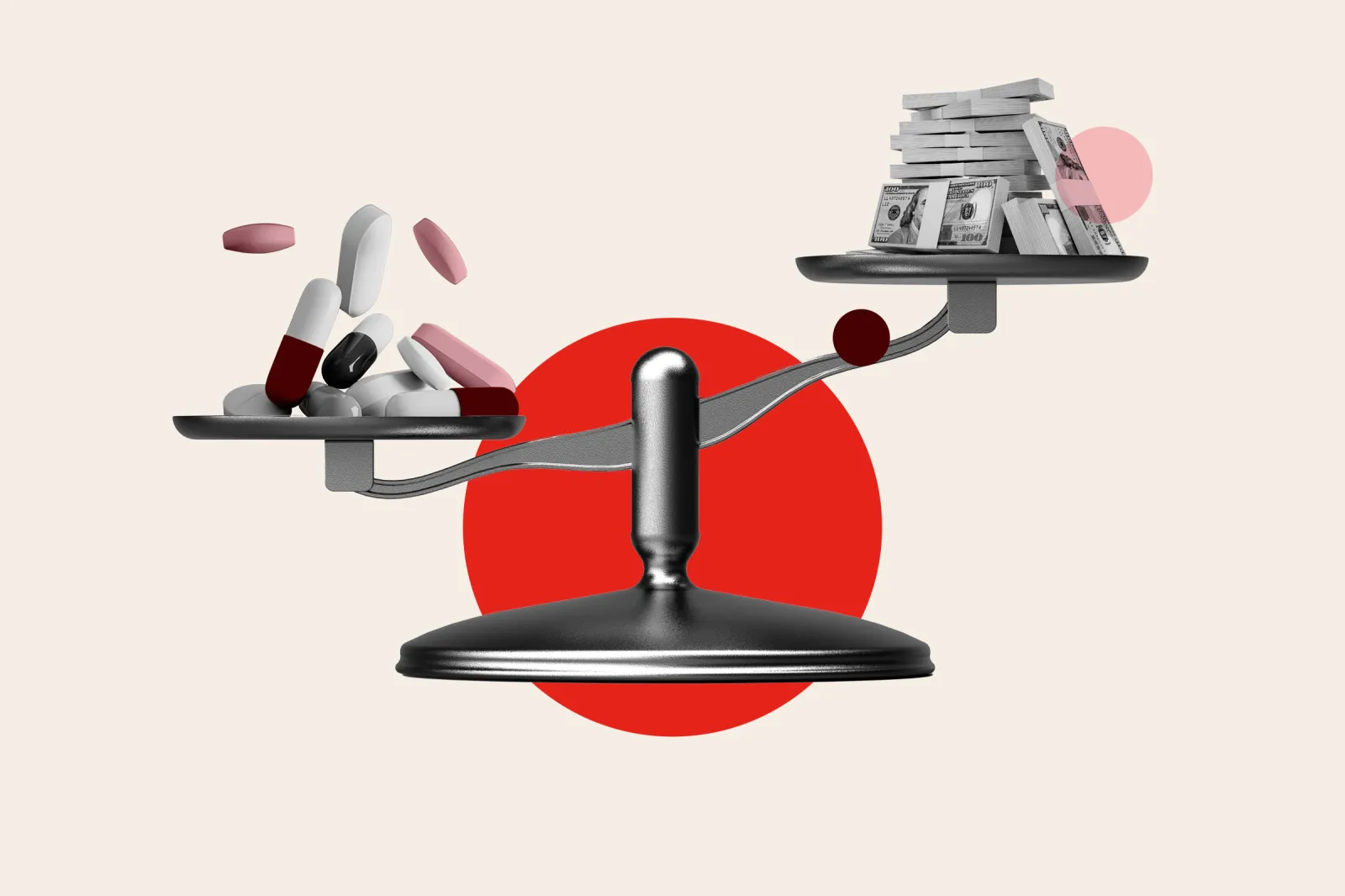
Photo-illustration by Newsweek/Getty

By Jasmine Laws
Reporter
0
Share
Newsweek is a Trust Project member
See more of our trusted coverage when you search.Prefer Newsweek on Googleto see more of our trusted coverage when you search.
As Americans are becoming increasingly concerned about the cost of health insurance, with price hikes for many plans expected next year, experts have told Newsweek when it could be cheaper to cover health costs out of pocket without paying for health insurance.
It is possible that the total cost of insurance "could amount to higher spending on medical care than if the person was uninsured, especially for people who are healthy or rarely use health care," Anna Doar Sinaiko, a professor of health economics and policy at Harvard University, told Newsweek.
However, for people who "use more than a minimum of health care, it is much less likely that it would be cheaper to be uninsured and pay for care directly than to be insured," she added.
Read More on News
Why It Matters
The expected expiration of the Affordable Care Act (ACA) enhanced tax credits at the end of the year means national average increases for ACA-compliant plans are forecasted to go up around 20 percent. At the same time, employer health benefit plans are also predicted to see an average increase of over 6 percent in cost next year.
Broadly, health insurance costs are increasing due to many factors, like inflation, increasing labor costs following the COVID-19 pandemic, and the growing demand for GLP-1 drugs such as Ozempic and Wegovy for diabetes treatment and weight loss.
A recent poll conducted by The Associated Press (AP) and NORC at the University of Chicago found that 57 percent of Americans were "extremely" or "very" concerned about rising health care costs.
Photo-illustration by Newsweek/Getty
What To Know
Under a few conditions, Americans may face lower health costs if they opt not to pay for health insurance—but this could leave them at risk if they are suddenly confronted with expensive bills due to injuries, accidents or sudden health complications.
Costs could be cheaper without insurance for those who do not have access to employer or government health insurance, which covers most health costs, and those who "do not get hit by a bus, develop cancer or have a heart attack and incur a big bill," Gerard Anderson, a professor of health policy and management at Johns Hopkins University, Maryland, told Newsweek.
That said, he added in health economics, generally 20 percent of people incur 80 percent of the health care bills, but the issue is that "you never know who will be in the 20 percent," so "unless you are an extreme risk taker, it is always better to have health insurance."
In some cases, providers may also take lower prices for those paying cash over insurance, Christopher Whaley, a professor in the Department of Health Services, Policy and Practice at Brown University, told Newsweek, adding this can be cheaper for patients, and "saves providers the hassle of going through insurance processes."
Although for more expensive care, insurers "negotiate discounts off of provider rates," he added, meaning that "if a patient has a hospital stay, then costs without insurance could be much higher than insurance prices."
There are plans in place that cater to those who do not need routine medical coverage, while protecting them from steep emergency costs—known as catastrophic plans.
These plans are gaining in appeal in some cases for younger Americans without existing health conditions, to save them from paying for full coverage.
The expansion of the role of pharmacies has meant that paying cash for generic drugs and services can also be cheaper at times. "Some pharmacies offer certain generic drugs for as little as $4 for a 30-day supply," Dr Ateev Mehrotra, chair of the Department of Health Services, Policy and Practice at Brown University, told Newsweek.
"This can happen because billing insurance involves substantial administrative costs, sometimes higher than the reimbursement itself," he added. However, he said these cases are rare, and in most areas of healthcare, paying in cash will be higher than the out-of-pocket cost under insurance.
According to the Peterson-KFF Health System Tracker, 95 percent of American adults under 65 accounted for only 47 percent of the healthcare spending within this age group, meaning many could "see savings by opting out of insurance" as they "collectively pay more than they consume," Ge Bai, a professor of health policy and management at Johns Hopkins Bloomberg School of Public Health, Maryland, told Newsweek.
"The percentage would be even higher if we take into account the pricing advantages of paying cash, the removal of administrative costs and profit margins from the insurance industry, and the structural flaws of Obamacare that have inflated premiums," she added.
However, if more healthy Americans opt not to pay for health insurance, "the people with health insurance will see their premiums increase even faster without the healthy people in the pool," Anderson said.
"This is something known as the insurance death spiral which occurs when only the sickest people purchase health insurance," he said.

...
What People Are Saying
Christopher Whaley, a professor in the Department of Health Services, Policy and Practice at Brown University, told Newsweek: "Policymakers have focused on ensuring access to health insurance, but have unfortunately largely ignored what makes health care in the U.S. so expensive. Without addressing these underlying drivers, and most importantly, rising hospital prices, then insurance will be expensive, whether it's paid for by patients or subsidized by taxpayers.
He added: "However, the large increases in insurance costs that many families are now grappling with will likely lead to reductions in insurance coverage and many families deciding to forgo coverage. At the same time, if those who do decide that insurance is "worth" the rising cost, then insurance pools will likely get sicker and more expensive, which will place further pressure on the stability of health insurance and potentially make insurance even more expensive next year."
Dr Ateev Mehrotra, chair of the Department of Health Services, Policy and Practice at Brown University, told Newsweek: "Some people facing very high premiums choose to forgo insurance, hoping that paying cash for care will be cheaper over the course of a year. For a healthy person, most will be right. On average, paying cash for care could be cheaper especially with lower-cost options like telemedicine and urgent care. However, this approach defeats the primary purpose of insurance, which is to protect against catastrophic costs in the event of an unexpected medical crisis."
Ge Bai, a professor of health policy and management at Johns Hopkins Bloomberg School of Public Health, Maryland, told Newsweek: "Due to various government mandates, the Obamacare plans have become junk plans with outrageous premiums. For example, for a family of three paying $22,000 annual premiums with a $21,000 deductible is essentially paying mortgage on an expensive non-existent house. They could have saved substantially if they were able to save and invest their premiums dollars and pay for healthcare services directly in cash."
She added: "Facing the true unaffordability of Obamacare plans, more Americans will refuse to pay outrageous premiums for junk coverage. Instead, they’ll look for alternative affordable options, such as direct care, association plans, short-term plans, health-share ministries, and crowd-sharing, or even remain uninsured, creating critical momentum to transform U.S. healthcare into a patient-driven, competitive, innovative, and affordable new ear."
Anna Doar Sinaiko, a professor of health economics and policy at Harvard University, told Newsweek: "With increasing health insurance premiums it is likely that more Americans, especially those who are healthy and don’t expect to use care, will make changes to their health insurance plans, such as buying less comprehensive plans or dropping coverage all together. Some of these people will decide that health insurance for the higher cost is not worth it, and some will make changes because they can’t afford the higher premiums."
She added: "These people are likely to be worse off because going without insurance is risky -- they no longer have financial protection in case they become sick or have an accident. Health insurance not only pays these unexpected bills, but it also brings important peace of mind that comes with knowing you are protected from a rare but very costly event. In addition, people without insurance use less care, even high-value care, which can impact future health."
Full Interview Below
Newsweek's interview with Anna Doar Sinaiko, a professor of health economics and policy at Harvard University.
Q1: Could there ever be cases where it is cheaper for Americans not to pay for medical bills with insurance in light of the expected cost increases next year? If so, how could this be the case? Why is it that paying for health insurance can end up being more costly than the bills themselves?
"Americans with health insurance pay monthly premiums and then usually have deductible or copayments that they pay out-of-pocket when they get care. The cost for care with insurance is this total cost (premiums plus cost-sharing), not just the amount a person pays when they receive care.
"It is possible that this total cost could amount to higher spending on medical care than if the person was uninsured, especially for people who are healthy or rarely use health care. For example, if someone didn’t use much care during the year, then the amount they spend on their premium and deductible could be more than if they paid for a small amount of care directly. Also, although the prices for care that are charged to the uninsured are usually higher than the prices paid by insurers, some doctors and hospitals will give cash or self-pay discounts to patients paying without insurance, which means patients sometimes pay the same prices insurers are charged for care.
"For people that use more than a minimum of health care, it is much less likely that it would be cheaper to be uninsured and pay for care directly than to be insured."
Q2: In light of this, what do you expect more Americans will do about their health insurance next year, and what repercussions could that have?
"With increasing health insurance premiums it is likely that more Americans, especially those who are healthy and don’t expect to use care, will make changes to their health insurance plans, such as buying less comprehensive plans or dropping coverage all together. Some of these people will decide that health insurance for the higher cost is not worth it, and some will make changes because they can’t afford the higher premiums.
"These people are likely to be worse off because going without insurance is risky - they no longer have financial protection in case they become sick or have an accident. Health insurance not only pays these unexpected bills, but it also brings important peace of mind that comes with knowing you are protected from a rare but very costly event. In addition, people without insurance use less care, even high-value care, which can impact future health.
"Another important consequence is that Americans who stay insured will likely see their costs continue to go up. This is because the people who stay insured are sicker or expect to use more health care, and insurers will increase the premiums to cover the costs of this population."
View 0 Comments
Submit Correction
View Editorial & AI Guidelines