10
Loading video...

By Anna Skinner
Associate News Editor
0
Share
Newsweek is a Trust Project member
See more of our trusted coverage when you search.Prefer Newsweek on Googleto see more of our trusted coverage when you search.
Some Americans are already planning for their next chance to view a total solar eclipse, but many will have to wait at least 20 years to witness the celestial phenomenon if they don't want to travel.
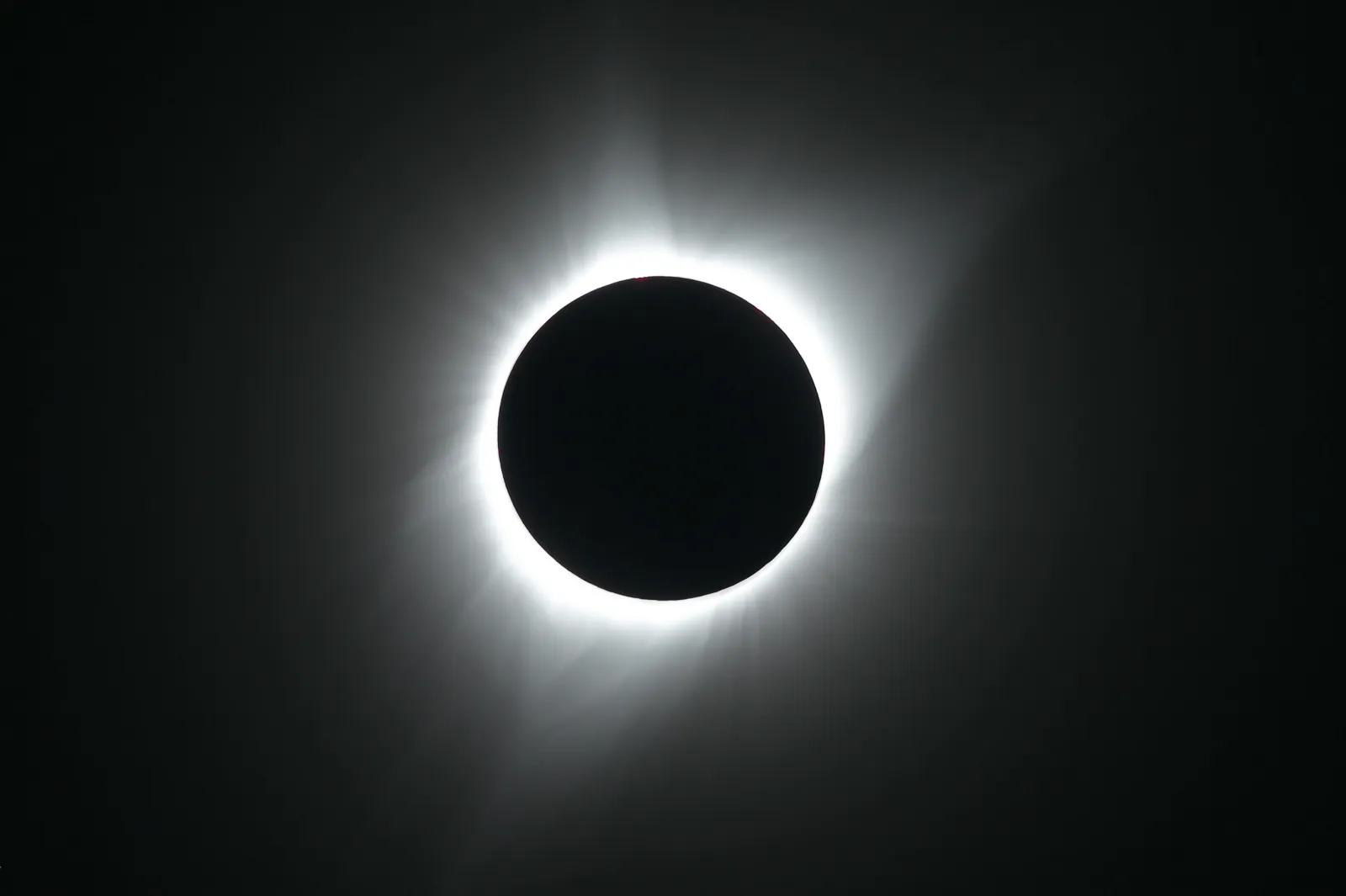
On Monday, the moon will be positioned so that the sun's entire disc will be blocked in 13 states, plunging millions of people into darkness in the early afternoon. The path of totality will start in Mexico and extend across Texas, Oklahoma, Arkansas, Missouri, Kentucky, Illinois, Indiana, Ohio, New York, Pennsylvania, Vermont, New Hampshire and Maine before heading into Canada and over the North Atlantic.
The spectacle is expected to draw crowds around the nation as people head to areas in the path of totality to witness the event. Meanwhile, officials across the country have voiced concerns about stretched public safety resources and an "enormous strain" on local hospitals and congested roadways. At least four states have urged residents to stock up on groceries and gas and to fill medical prescriptions in the days before the eclipse, as traffic could overwhelm local roads.
Read More
Is Solar Eclipse to Blame for New Jersey Earthquake? USGS Speaks Out3 min read

Solar Eclipse to See Citizen Scientists Probe Upper Atmosphere3 min read

How to View Solar Eclipse From California3 min read

...
The last total solar eclipse to darken America's skies occurred on August 21, 2017, in Oregon, Idaho, Montana, Wyoming, Nebraska, Kansas, Iowa, Missouri, Illinois, Kentucky, Tennessee, North Carolina, Georgia and South Carolina. Before that, the last total solar eclipse in America was in 1979.
After Monday's event, the next time a total solar eclipse will occur in this country won't be until 2044.
August 23, 2044
The next solar eclipse to pass through multiple states will be on August 23, 2044, although the path of totality will be much smaller than Monday's event. Only Montana, North Dakota and a small part of South Dakota will be within the path.
August 12, 2045
Americans will have a chance to witness another total solar eclipse only one year after the moon blocks the sun in 2044, on August 12, 2045. This path is much longer, and viewers in California, Nevada, Utah, Colorado, Kansas, Oklahoma, Texas, Arkansas, Louisiana, Mississippi, Alabama, Georgia and Florida will get a chance to observe the event. This eclipse also will occur in Haiti, the Dominican Republic, Venezuela, Guyana, French Guiana, Suriname and Brazil.
May 11, 2078
After 2045, the next total solar eclipse in America will be in 2078. The path of totality will pass over a swath of the Southern U.S. as well as part of the Eastern Seaboard, crossing Georgia, Louisiana, North Carolina and Virginia.
September 14, 2099
Twenty-one years later, the last total solar eclipse in America in the 21st century will be in 2099. Some Northern, Midwestern and Eastern states will witness the event: Minnesota, Wisconsin, Illinois, Ohio and North Dakota.
Newsweek reached out to NASA by email for further comment.
Total Solar Eclipses Outside the U.S.
Total solar eclipses will occur much sooner in other parts of the world. After Monday's eclipse, the next total solar eclipse will be on August 12, 2026, and can be viewed in parts of Greenland, the Arctic, Iceland and Spain, according to a series of maps published by Time.
One year later, on August 2, 2027, Spain will again be within the path of eclipse totality, as well as Algeria, Libya, Egypt, Saudi Arabia, Yemen and Somalia.
On July 22, 2028, a total solar eclipse will be visible in parts of Australia and New Zealand.
On November 25, 2030, another total solar eclipse will occur. Much of its path will be across the Indian Ocean, crossing parts of Botswana, South Africa and Australia.
On March 30, 2033, an eclipse will be visible to viewers in Russia and Alaska.
View 0 Comments
Submit Correction
View Editorial & AI Guidelines