...

By Marni Rose McFall
0
Share
Newsweek is a Trust Project member
See more of our trusted coverage when you search.Prefer Newsweek on Googleto see more of our trusted coverage when you search.
Skywatchers across the United States will soon have a chance to see June's "Strawberry Moon," the first full moon of summer, which reaches peak illumination on June 29.
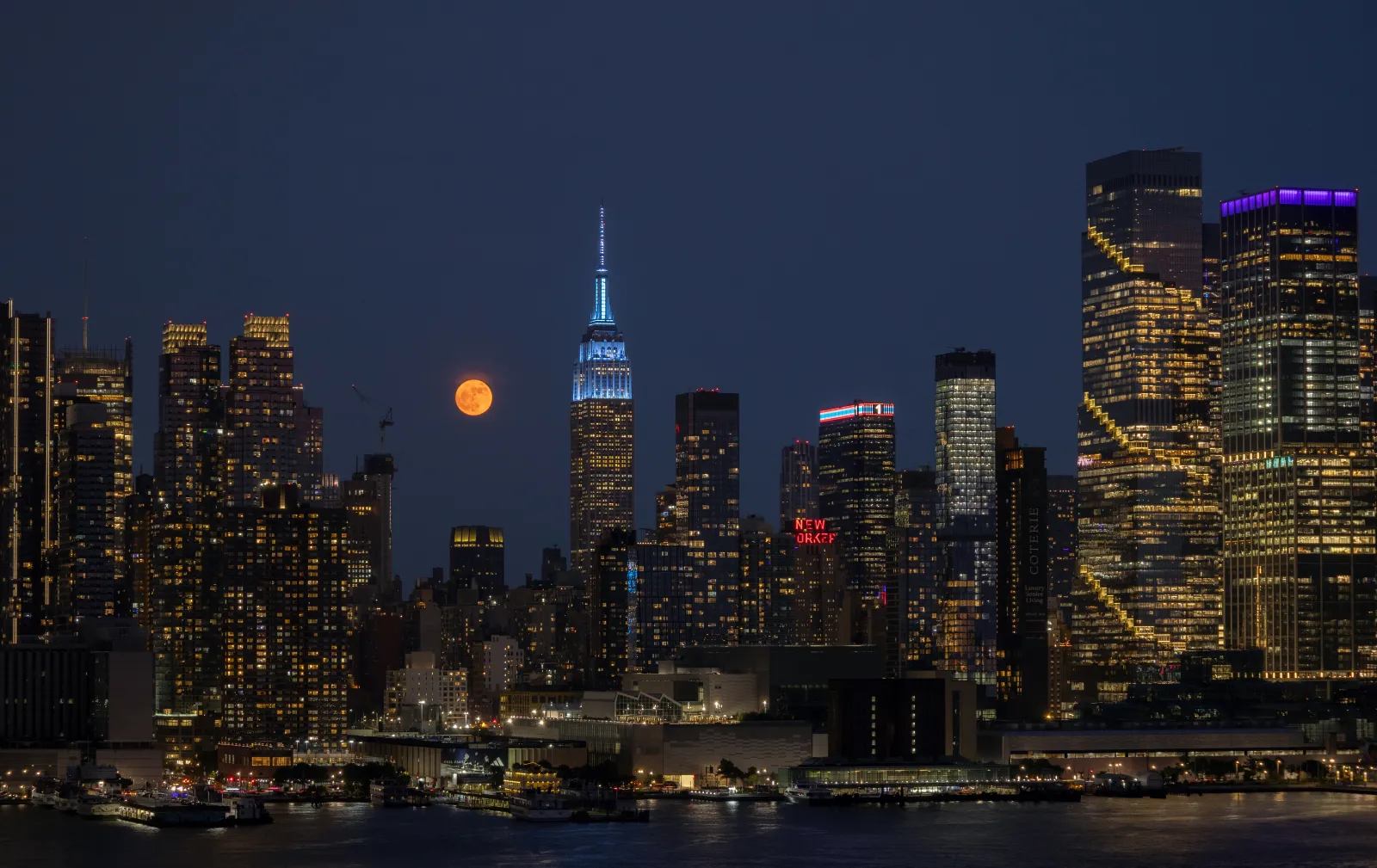
It will be the second-smallest full moon of the year. The moon will be visible nationwide, and the most beautiful views will occur at moonrise, as the Strawberry Moon appears low on the southeastern horizon.
The full moon will come a day after apogee, the point in the moon’s 29-day orbit when it is the furthest from the Earth.
Read More on Weather
The moon will be visible nationwide, but weather conditions could make some regions better than others for viewing. Long-range forecasts from the National Oceanic and Atmospheric Administration (NOAA) and other meteorological outlooks suggest the Northwest and parts of the Northeast may have some of the clearest skies heading into the event, while more unsettled conditions could affect portions of the South and central U.S.
...
What Is the Strawberry Moon?
The Strawberry Moon is the traditional name for June's full moon. The name comes from Native American Algonquian tribes, who associated the full moon with the short strawberry harvesting season in the northeastern United States. Despite its name, the moon does not actually appear pink or red.
Other cultures have given June's full moon different names, including the Berries Ripen Moon, Green Corn Moon, Hot Moon and Mead Moon.
What Time Is the Strawberry Moon Today?
The Strawberry Moon reaches full illumination at 7:58 p.m. EDT on Monday, June 29, when the moon will be positioned opposite the sun.
Because the exact moment of fullness occurs before moonrise for much of North America, the best viewing opportunity will come shortly after sunset as the moon rises above the southeastern horizon.
Why This Year's Strawberry Moon Is Special
June's full moon follows the summer solstice, which occurred on June 21. As a result, it will trace one of the lowest paths across the sky of any full moon in 2026, remaining close to the horizon for much of the night.
As the moon will appear after apogee, it may appear slightly smaller than an average full moon, although the difference is difficult to notice with the naked eye.
A full moon that coincides with apogee is known as a micromoon, which is the opposite of a supermoon, and appears around 12 to 14 percent smaller and dimmer than average.
Viewers may notice a golden, orange or yellow tint during moonrise as its light passes through more of Earth's atmosphere.

...
Where Are the Best Places to View the Strawberry Moon?
The moon will be visible from every U.S. state, but cloud cover could determine where the best views occur.
NOAA's latest extended-range outlook indicates that parts of the Pacific Northwest and Northeast are expected to be drier than average heading into the end of June, potentially improving viewing conditions.
For the best chance of seeing the Strawberry Moon:
- Find a location with a clear view of the southeastern horizon.
- Avoid areas with significant light pollution.
- Consider open fields, beaches, lakeshores or elevated terrain.
- Arrive shortly before local moonrise, which typically occurs shortly after sunset.
When Is the Next Full Moon?
The next full moon after the Strawberry Moon will be the Buck Moon, which reaches full illumination on July 29, 2026.
With summer underway and the moon hanging unusually low in the sky, this year's Strawberry Moon could offer one of the most photogenic lunar displays of 2026, provided the clouds cooperate.
Contact Newsweek editors on this story: Ben Kelly and Sam Wilson.
View 0 Comments
Submit Correction
View Editorial & AI Guidelines