...

By Kimberly Glas
President and CEO, National Council of Textile Organizations
0
Share
Newsweek is a Trust Project member
See more of our trusted coverage when you search.Prefer Newsweek on Googleto see more of our trusted coverage when you search.
When Americans see a U.S. Immigration and Customs Enforcement (ICE) official, a federal air marshal, or a National Park service ranger, they assume the uniforms they wear represent more than authority. They expect them to represent the country itself.
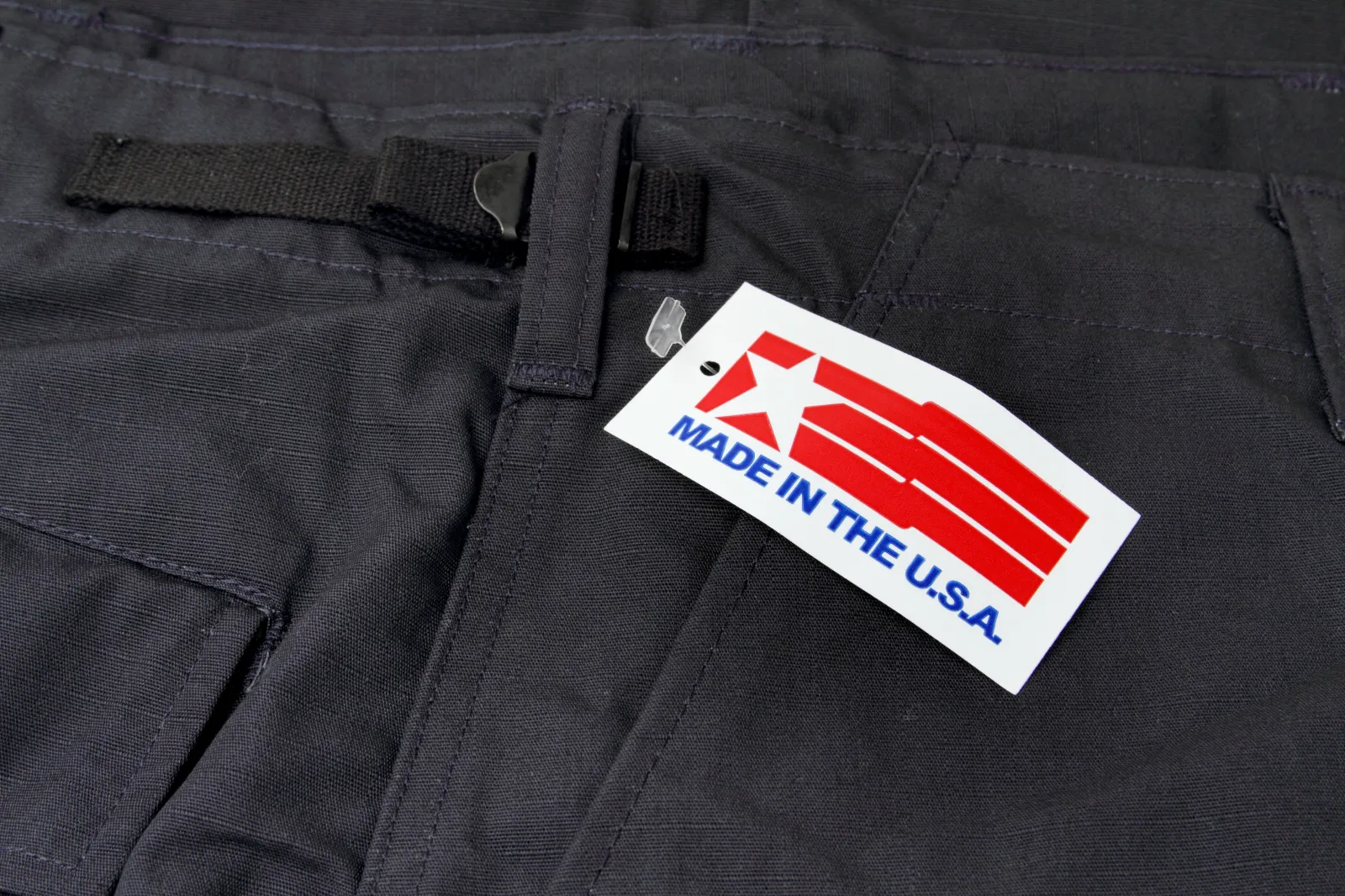
But most Americans would be disappointed to learn that many of the uniforms these government officials wear and the gear they carry are not made in America. U.S. Department of Homeland Security uniforms are imported from several foreign countries, including Mexico and Asia. Virtually all the medical personal protective equipment (PPE) our first responders wear is still imported from China, which has a long record of employing unfair trade practices and abusive labor practices including forced labor.
...
Read More on Opinion
Our government still uses American taxpayer dollars to purchase foreign-made uniforms, tactical gear and other textile equipment, bypassing a domestic textile industry that remains capable and eager to supply the U.S. government with products fully made in America created by an outdated loophole called the Trade Agreements Act (TAA), which allows sourcing from offshore.
Over several past administrations, loopholes, weak enforcement and inconsistent government contracting practices have allowed federal agencies to circumvent Buy American sourcing requirements. The Trump administration has a huge opportunity to right this wrong.
The consequences for domestic textile manufacturers have been severe. The U.S. textile industry has lost 39 plants in the past two years and has idled capacity due to a multitude of factors largely related to predatory trade practices, compiled from multiple government data sources, news reports and industry statistics
Using executive action, the administration could prioritize the full domestic procurement of American-made textiles across all government agencies. We estimate these contracts alone are worth over $1 billion dollars—which would be reinvestment of taxpayer dollars in our communities and in our textile workforce.
As a model for how this could be accomplished, I would point to the Buy American procurement policies utilized by the United States military and Department of War (DOW), which when applied consistently, help bolster the U.S. textile industry that I represent.
A statute known as the Berry Amendment requires that all textile, agricultural and specialty steel products purchased by the DOW be made in America.
That is a model that can and should be replicated and expanded across all federal government agencies. President Donald Trump could seize the initiative and immediately sign an executive order expanding the Berry Amendment and Buy American procurement policies for all federal agency spending for textiles and apparel. Such a move would be a huge boost to U.S. textile industry and workers at a time when America is rightfully attempting to revitalize and reshore our manufacturing base.
The president has instituted an agenda aimed at helping rebuild American manufacturing, confront unfair trade practices and put American workers first. The logical next step is to apply these same America first principles to our government’s own purchasing practices and close all damaging loopholes.
Such a commonsense action would build up U.S. manufacturing for key security needs and create a strong demand for U.S.-made items.
It would also provide certainty—something U.S. manufacturers desperately need to invest, hire and expand capacity. Finally, such an order would strengthen supply chains critical to national security and emergency preparedness, and it would align federal agency procurement with the standards already expected for the U.S. military.
The economic impact would be substantial. With stronger Buy American policies and consistent federal demand, we estimate that textile industry employment would grow substantially.
At its core, this is a question of domestic manufacturing support and national pride. Why should U.S. Park Service rangers or Customs officers wear foreign-made uniforms when an American industry—one explicitly recognized as strategic—is struggling because of lack of demand?
The choice before us is straightforward. Charting a new path on procurement to support the American textile industry and workers would bolster a strategic domestic industry, strengthen readiness for emergencies and national security needs and give American manufacturers the stability required to grow.
Kimberly Glas is the president and CEO of the National Council of Textile Organizations and former Commerce deputy assistant secretary for textiles, consumer goods and materials.
The views expressed in this article are the writer's own.
View 0 Comments
Submit Correction
View Editorial & AI Guidelines