...

By Micah McCartney
Reporter
0
Share
Newsweek is a Trust Project member
See more of our trusted coverage when you search.Prefer Newsweek on Googleto see more of our trusted coverage when you search.
The Pentagon has expanded a list of Chinese companies it says are linked to Beijing's military, adding some of the country's best-known technology and consumer brands and potentially paving the way for future investment restrictions and sanctions.
The updated roster, released under a congressional mandate established in 2021, identifies 188 entities that the U.S. Department of Defense considers part of or supportive of China's military-industrial ecosystem. The department's Section 1260H list now includes major companies such as Alibaba, BYD and robotics firm Unitree—businesses that are neither state-owned nor traditionally associated with the defense sector.
There is growing concern in Washington over China's military modernization and the role private companies may play under Beijing's civil-military fusion strategy, which seeks to integrate commercial innovation into national defense capabilities.
Read More
China’s Xi Goes to North Korea to Court Kim5 min read

US Strikes Iranian Military Sites After Iran Launched Drone Attack 4 min read

100 Days of Iran War: In Numbers9 min read

At the center of U.S. concerns is China's policy of civil-military fusion, a Chinese Communist Party doctrine that blurs the line between civilian and military industries. U.S. officials argue that Chinese firms can be compelled to provide data, technology and other support to the government upon request, raising concerns about their role in advancing China's military capabilities.
The latest designation comes amid broader efforts by Washington to limit China's access to advanced technologies viewed as strategically important, including artificial intelligence chips, semiconductor manufacturing equipment and quantum computing technologies.
While inclusion on the Pentagon's list does not automatically trigger sanctions, it can serve as the basis for future restrictions on investment, procurement and other forms of commercial engagement.
...
Beijing Condemns the Move
China responded swiftly, accusing Washington of using national security concerns to unfairly target Chinese businesses.
"We urge the U.S. side to correct its mistakes and stop its unreasonable suppression of Chinese companies," Foreign Ministry spokesperson Lin Jian told reporters.
"China will take necessary measures to firmly safeguard the legitimate rights and interests of Chinese companies."
Why Alibaba, BYD and Unitree Were Added
Among the most notable additions is Alibaba, one of China's largest technology companies and a dominant player in e-commerce and cloud computing.
The Pentagon described Alibaba as a "military-civil fusion contributor to the Chinese defense industrial base," citing alleged links to China's Ministry of Industry and Information Technology.
"Alibaba is not a Chinese military company nor part of any military-civil fusion strategy," a company representative told Newsweek. "We will take all available legal action against attempts to misrepresent our company."
Also added to the list was BYD, one of the world's largest electric vehicle manufacturers and a rapidly expanding global automotive competitor.
China has virtually no market share in the U.S. vehicle market.
In January, however, President Donald Trump said he would welcome Chinese automakers if they built factories in the United States and hired American workers.
That position contrasts with calls from some lawmakers, including members of Trump's Republican Party, who have advocated banning Chinese electric vehicles from the U.S. market altogether.
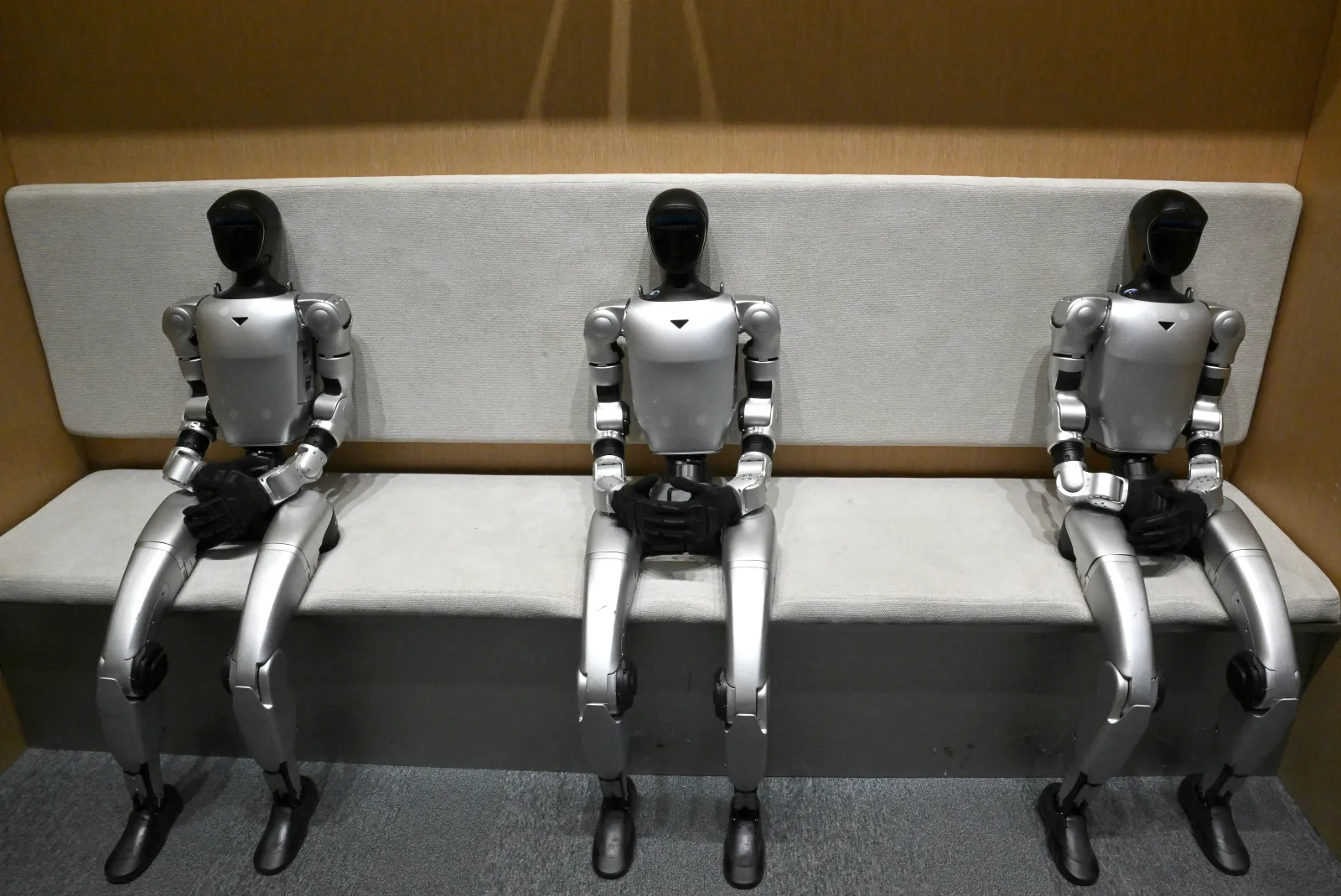
Another high-profile addition is Unitree Robotics, known primarily for its humanoid robots. The firm's kung fu-performing machines drew widespread attention during China's Spring Festival Gala this year and have become a symbol of the country's rapid advances in robotics and artificial intelligence.
Newsweek reached out by email to BYD and Unitree with requests for comment.
"The Pentagon's 1260H list is generally a good indicator of follow-on actions from the federal government. For instance, I'd expect to see Unitree on the FCC's covered list at some point soon," Michael Sobolik, a senior fellow at the Hudson Institute, told Newsweek.
Firms that do business with listed entities could face compliance and disclosure questions. Under Securities and Exchange Commission rules, publicly traded companies are generally expected to assess whether such relationships pose material legal, or reputational risks that should be disclosed to investors.
That could create a dilemma for U.S. chipmaker Nvidia, which has been seeking to penetrate China's vast market. On June 1 it confirmed a partnership with Unitree to jointly develop humanoid robots using Nvidia's Isaac GR00T platform and Blackwell AI chips.
"More fundamentally, it raises the obvious question of why Nvidia is offering computing technology to a company affiliated with the People's Liberation Army," Sobolik said.
The Risks of Broad Definition
Some analysts have argued the update reflects an overly broad interpretation of 1260H's purpose of identifying companies linked to China's military.
"In China, civilian technology and national-security priorities are often hard to separate, especially in AI, cloud computing, batteries, robotics and advanced manufacturing," Lizzi Lee, a fellow at the Asia Society Policy Institute's Center for China Analysis, told Newsweek.
While the inclusion of some firms on the list may be relatively easy to justify, designating flagship Chinese technology companies such as BYD and Alibaba is more difficult, she said.
"The risk is that the broader and less precise these tools become, the more they reinforce Beijing's view that Washington is targeting China's civilian tech champions wholesale in an effort to contain China."
Such moves could invite retaliation and spur Beijing to deploy its own legal and regulatory tools in response. U.S. allies are also unlikely to fully embrace Washington's expansive interpretation of civil-military fusion, making coordination more difficult and creating opportunities for Beijing to exploit those differences, Lee added.
Congress Calls for Tougher Action
The U.S. House Select Committee on the Chinese Communist Party welcomed the Pentagon's update and urged stronger measures against companies included on the list.
The committee described the designations as a "warning" to American businesses and investors.
"Any of them that are publicly traded on U.S. exchanges should be immediately delisted and their products should be removed from supply chains our country depends on," the committee said.
"American companies must stop doing business with these threats to our national security, otherwise they are enabling China's military ascendance."
The expanded list marks the latest step in a broader U.S. effort to scrutinize Chinese firms operating in strategically important sectors as competition between Washington and Beijing increasingly extends beyond trade and into technology, investment and national security.
Updated 12:00 a.m. and 3:07 a.m., 6/10/26, This article has been updated with comment from Michael Sobolik, Lizzie Lee and Alibaba.
Updated 8:37 a.m., 6/10/26, This article has been updated with Michael Sobolik's Hudson Institute affiliation.
View 0 Comments
Submit Correction
View Editorial & AI Guidelines