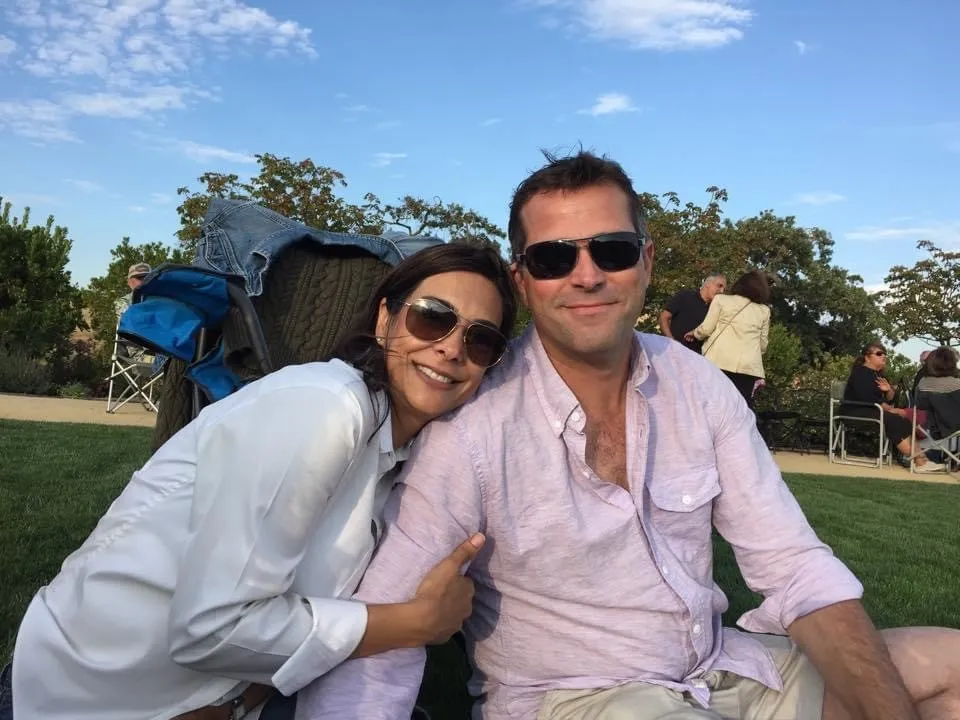
...

By Samina Bari
0
Share
Newsweek is a Trust Project member
See more of our trusted coverage when you search.Prefer Newsweek on Googleto see more of our trusted coverage when you search.
The week before my husband died, he built our daughters a terrarium.
We had driven into Berkeley, California, to find the right reptile store, stopped for lunch in Sausalito, then swung by the Oakland Zoo on the way home because the girls weren’t tired yet. The next day, he had planned for a babysitter to come so the two of us could watch the San Francisco Giants’ home opener, then spend the night at the Four Seasons in San Francisco. Dinner reservations. A couple’s massage. Sixteen years married, and he still planned like he was courting me.
We never made it to the hotel.
Read More on My Turn
My Husband Froze His Eggs Before He Transitioned. Now I’m Having His Baby6 min read

I Was Single at 37 and Had Given Up on Love—One Message Changed Everything10 min read

I Thought Going Gray Meant I’d Stopped Caring about My Looks. Then the Compliments Started6 min read

That night, after I’d put the girls to bed, he got a text from friends having drinks at our country club and asked if I minded if he joined them. Of course I didn’t, I said. I was in bed with a glass of wine and the manuscript I was working on when my friend and across-the-street neighbor Serena called, which was strange, because we always texted. She said our garage door was open. Then she said there was an ambulance outside.
I don’t remember deciding to run. I just remember running, yelling his name down the street toward the lights. When I got there, the first thing I saw was the bottom of his shoes. He looked like he was sleeping. So peaceful. I begged him to wake up—for the kids, for me, for us—while a paramedic asked what medications he took and someone put a sweater around my shoulders that I shook off because I wasn’t cold, I was somewhere past cold. A neighbor driving home had spotted him in the street and called it in. He had been lying there alone for a while before anyone found him. Medics worked on him and couldn’t bring him back.

...
Doug hit his head falling from an electric scooter I’d always hated, less than half a mile from our house during what had been an ordinary week in our happy, lucky life.
People say there’s a before and an after. What they don’t tell you is how long the after lasts, and what it actually looks like.
They call it grief brain—the inability to think or even function. In the days, weeks and months that followed, my traumatic grief led to diagnoses of PTSD, anxiety and depression. Prescription bottles littered my bathroom counter. I lost so much weight I looked almost skeletal. I literally forgot how to drive a car. If it hadn’t been for my friends, I don’t know how I would have come back from that at all.
Well-meaning loved ones did what they could to help. Some succeeded in providing comfort. Others did not. In fact, some efforts left me feeling even more isolated, angry and unseen. “You’re going to thrive,” one person said. “You’re not going to be single for long,” said another. I understand now what was happening: Loss makes people deeply uncomfortable, and when they can’t fix something, they reach for whatever sounds hopeful. They leaned into their discomfort and didn’t know how to be present with my grief.

...
Three years later, I still wear my wedding ring because Doug is still my husband. I am still his wife. We weren’t divorced. We didn’t grow apart. We didn’t make a choice. He died and somehow that fact—which is the most enormous, immovable fact of my life—gets flattened into a label that makes other people comfortable: widow. I reject the word not because I’m in denial, but because it was never meant to hold what I actually am: a woman still married to a man who is physically gone, raising his daughters in the house he loved, missing him in ways that haven’t softened so much as they’ve just become familiar, like a second pulse.
My girls were 7 years old. They went back to school the Monday after their daddy died because they wanted to, then came home asking how to be good enough to get to heaven and see him again. They started sleeping in my bed because they were afraid of what happens while you’re sleeping, since he died while they were asleep. I installed cameras. I ripped out the shrubbery in front of our house so nothing could hide there. None of it made them feel safer, but it made me feel like I was doing something, which is its own kind of survival.
Somewhere in those first months I also discovered the sheer logistical brutality of what follows a loss, such as the death certificates sent out again and again, each time reopening the wound, the accounts, the calls, the forms and systems that don’t care that you can’t think straight. The administrative weight was crushing. When I asked my estate attorney and financial advisor for help, they said it was “out of scope.” So, I’ve spent the last year creating resources so the next woman who faces what I did—and statistically it likely will be a woman—doesn’t have to navigate the crushing administrative burden alone and unguided. But that’s a different story.
What I’ve learned is that grief doesn’t look the same every day. Some days I am still the woman who used to stay up late with her best friend, who also happened to be her husband, talking about nothing and laughing until 1 a.m. Some days I am only the mother (and father) trying to get two scared little girls back to sleep. Most days I am both, carrying the spirit of a man who is with me everywhere I go, because that is what loving someone for nearly 25 years does to you. It doesn’t end when they do.
I don’t know what to call a woman in my position. I only know what I refuse to call her.
Just his wife. Still.
Samina Bari is the author of I Can, I Will & I Did: Lessons on Life, Love, and Leadership and Don’t Call Me Widow: A First-Hand Guide to Help Support Someone Who's Lost Their Spouse*, and the founder of Farewell, a tool to help people after loss. She lives in California with her twin daughters.*
All views expressed in this article are the author's own.
Do you have a personal essay you want to share with Newsweek? Send your story to MyTurn@newsweek.com.
View 0 Comments
Submit Correction
View Editorial & AI Guidelines