...

By Tom O'Connor
Deputy Editor, National Security and Foreign Policy
0
Share
Newsweek is a Trust Project member
See more of our trusted coverage when you search.Prefer Newsweek on Googleto see more of our trusted coverage when you search.
As the United States and Iran prepare for a new round of negotiations six weeks into a war that has rocked the Middle East and global energy markets, both sides are not only clashing with one another but also among themselves.
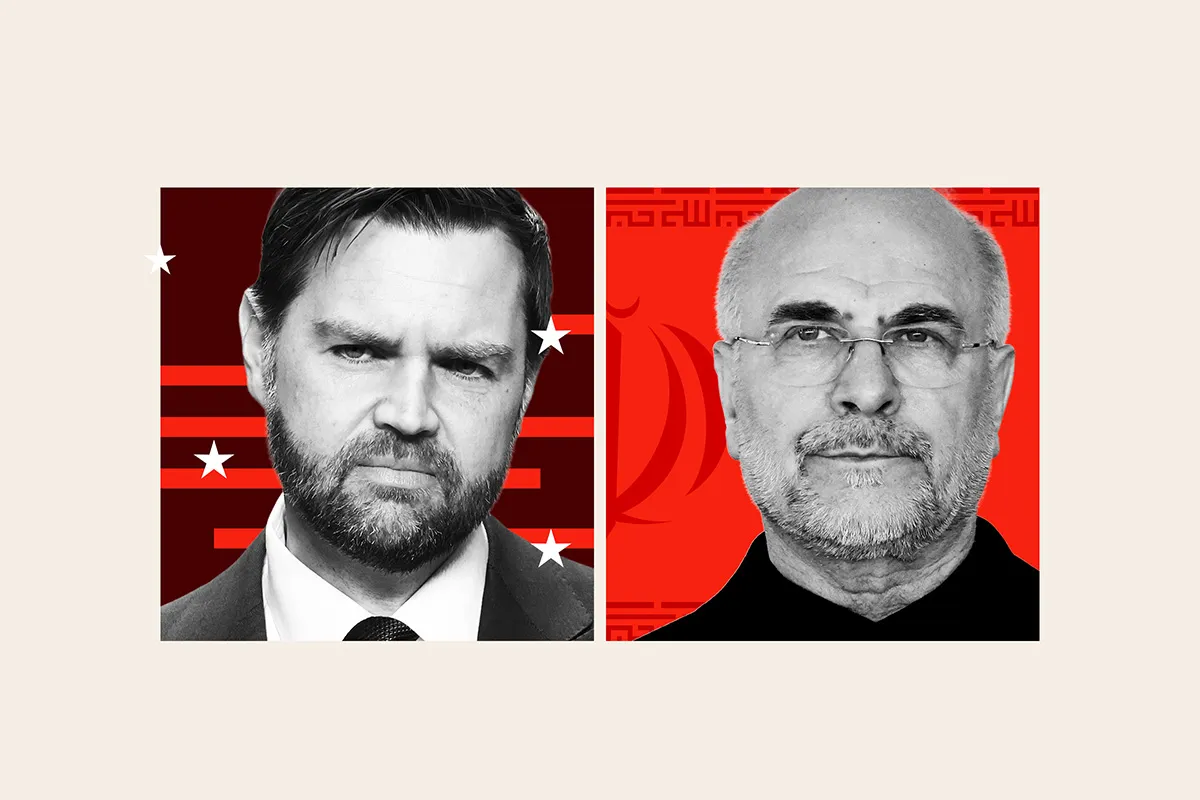
U.S. Vice President JD Vance's visit to Pakistan to meet an Iranian delegation to be led by Parliament Speaker Mohammed Bagher Ghalibaf and Foreign Minister Abbas Araghchi marks the most direct diplomatic deployment by President Donald Trump's administration since the start of the war launched by the U.S. and Israel in late February.
It's notable not only because it would also constitute the highest-level direct engagement between Washington and Tehran since the 1979 revolution that established the Islamic Republic, but also due to the fact that Vance—an alleged war skeptic—will be leading the talks. Previous U.S.-Iran negotiations under Trump were conducted indirectly and have been spearheaded by his son-in-law, Jared Kushner, and special envoy Steve Witkoff, both of whom will join Vance in Islamabad.
Read More on World
From the Iranian side, Ghalibaf is one of the most influential players to survive U.S.-Israeli strikes that have killed scores of senior leaders and military commanders. Viewed as a hard-line yet pragmatic figure, Ghalibaf is tasked with bridging the gap between Iran's diplomatic apparatus and the military, particularly the Islamic Revolutionary Guard Corps (IRGC).
The U.S. and Iranian teams remain at odds on key issues, including control over the Strait of Hormuz, the fate of Iran's ability to enrich uranium and whether or not any ceasefire applies to Lebanon, where the Israel Defense Forces (IDF) is waging a parallel war against Iran's ally, Hezbollah.
"Both sides go into these negotiations believing they have a pretty strong hand," Naysan Rafati, Iran senior analyst at the International Crisis Group, told Newsweek. "The U.S. and Israel have done significant damage to Iran's military capacity and retain the ability to deepen the damage if hostilities resume; Tehran has been able impose economic costs by limiting traffic through the Strait of Hormuz while keeping U.S. assets and allies under fire for weeks."
"Compared to past negotiations, it's a combination of very familiar and new territory," Rafati said. "For Washington, the list of objectives would at its most ambitious cover several areas: Nuclear, missile, proxies, maritime movement, and hostages. For Tehran, it's about conceding as little as possible on each of those files, and getting financial reprieve."
...
MAGA Divided
Trump on several occasions has publicly called Vance out for his supposed reservations in launching a war against Iran and apparent leaks in media reports have depicted the vice president as supporting a more restrained approach.
Opposition to foreign military intervention has been a key element across much of Trump's "Make America Great Again" movement and the president factored this language in heavily during his November 2024 victory speech. Upon taking office early last year, he pursued a focus on peacemaking initiatives, touting success in resolving eight international conflicts—including the 12-Day War launched by Israel against Iran in June.
But Trump's hawkish tilt this year, beginning with the U.S. raid to seize Venezuelan Nicolás Maduro and particularly on display in the ongoing U.S.-Israeli war with Iran has prompted criticism from within the MAGA support base. Popular conservative pundits once supportive of Trump such as Tucker Carlson, Megyn Kelly, Candace Owens, Alex Jones and Marjorie Taylor Greene have since lashed out against the president over the war, prompting Trump to hit back with a lengthy, scathing Truth Social post against them on Friday.
Vance, who has been speculated to be in competition with Secretary of State Marco Rubio for heir to the MAGA movement and presidential aspirations, has largely sought to steer clear of controversy. But his front-line role in the Iran negotiations will likely mark a major test both to his diplomatic prowess and position within the administration.
Alex Vatanka, senior fellow at the Middle East Institute, noted how "JD Vance has always articulated for restraint, and in fact, echoed the same traditional views of Donald Trump," including as they relate to "so-called forever wars in the Middle East."
"If Trump now turns to JD Vance," Vatanka told Newsweek, "there's a mixed kind of set of reviews about how close these two men are, and on this issue, they might have refound each other, if you will."
"And this makes sense in the context of how little time the Iranian side has for Witkoff and Kushner, two individuals that the Iranians have basically said were the reason why the talks failed because they weren't genuine, they weren't professional, they didn't know what they were talking about, and they're too close to the Israelis," Vatanka said. "So, when you bring JD Vance into it, on the Iranian side, you also have someone who they think is much more committed to the idea of diplomacy working."
Prior to boarding Air Force Two to depart for Pakistan on Friday, Vance relayed to reporters an optimistic tone, while affirming that he was operating under Trump's orders and warning the Islamic Republic not to attempt any underhanded tactics.
"We're looking forward to the negotiations. I think it's going to be positive. We'll, of course, see," Vance said. "As the president of the United States said, if the Iranians are willing to negotiate, we're certainly willing to extend the open hand."
"If they're going to try to play us, then they're going to find that the negotiating team is not that receptive," he added. "So, we're going to try to have a positive negotiation. The president has given us some pretty clear guidelines. And we're going to see."
Iran's Balance of Power
Apparent divisions within the U.S. have been the source of ridicule for Iranian officials. Lieutenant Colonel Ebrahim Zolfaghari, spokesperson for the Iranian Armed Forces' Khatam al-Anbiya Central Headquarters, raised the issue during video remarks last month in which he asked, "Have your internal conflicts gotten to the point where you are negotiating with yourselves?"
But questions also surround the center of power in Iran. The death of Supreme Leader Ayatollah Ali Khamenei and absence of his son and successor, Mojtaba Khamenei, have obscured traditional governance structures, while the Iranian military's autonomous "mosaic" doctrine affords local commands substantial authority to wage war without superior oversight.
Ghalibaf, a former IRGC commander and police chief who previously served as mayor of Tehran, plays a key role in Iran's remnant power structure.
Despite frequent allegations of corruption and four unsuccessful presidential runs, including the 2024 election that handed victory to reformist President Masoud Pezeshkian, Ghalibaf maintains ties across Iran's competing cliques, including principlists, reformists, military figures and clerics.
Unconfirmed reports last month alleged that the White House was eyeing Ghalibaf has a potential leader in a postwar scenario for Iran. Trump later confirmed that the U.S. had opened a channel with the parliamentary speaker and has since adopted more approving language of Iran's "new" leadership.
Meanwhile, Ghalibaf has increasingly taken the spotlight with frequent social media posts commenting on the course of the conflict.
On Friday, he issued a statement outlining two conditions that would need to be met before talks begin: "a ceasefire in Lebanon and the release of Iran’s blocked assets prior to the commencement of negotiations," referring to Israel's ongoing strikes against Hezbollah and an estimated approximately $120 billion in frozen Iranian funds held around the world.
But in addition to Araghchi, also joining Ghalibaf in Islamabad is a broad range of Iranian representatives, including Ali Akbar Ahmadian, who serves as the supreme leader's representative on the Iranian Defense Council, Central Bank Governor Abdolnaser Hemmati and members of parliament.
Upon arriving in the Pakistani capital, Ghalibaf acknowledged that Iran had twice been subject to U.S. strikes amid previous negotiations. He mirrored Vance's pre-flight message in saying, "We have goodwill, but we do not have trust," warning any deception would be met with military action.
Vatanka argued that despite some pro-Iranian government channels questioning the utility of negotiations following the U.S. attacks during two previous rounds of talks in February of this year and last June, the Islamic Republic's core leadership appeared united in its commitment to pursuing serious diplomacy.
"Where you will likely have a problem, is the extent, the scope of the deal," Vatanka said. "I think the consensus would be around something that ends the war, sanctions relief, and presumably some agreement or understanding around the nuclear issue, the enriched uranium and the Strait of Hormuz. But that's kind of the bare minimum."
Anything beyond this, including the potential normalization of U.S.-Iran ties, he said, would be "where you're going to see a flare up and have differences in Tehran, because that takes us to the heart of this duality in the Islamic Republic that has been there for decades, the so-called pragmatic reformist faction that really wants to go back into the mainstream international community and sees a lot of benefits to be had from doing so, whereas the Revolutionary Guard and the so-called hard-liners are still not on board."
But Vatanka said even the IRGC may be undergoing a change of heart given the realities of the war and the prospect of achieving a breakthrough that could reset U.S.-Iran relations.
Rafati, for his part, depicted the meeting as a test for both Iran's new leadership and Vance's ability to strike a deal that Trump would sign off on.
"The Iranian negotiating team appears set to have a combination of the regime's diplomatic and military elements represented," Rafati said. "It will be an interesting early test of whether the change in supreme leader and other shuffling within the upper echelons of the system produce any change in positions or continuity on the same points that stymied past talks, such as enrichment on Iranian soil."
"On the U.S. side," he added, "Vice President Vance's involvement underscores the stakes—but obviously President Trump's call is what matters most."
View 0 Comments
Submit Correction
View Editorial & AI Guidelines