...

By Hugh Cameron
Reporter
0
Share
Newsweek is a Trust Project member
See more of our trusted coverage when you search.Prefer Newsweek on Googleto see more of our trusted coverage when you search.
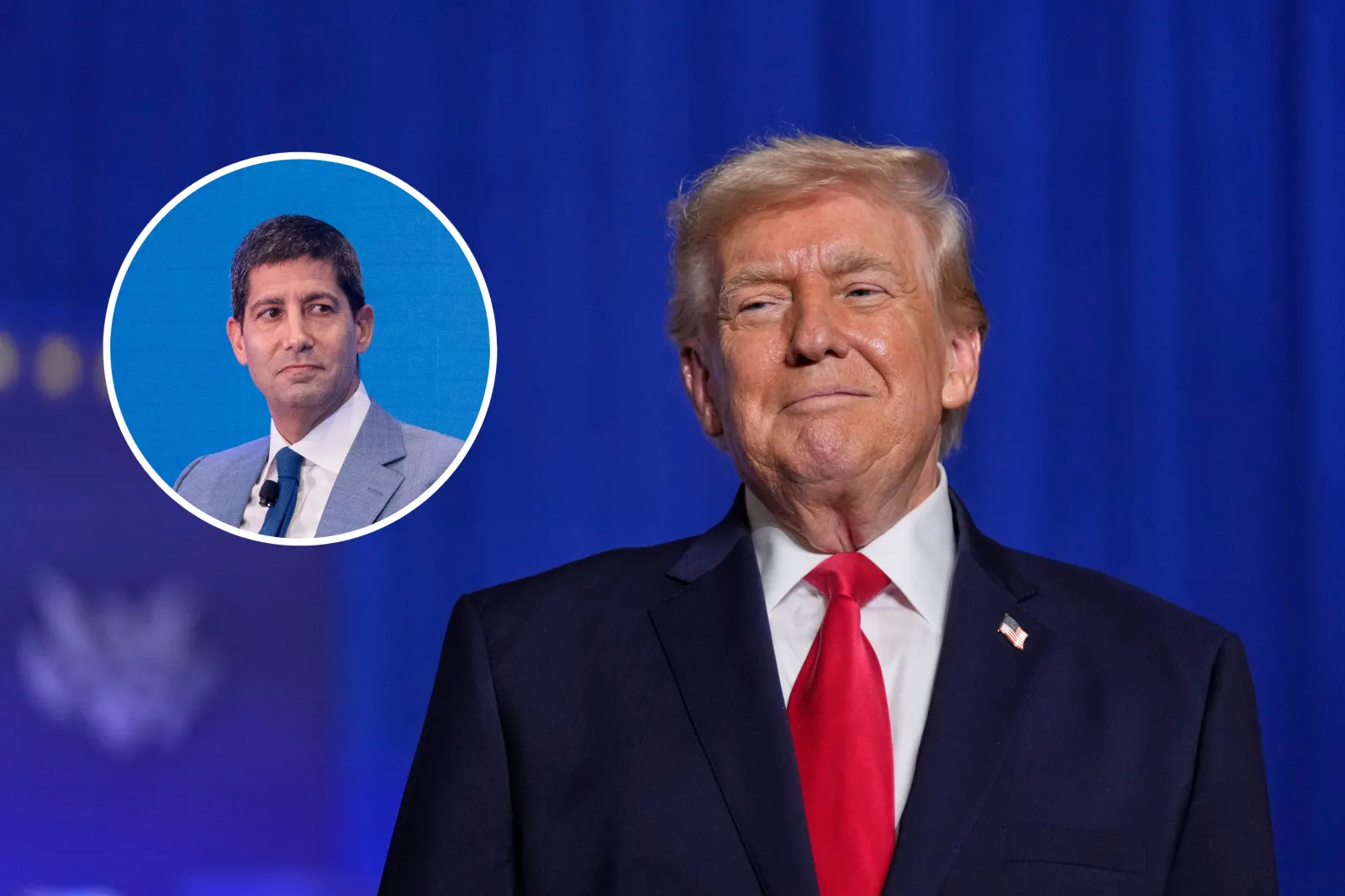
President Donald Trump has unveiled his pick to succeed Jerome Powell as chair of the Federal Reserve.
In a Truth Social post early on Friday morning, Trump announced that he would be nominating Kevin Warsh - a 55-year old former Fed governor and Wall Street veteran - as his choice to succeed the central bank's current chief, whose term ends in May.
"I have known Kevin for a long period of time, and have no doubt that he will go down as one of the GREAT Fed Chairmen, maybe the best," the president wrote. "On top of everything else, he is ‘central casting,’ and he will never let you down."
Read More on News
The hunt for Powell's replacement kicked off in earnest last September, with candidates emerging from both policymaking backgrounds and the private sector. But following a meeting with Trump at the White House on Thursday, and after informed sources told Bloomberg that the former Fed governor was a shoe-in, Warsh quickly ascended to the top of the pile on prediction markets like Polymarket and Kalshi.
Warsh has occasionally, like Trump, advocated for interest rate cuts amid periods of Fed caution, while being unafraid to criticize the central bank's current leadership. But experts say his record should assuage market fears of an overly dovish, potentially inflationary, pick to lead the central bank.
...
Past Fed Experience
In 2006 at the age of just 35, Warsh was serving as executive secretary to the National Economic Council (NEC) when President George W. Bush appointed him the youngest governor in the Federal Reserve's 112-year history.
During his five-year tenure, Warsh was instrumental in guiding Fed policy and supporting then-Chair Ben Bernanke's unprecedented attempts to prop up banks and credit markets in the aftermath of the financial crisis.
"It was a tumultuous time and so Kevin's been battle tested," form Fed governor Randall Kroszner told Bloomberg last July.
Warsh also became known for incorporating his prior private sector expertise into the policymaking role, and was described by The New York Times as the central bank's "chief liaison to Wall Street" following his resignation in 2011.
Since leaving the Fed, Warsh has held a number of academic and business roles, and currently serves as a lecturer at Stanford University's Graduate School of Business.
Warsh was widely considered a leading contender to succeed Janet Yellen as Fed chair in 2017, but Trump ultimately passed him over in favor of Powell. According to The New York Times, following Trump's victory in the 2024 election, he was also in the running to succeed Yellen as Treasury secretary.
Trump's eventual pick for the role, Scott Bessent, was tasked last year with putting together a selection of possible successors to Powell. In October, Bessent confirmed that he had whittled the choice down to Warsh, current Fed governors Christopher Waller and Michelle Bowman, NEC director Kevin Hassett, and BlackRock executive Rick Rieder.
Proximity to the President
While decidedly less pro-easing than some of the other names on Bessent's shortlist, Warsh's ideological proximity to Trump appears far greater than that of the central bank's current chairman.
In an interview with CNBC in July, Warsh said his former boss Bernanke was the last "really effective" leader of the Federal Reserve, but attributed this to his leadership during the "darkest days" of the financial crisis rather than his approach to interest rates.
Last year, Warsh emerged as a prominent advocate for monetary easing as the Fed elected at consecutive meetings to keep its target range steady. Warsh stood with Trump in calling for Powell to slash interest rates despite the central bank’s unease about rising prices, and doubted the inflationary impacts of Trump's tariffs or the deficit-increasing effects of his signature tax bill.
Warsh has also been unafraid to criticize the Fed's current leadership and the $2.5 billion renovations to its Washington, D.C. headquarters, which is at the center of the Justice Department's recently launched legal investigation into Powell. In an interview with Fox News, Warsh called the renovations "outrageous" and evidence that the central bank had "lost its way."
"I think what we need is regime change at the Fed, and that's not just about the chairman, it's about a range of people," Warsh told Maria Bartiromo. "It's about breaking some heads, because the way they've been doing business is not working."
But despite his agreement with the president on certain economic and political matters, experts have told Newsweek that Warsh possesses the requisite experience to lead the Fed, and that he exhibits less Trump-aligned views than some of the other candidates.
"I believe Warsh would benefit Europe and the global financial markets," said Ralph Luetticke, professor of Economics at the University of Tübingen in Germany. "He has experience with the Great Recession, when the Fed provided global liquidity."
"Good policy in a crisis is far more important than whether interest rates are 100 basis points lower," he added.
Matthias Meier, professor of Economics at the University of Mannheim, told Newsweek: "Kevin Warsh was traditionally seen as a hawk... That is a key distinguishing feature between him and Kevin Hassett."
He added that Warsh possesses "plenty of experience in monetary policy" thanks to his half-decade spent at the central bank. He said this "distinguishes him" from the private sector candidate Rieder, who has never held a government policymaking role.
"Between these three, Warsh is the least-disruptive candidate for financial markets," Meier said.
Also notable are his family connections to the current president: his wife, Jane Lauder, is the daughter of reported Trump confidant Ronald Lauder, a Republican donor and Estée Lauder heir.
Why Old Favorite Kevin Hassett Didn't Get Picked
In late 2025, Trump's longtime economic adviser was considered a runaway favorite for the role, with his odds on Polymarket reaching 85 percent in early December. This followed the president gesturing to Hassett during a meeting in the Oval Office, and sayin: "I guess a potential Fed chair is here too."
"I don't know, are we allowed to say that, potential?" Trump said. "He's a respected person that I can tell you. Thank you, Kevin."
Although Trump said Hassett would have made a "great chairman" on Friday morning, he explained that he was "doing such an outstanding job working with me and my team at the White House, that I just didn't want to let him go."
"As the expression goes, 'if you can't do better, don't try to fix it!'" Trump wrote. "Thank you Kevin for doing such a great job!"
Trump added that the other finalists—including Waller and Rieder—were interviewed and "would have been outstanding," and that each will have "a great and unlimited future with 'TRUMP.'"
How Much Power Will Warsh Hold?
The Federal Reserve chairman "is not almighty," Meier told Newsweek. The majority-voting system of the Federal Reserve's Open Market Committee, as well as the long terms of its governors, means the next chair will be limited in how much they can abide by any of Trump's calls for significant rate cuts.
In December, economist Mark Gertler also told Newsweek that the first-among-equals status of its chief effectively constrains what any new chairman can do, as does the economic consequences that would follow any easing.
"Any attempt to move rates lower for political purposes is likely to boost inflation, leading to a resounding negative reaction in financial markets," he said. "Beyond this, failing to control inflation would be considered a sign of failure, something a new Fed chairman would surely like to avoid."
"Overall, Warsh is an experienced and solid candidate for the Chair," Meier said. "Relative to past Fed nominations by President Trump, such as Judy Shelton, I expect the nomination of Warsh to face less resistance in [the] Senate."
Some lawmakers have already said they will oppose whoever Trump nominates to fill Powell's shoes due to the DOJ's new investigation. This will make his upcoming confirmation hearing a key test of whether contemporary fears about Fed independence will outweigh the appeal of accepting one of Trump's more moderate picks.
Update 1/30/26 9.20 a.m. ET: This article was updated with additional information.
View 0 Comments
Submit Correction
View Editorial & AI Guidelines