
...

By Giulia Carbonaro
Senior Reporter
0
Share
Newsweek is a Trust Project member
See more of our trusted coverage when you search.Prefer Newsweek on Googleto see more of our trusted coverage when you search.
The United States is producing more oil than any country in the world. Yet Americans are still paying sharply higher prices at the pump—and experts told Newsweek that more domestic drilling is unlikely to deliver quick relief.
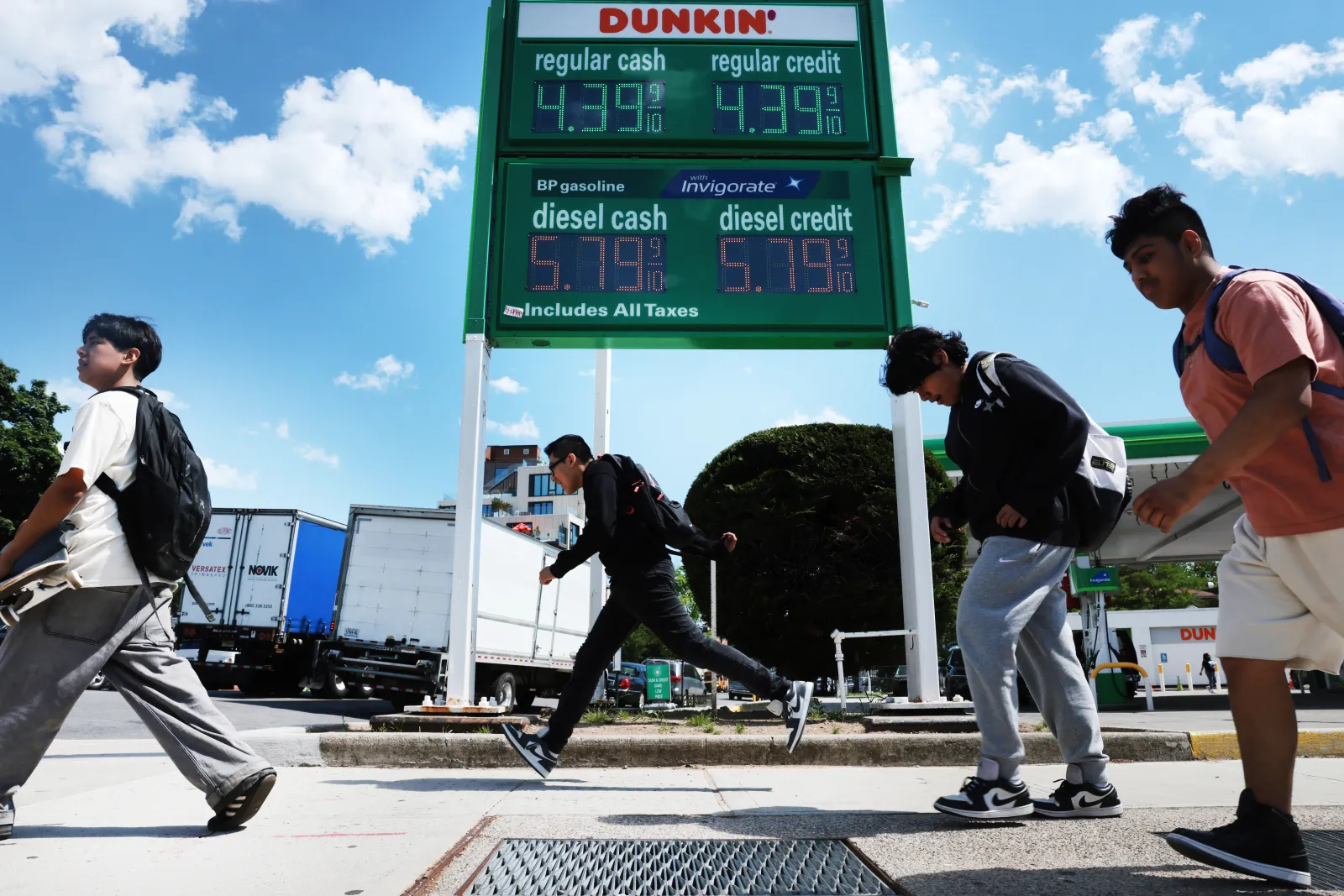
The national average price of gasoline stood at $4.24 per gallon on Thursday, up from $2.99 before the Iran war disrupted global energy markets. In California, drivers are paying nearly $6 a gallon, more than $1 higher than a year ago despite President Donald Trump's pledge to lower everyday costs. This is according to data by the American Automobile Association (AAA).
While the U.S. remains a global energy powerhouse, it cannot rapidly replace the roughly 20 million barrels of oil affected by disruptions around the Strait of Hormuz.
Read More on News
Analysts say bringing new production online takes months or even years, meaning higher oil output today would do little to ease fuel prices in the near term.
"Twenty million barrels of oil is being blocked via the Strait—the U.S. and global oil producers could not overcome that even if we had 10 years advance notice," Patrick De Haan, head of petroleum analysis at GasBuddy, told Newsweek.
Higher crude prices driven by supply disruptions in the Persian Gulf have pushed fuel costs higher worldwide. Even though U.S. oil production remains near record levels, industry analysts say domestic producers cannot simply flip a switch and flood the market with additional supply.
The Energy Information Administration (EIA) says oil domestic production might actually decline this year.
America Is Already Producing Near-Record Levels of Oil
The U.S. is already producing close to record amounts of crude oil, limiting how much additional supply can realistically come online in the near term.
According to the Energy Information Administration, U.S. crude production averaged just over 13.7 million barrels per day in March. That is well within the "125,000 barrels per day of the all-time highs hit late last year," Denton Cinquegrana, chief oil analyst at Oil Price Information Service (OPIS), a Dow Jones company, told Newsweek.
After weeks of pressure from the Trump administration to boost output, production is expected to have increased modestly since March. But analysts say the industry's response remains constrained by economics rather than politics.
...
Last month, some U.S. oil producers said they were increasing output, though the move appears grounded in their desire to capitalize on expectations that crude oil prices will remain high for the foreseeable future.
"More drilling has to make economic sense" for producers, Cinquegrana told Newsweek.
"Producers have been very disciplined over the past few years, a departure from early on in the shale revolution," the oil analyst said.
"At the end of the day, it comes down to economics. If the long-term price signals are there, then there is potential for more production. Not just doing it because the president says it," he added.
Crude oil futures are now hovering between $93 and $95 per barrel, according to Investing.com.
As Dan Pickering, chief investment officer for Houston-based Pickering Energy Partners, a financial services firm, told The New York Times: "Do you want to be the dumb guy that sees oil at $100, raises your budget 25 percent and then watches oil plummet?"
That caution reflects lessons learned during previous oil booms and busts. Producers have become increasingly reluctant to ramp up spending in response to short-term price spikes that may quickly reverse.
"It takes many months of elevated prices for companies to budget and/or allot more money to increasing drilling, which in turn then takes months to explore new wells, get data back," De Haan said.
"It takes time—U. S. companies can’t just raise capital for new drilling, explore and drill new wells, find oil and get oil to the market overnight," he added. "Rome wasn’t built in a day and U.S. oil production increases can take years to materialize."
This is the reason why, despite being given free rein by Trump’s "Drill, Baby, Drill" policy, U.S. oil companies have remained wary of increasing output over the past year.
Last month, Exxon Mobil and Chevron said they did not intend to drill much more oil this year than planned before the Iran war started.
"We feel like we are producing the maximum amount that we can," Exxon’s chief financial officer, Neil Hansen, said.
...
On the other hand, companies like Diamondback and shale driller Continental Resources said they were expanding drilling due to higher oil prices, as reported by the Financial Times.
"We had some room to do something better if prices improved. And for our company that is sizable and we think it is fitting for where we are today," Continental owner and Trump donor Harold Hamm told the newspaper.
"We don’t expect prices to go back to where they were prior to the Iran war."
No Easy Or Quick Fix—Not Even Reopening the Strait
The long timeline within which oil companies work is not only a disincentive to drilling more oil right now for producers—but it also means that consumers would not see the relief they urgently need straight away
"To turn on more production would take time. There would not be an immediate impact on gasoline prices," Cinquegrana said.
"Once production ‘hits the streets,’ it will help balance global markets and relieve price pressures."
The reopening of the Strait of Hormuz is the only thing that is bringing gas prices in the U.S. down—and, even then, it is not going to be a quick fix.
Analysts told Newsweek that gas prices will not return to pre-Iran war level, even if the passage through the strait was safely reestablished today.
"Normal flows of oil through the Strait of Hormuz would likely be step one. But even if the strait reopens, it will take some time to normalize," Cinquegrana said.
"If the strait were to reopen today, it would probably be early June until ships started going in and out," De Haan said in a recent interview with FactCheck.org.
"It could be until July for some of those cargoes to start getting to the market."
View 0 Comments
Submit Correction
View Editorial & AI Guidelines