...

By Lucy Notarantonio
Senior Reporter
0
Share
Newsweek is a Trust Project member
See more of our trusted coverage when you search.Prefer Newsweek on Googleto see more of our trusted coverage when you search.
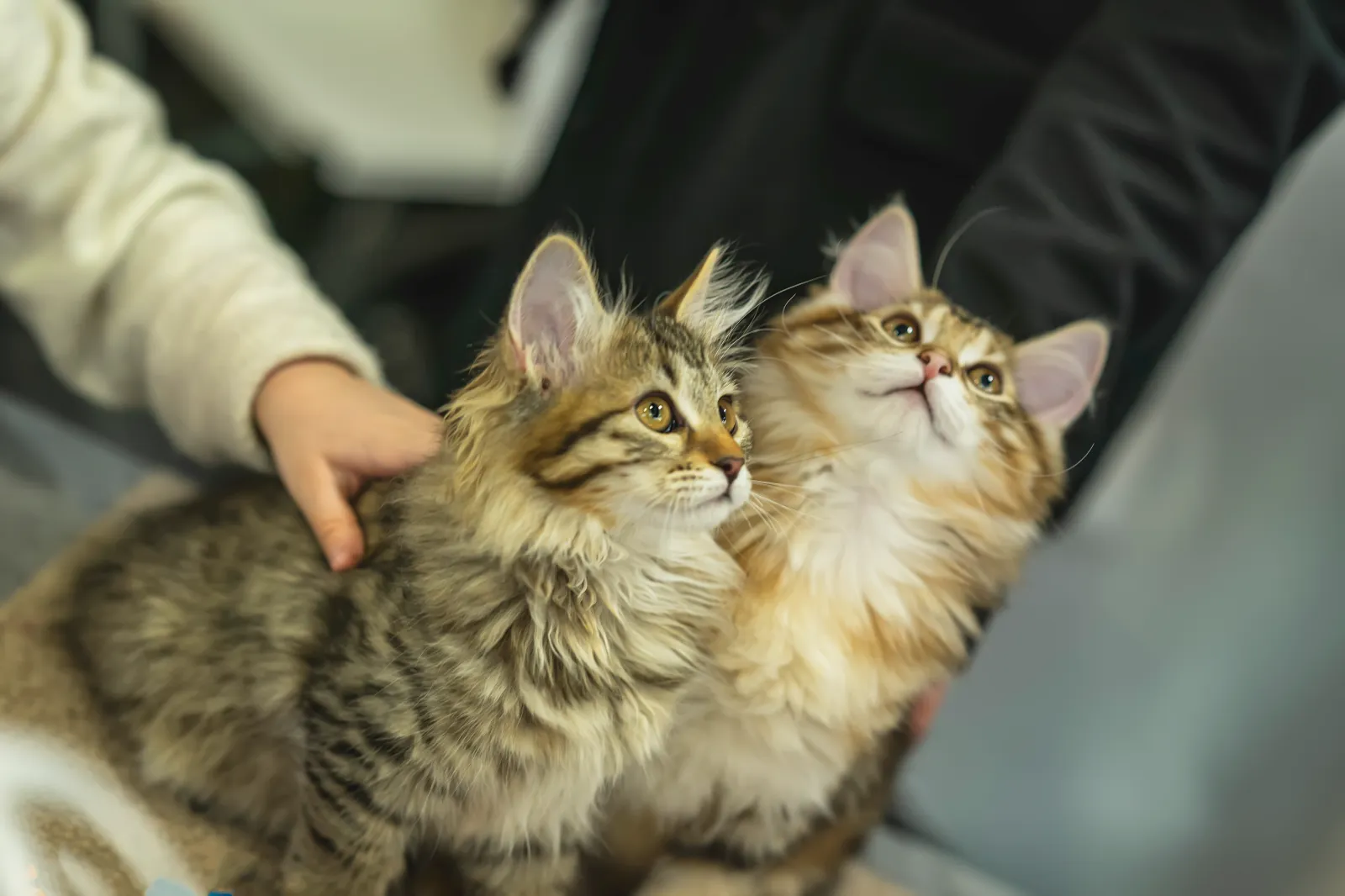
A woman who adopted two tabby kittens has been left stunned as the siblings grow at different rates with one remaining petite while the other seems on a fast track to adulthood.
Their owner Taylor (@taylorrryan3) from Toronto, Canada shared the size gap on TikTok where the clip went viral earning over 442,000 views. In the November 25 video Taylor holds Mango up to the camera first, then she holds her sister Mango in the arm.
Text layered over the clip explains that the kittens are the same age and from the same litter, but Salsa is like a “giant” while Mango has “stayed a tiny baby," racking up over 73,000 likes.
Read More on Pets
Viewers flooded the comments with reactions and theories with several saying they had seen the same thing in their pets and sharing photos of mismatched littermates.
“Just like human siblings can be very different, the bigger one has a main coon look about her [though]” wrote one user.
Another joked “I think you need to put the left one in the sun, it needs a little more growing” while a third suggested “They could have different fathers.”
...
That scenario is possible as explained in a recent Live Science report. Female cats are induced ovulators meaning they don’t release eggs until after mating. This boosts the odds of fertilization but it also opens the door to something humans don’t experience: a female can release several eggs over a short window and if she mates with more than one male during that time different eggs can be fertilized by different fathers.
As a result kittens in the same litter may not all share the same dad. Some siblings may be only about 25 percent genetically related. With that much extra genetic variation it’s no surprise their appearances can diverge dramatically.
This process is known as heteropaternal superfecundation. It’s relatively common in animals — dogs, sheep, and cows can produce multi-father litters — and while it’s extremely rare, it has been documented in humans as well.
A 2020 report from Cambridge University Press drew on a database from 1992 whereby three HS cases were found in a parentage test database of 39,000 records. Among fraternal twins whose parents were involved in paternity lawsuits, about 2.4 percent were found to have different fathers. The twin-birth pattern in this group appeared similar to that of the general population, but the researchers cautioned that the percentage may not apply to other populations and shouldn’t be treated as a universal rate.
Update 11/28/25, 5:50 a.m. ET: This article has been updated to remove the video embed as requested by the creator.
View 0 Comments
Submit Correction
View Editorial & AI Guidelines