10
Loading video...

By Alyce Collins
Senior Reporter
0
Share
Newsweek is a Trust Project member
See more of our trusted coverage when you search.Prefer Newsweek on Googleto see more of our trusted coverage when you search.
Another day, another Y2K trend makes a comeback. This time, though, we are not just talking about bucket hats or being brat, but rather the "Y2K skinny" trend that has led one millennial woman to call it out for being harmful to young people.
When Kaila Uli was growing up in the 1990s and early 2000s, there was so much to love about that era. From the creative fashion to the excitement of a new millennium, it was truly an iconic time.
But it was far from perfect, and for Uli, of Los Angeles, California, one of the most "brutal" aspects of Y2K were the body standards. She told Newsweek that the "pressure to lose weight was constant," because of how much people idolized being thin.
Read More on On the Internet
That is why Uli, now 33, was incredibly dismayed when she saw that the latest Gen Z trend rolling off the social-media conveyor belt was the Y2K skinny aesthetic.
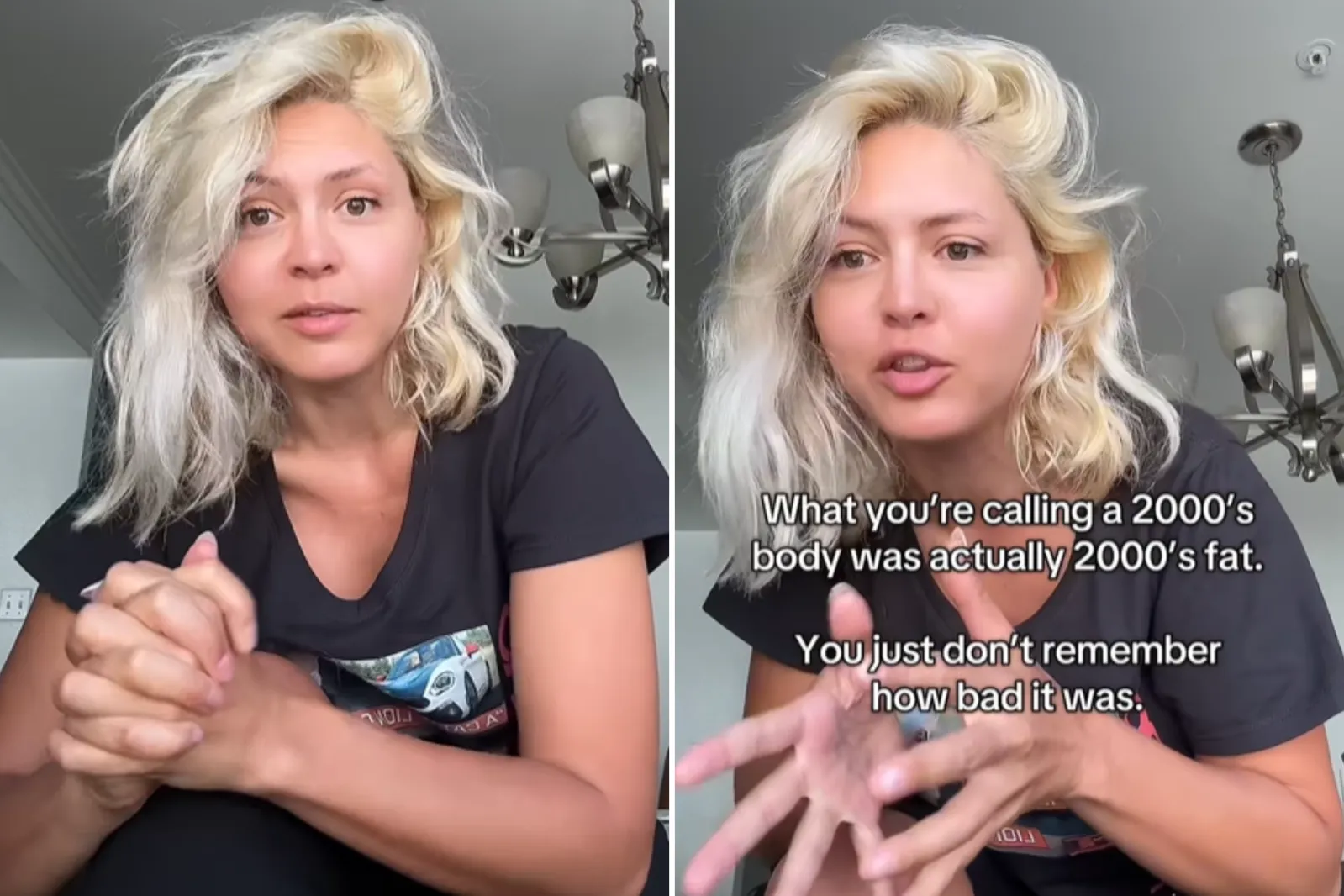
"My first thought was, 'No, we can't go back here,'" Uli said. "These girls don't understand how absolutely dangerous trying to achieve a Y2K body was. People starved themselves, used drugs, went to the hospital, did extreme diets like the lemon cayenne diet, and went to absolute extremes to try to look emaciated."
...
In the 1990s and early 2000s, looking thin and waiflike was a currency. It put people on a pedestal because they had the "It body type." Tabloids would print pictures of celebrities wearing tiny crop tops that showed off their abs; magazines would tout the latest fad diets that promised to help you shed 20 pounds in a week; and shows like America's Next Top Model were all the rage.
Who could possibly forget British supermodel Kate Moss's comments about how "nothing tastes as good as skinny feels" during a 2009 interview with WWD? The model was accused of encouraging eating disorders, and she was heavily criticized for it.
As a model herself during the 2000s, Uli faced endless battles with her body image and recalls how many times she was sent home from castings "for being fat."
Y2K skinny isn't just about being thin, but it is harking back to a time when "heroin chic" was used in a complimentary way. It was a time that swapped out any semblance of body positivity for being body conscious instead.
Uli continued: "I think there's a misconception that being just a bit thinner than 'normal' is Y2K skinny. And, on one hand, I'm happy about that because it means we did a good job changing the body standards to be healthier.
"I started dieting at 14 once I saw photos of Jessica Simpson being called obese. There was a day where I took a meat cleaver and began trying to cleave my inner thigh fat off. I was unsuccessful because the knife was dull (thank God), but it triggered a spiral into dieting and eating disorders."
The Agency for Healthcare Research and Quality said that eating disorder-related hospitalizations increased 18 percent from 1999 to 2006. Anorexia nervosa hospitalizations went up by 17 percent, and all other eating-disorder hospitalizations, excluding bulimia, increased by 38 percent.
It is thought that 9 percent of the U.S. population, or 28.8 million Americans, will have an eating disorder in their lifetime. Additionally, between 6 and 8 percent of adolescents have an eating disorder, as suggested by the Eating Recovery Center.

...
Things started to change in the 2010s, as we saw a major shift toward body positivity and inclusivity. Fashion brands started catering to all body types, and size-zero models were no longer the be-all-and-end-all. It felt like the tide was turning, and people were accepting their natural figures for all their beauty.
Then, the drug Ozempic and Y2K skinny made a resurgence.
Uli can't bear the thought of Gen Z going through what so many millennials experienced in the 2000s. She called out the Y2K skinny trend in an Instagram video (@kailauli) by saying they "don't remember how bad it was" back then.
The clip went viral with over 2.4 million views and more than 111,000 likes on Instagram at the time of writing.
Indeed, Uli told Newsweek that she has heard from countless women who related to her video and shared their own devastating experiences of that time.
"I've had both anorexia and bulimia, and I'm blessed to be recovered, but not everyone is. I don't want to see a resurgence of women destroying their bodies to get thin," Uli said.
With over 2,100 comments on her viral Instagram video, many internet users praised Uli for speaking out against this dangerous trend.
One comment reads: "Thank you! I'm glad someone said it because they're trying to take us back there."
Another Instagram user wrote: "I look back in my old modeling photos in shock of how skinny I was but was told to lose weight …"
A third person added: "Raise your hand if you have been victimized by y2k standards."
Is there a health issue that's worrying you? Let us know via health@newsweek.com. We can ask experts for advice, and your story could be featured on Newsweek.
View 0 Comments
Submit Correction
View Editorial & AI Guidelines