10
Loading video...

By Jack Beresford
Senior Reporter
0
Share
Newsweek is a Trust Project member
See more of our trusted coverage when you search.Prefer Newsweek on Googleto see more of our trusted coverage when you search.
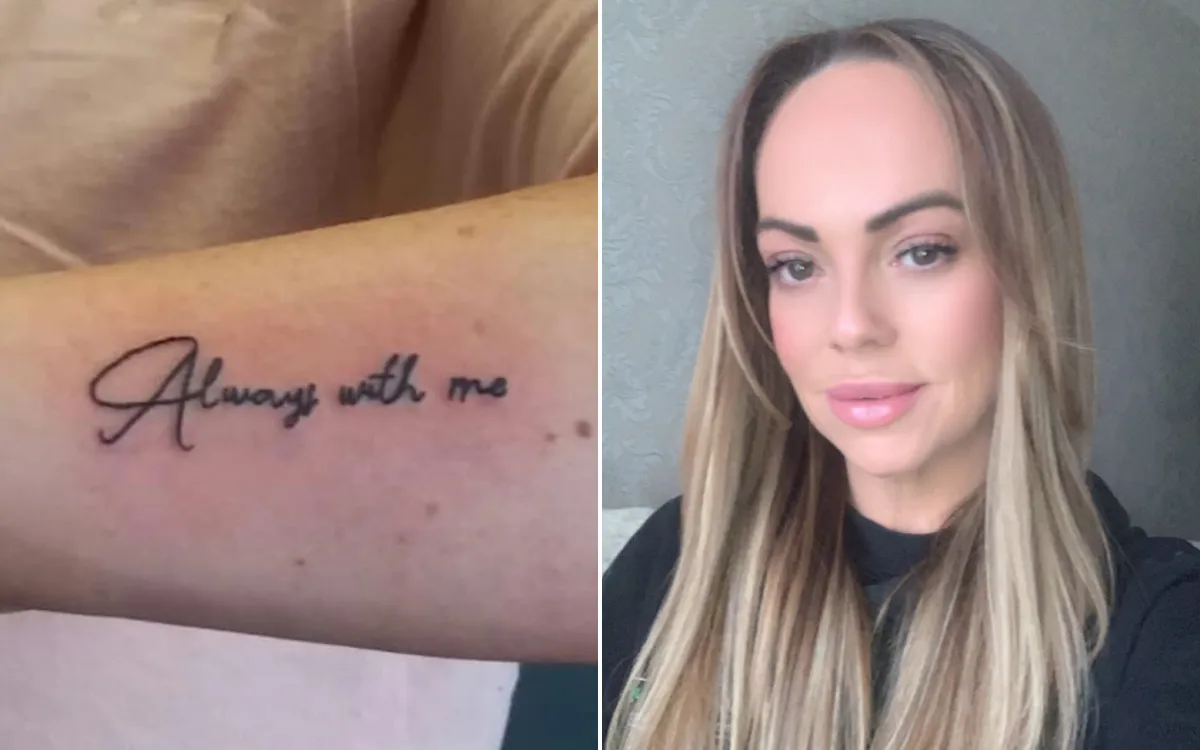
A woman who tattooed her late father’s ashes into her arm was alarmed when something started going wrong with the inking.
Tammie Lunt from Liverpool, Merseyside, in England, had been eager to pay tribute to her dad following his death in 2018 by having the words “Always with me” tattooed on her arm. “My dad was covered in sentimental tattoos of things like his kids’ names,” Lunt told Newsweek.
“He fought so many illnesses and challenges in his last few years before he passed away. Dad was my hero. He worked hard for us all to make sure we got what we needed. I wanted to do it as a symbol of my love to him, a mark of honor for everything he sacrificed.”
Read More on Family & Parenting
Lunt didn’t want an ordinary tattoo though. She wanted her tattoo to be made with ink that had been blended with her father’s ashes. It took a little convincing though “the tattoo artist was a bit hesitant at first,” Lunt said. “But after she did some research and soon knew what to do. I dropped the ashes off at the tattoo studio and the next day I went in.”
Everyone mourns the loss of a loved one in their own unique way. Though Lunt’s tattoo tribute may have been more unusual than most, it's not uncommon for objects to take on newfound significance in the wake of someone’s passing.
Writing for Leeds University, Laura King, a professor of collaborative history, said: “Whether these are created specifically in order to remember or something incidental that becomes significant because of a death, things are special in processes of remembrance.”
She continued: “Objects have often been created in response to a death–think about the mourning brooches of the Victorians to ceramics and vinyl records made from cremation ashes today.” Lunt’s tattoo represented an extension of this concept and was something she wore with pride, knowing a small part of her dad was with her.
But it would not last. A few years later Lunt noticed “a tiny hard bit of skin on my hand that was getting a bit irritated.” When she presented it to her doctor, they were confused, but concluded that whatever was happening was not life threatening. “I was just told to go home, keep an eye on it and if it gets worse contact them again,” Lunt said. It was only later that she realized the likely cause.
“I had completely forgotten about what the tattoo artist had said to me that the ashes can be rejected from my body,” Lunt said. “I contacted her and spoke about it. She more or less confirmed it was probably the ashes being ejected from my body. I laughed and said my dad has probably had enough of me now.”
Though Lunt was able to joke about it, what was happening to her soon took on a profound meaning. “I took a picture of the bit of skin on my hand and when I zoomed in it looked like a small heart,” she said. “At that moment I just thought to myself ‘he’s telling me to let him go now. I need to stop grieving so hard for him, he’s in a better, healthier place. I need to let him go.’”
Lunt still has that little bit of skin on her arm. She’s not ready to say goodbye just yet. “It’s not painful or anything like that, it feels like a bit of gristle in my hand, it’s still in there for now,” she said.
In a video posted to TikTok under the handle @tambinayano82, Lunt revealed what had happened. It's been watched over 370,000 times with Lunt stunned at the "unreal" response to her post. "I think people relate to this type of thing everyone has lost someone close to them and although there has been a couple of negative comments the others have been about relating to me and that they’ve also had ashes put into their tattoos," she said.
Though Lunt's tattoo tribute may not have worked out as intended, it has helped bring her some sense of closure. “It’s bitter sweet,” she said. ”But I don’t regret it. I’d get it done again … and again.”
...
View 0 Comments
Submit Correction
View Editorial & AI Guidelines