10
Loading video...

By Jack Beresford
Senior Reporter
0
Share
Newsweek is a Trust Project member
See more of our trusted coverage when you search.Prefer Newsweek on Googleto see more of our trusted coverage when you search.
When Sabrina Castaldi moved in with her boyfriend, it was supposed to be the start of an exciting new chapter in her life. But months later, troubling health issues began.
Castaldi had a happy childhood. "I am from New Jersey and grew up in a small town," she told Newsweek. "Your typical Catholic Italian American. We always did our Sunday dinners at Grandma's."
She describes herself as a sociable and active child who participated in dance, gymnastics, and cheerleading. However, she was dogged by health issues. As a child, Castaldi says she was diagnosed with synovitis, a severe type of inflammation that affects the soft tissue lining around the joints. She also endured difficulties with her hips, knees, and legs that meant she was often hospitalized or ordered to take bed rest.
Read More on Health
"At the time, the doctors had no answers for why I was in such bad chronic pain," Castaldi said.
As she got older, the pain spread to her hands, arms, and elbows. By high school, Castaldi said she was experiencing digestive problems, fatigue, dizziness, headaches, and heart palpitations alongside the continued limb pain.
There were fainting episodes, while Castaldi said she also struggled with postural orthostatic tachycardia syndrome (POTS), a condition that affects the nervous system and blood flow, causing a person's heart rate to rise rapidly when standing up from a sitting or lying position.
"It was honestly a scary time in my life. I actually thought I was dying and no one wanted to tell me," Castaldi said. "There was one time I fainted in the shower, had a seizure, and had to be taken to the hospital by ambulance when I was 15."
Her symptoms eventually forced her to quit cheerleading.
"The pain in my legs combined with the fainting and brain fog led me to stop cheerleading," she said.
Castaldi said doctors considered several possible diagnoses, including diabetes and lupus, but she never received definitive answers. At age 22, after developing severe acne alongside her existing symptoms, she began researching alternative wellness practices.
"This is where I drew the line," she said. "I was so over being sick."
Castaldi spent years researching the impact of herbal remedies and said that, in her experience, they helped her manage her symptoms more effectively.
However, it wasn't until she moved into her first apartment at age 24 that Castaldi started to suspect she had found the potential source of her health issues. Suddenly, her symptoms flared up worse than ever. She said she experienced additional issues, including breathing problems, anxiety, and panic attacks.
"My body was falling apart and mentally I was losing it," she said.
Castaldi can still remember the moment "a light bulb clicked" when a friend suggested mold exposure could be contributing to her symptoms.
Scientific research has found that living in damp or moldy buildings is associated with higher rates of respiratory symptoms, allergies, and asthma. A major World Health Organization review concluded that the clearest health effects of indoor mold exposure are increased rates of respiratory symptoms, allergies, and asthma, while experts say evidence for some broader health claims remains less certain.
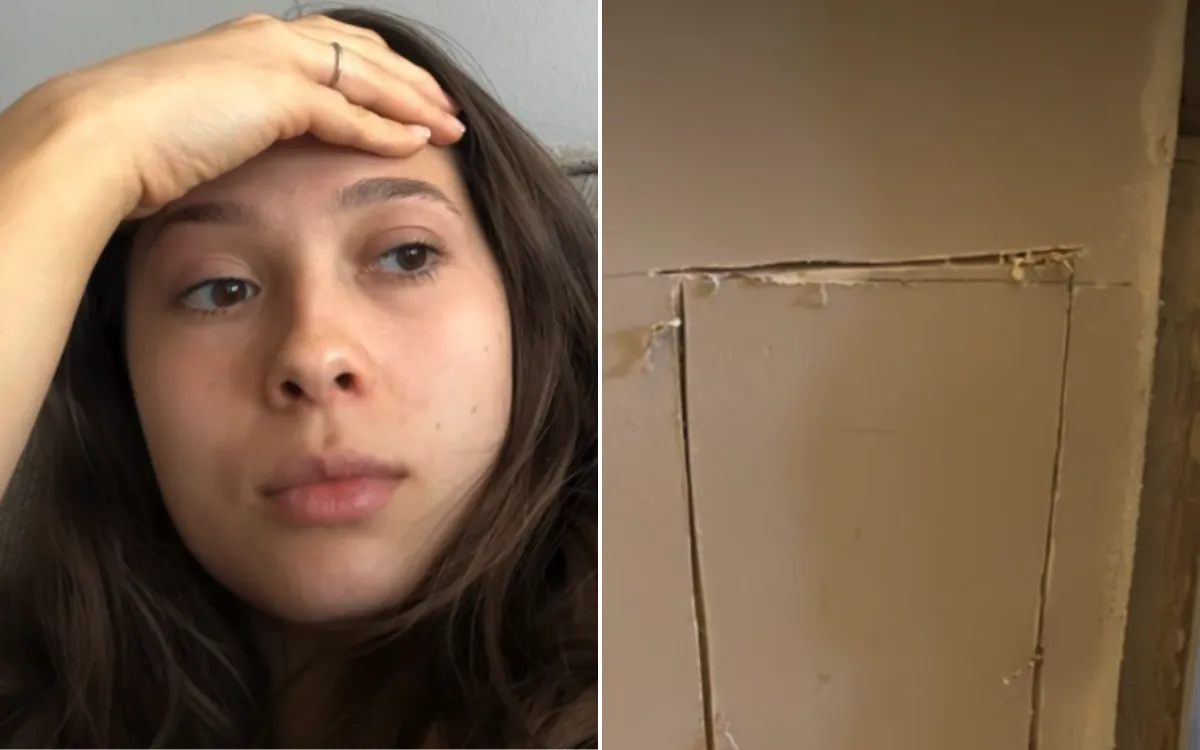
Castaldi's new apartment had water damage and leaks. There was more, though. Looking back, she realized this had been an ongoing problem.
...
"My childhood house was not a 'moldy home,' but there was often water leaking into my bedroom ceiling," she said. "Moving into my first apartment made me so sick because it was infested with mold."
Castaldi moved out of the property. Within months, she was feeling better again and, soon enough, celebrating the start of a new chapter living with her boyfriend. After seven months living together, however, she began to feel dizzy again.
After further testing and investigation, she discovered the source: black mold behind a bathroom mirror.
She said testing again indicated mold exposure, and further investigation revealed black mold behind a bathroom wall caused by a leak. She took action to have the mold removed. Once again, her symptoms dissipated.
Fast forward to today, and Castaldi is happy and healthy, living in a mold-free home she purchased with her now-fiancé.
"I am so grateful to have discovered mold poisoning and how it can cause hundreds of health issues," she said.
She now hopes her story raises awareness about the potential pitfalls of mold exposure.
"The thing with mold illness is it can always come back if you're exposed again," Castaldi said.
Contact Newsweek editors on this story: Rebecca Flood and Sam Wilson.
View 0 Comments
Submit Correction
View Editorial & AI Guidelines