...

By Isabel van Brugen
News Reporter
0
Share
Newsweek is a Trust Project member
See more of our trusted coverage when you search.Prefer Newsweek on Googleto see more of our trusted coverage when you search.
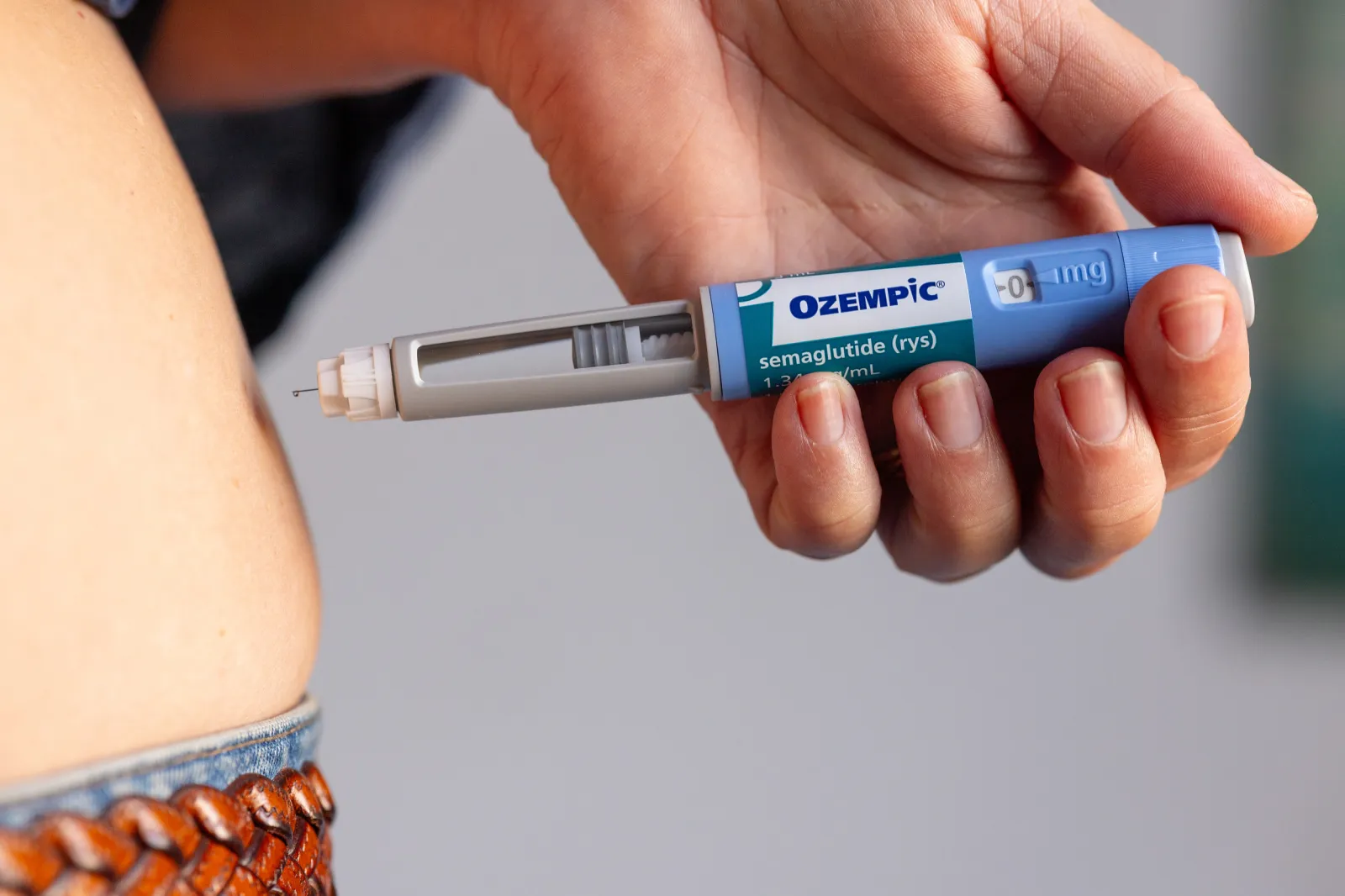
Women taking popular weight-loss drugs have been urged to use effective contraception while taking the medication amid reports of a so-called "Ozempic babies" phenomenon.
The advice was issued by the United Kingdom's Medicines and Healthcare products Regulatory Agency (MHRA), an executive agency of the Department of Health and Social Care, on Thursday.
Newsweek reached out to the U.S. Department of Health and Human Services for comment via email.
Read More on U.S.
Why It Matters
Demand for weight-loss drugs, including GLP-1 medications such as Ozempic, Wegovy, and Mounjaro, has surged in the United States. In May 2024, a KFF Health Tracking Poll found that approximately 6 percent of American adults—about 15 million people—were using GLP-1 agonists such as Ozempic, either for diabetes treatment or weight loss.
Some experts have cautioned that women should use effective contraception while taking these medications amid reports that they may be linked to an increase in unexpected pregnancies, The Guardian reported last May.
...
What To Know
The MHRA issued its alert after receiving 40 reports related to pregnancies while using "GLP-1 medicines," which are known by the brand names Ozempic, Mounjaro, Wegovy, Saxenda, and Victoza.
Ozempic and Wegovy contain semaglutide, which mimics the GLP-1 hormone to increase insulin, slow digestion, and suppress appetite. Mounjaro contains tirzepatide, which acts on an additional hormone related to blood sugar and appetite control.
The MHRA warned that Mounjaro may reduce the effectiveness of oral contraceptives in people who are overweight. It received 26 pregnancy-related reports for Mounjaro alone.
"Therefore, those taking Mounjaro who are overweight and are using an oral form of contraception are advised to also use a non-oral form of contraception," the agency said. "This only applies to those taking Mounjaro and is especially important for the four weeks after starting Mounjaro and after any dose increase."
Hundreds of women have shared personal accounts of unplanned pregnancies while using these medications in online groups, including the Facebook group "I got pregnant on Ozempic."
"My ozempic baby...I see so many posts about ozempic and asking for "stories or side effects," but I never see anyone warning about pregnancy... lol," one woman shared on Facebook.
"If you don't know, I got pregnant on ozempic and so many other women have too..I was on ozempic for 6 weeks & found out I was pregnant. I was so scared, google had me frightened I would miscarry because of the ozempic. I then came across a group called 'I got pregnant on ozempic'. I started reading all of these stories about women fighting infertility and getting pregnant on ozempic."
The Food and Drug Administration has not yet issued similar advisories in the United States.
What People Are Saying
MHRA Chief Safety Officer Dr. Alison Cave said: "Skinny jabs are medicines licensed to treat specific medical conditions and should not be used as aesthetic or cosmetic treatments. They are not a quick fix to lose weight, and have not been assessed to be safe when used in this way.
"Our guidance offers patients a 'one stop shop' for our up-to-date advice on how to use these powerful medicines safely.
"This guidance should not be used as a substitute to reading the patient information leaflet or having a conversation with a healthcare professional as part of the prescribing process."
**Dr. Ilana Ressler, a reproductive endocrinologist at Illume Fertility, told Interesting Engineering on May 22: "**There is this phenomenon of Ozempic babies...really what I think what's happening is women who may not have been ovulating before with the improvements that the medication is bringing on, that might be helping them to ovulate more regularly and they might be more likely to conceive while on the medication than not—so it is recommended to avoid pregnancy while taking the medication."
Dr. Zuri A. Murrell, in a video on X last year: "There is nothing magical about the medicine that's in Ozempic that helps you get pregnant. But what it does is that a lot of times, when people can't, it's because of a hormone weight imbalance.
"And so, when you lose weight, and sometimes when you lose weight rapidly, the hormones and the new you aren't in concert. Or they really are in concert, and guess what can happen, pregnancy.
"So, it's not the Ozempic itself, it is actually the balancing out of your hormones. That means that you've lost fat, and that the body actually for you is working like it should. So just remember, Ozempic is not something that somebody takes and 'I'm pregnant.' What it does do is cause your body and hormone level to be more in sync and more likely that you can."
What Happens Next
It remains unclear whether the FDA will follow the MHRA's lead in issuing similar warnings or guidance on contraception.
View 0 Comments
Submit Correction
View Editorial & AI Guidelines