...

By Hugh Cameron
Reporter
0
Share
Newsweek is a Trust Project member
See more of our trusted coverage when you search.Prefer Newsweek on Googleto see more of our trusted coverage when you search.
Ticket prices for the 2026 FIFA World Cup Final are plummeting only days out from the five-week tournament's showpiece event.
According to figures from the price and inventory tracking website TicketData.com, the average get-in cost for the July 19 final has dropped by 28 percent over the past week and by 19 percent in the past three days across resale platforms such as SeatGeek and StubHub.
As of Friday morning, fans could attend the match for $7,149 per seat, down from a recent peak of $12,200 on June 22.
Read More on News
The past week has seen prices decline for all the remaining games at the 2026 tournament. Seats at the quarterfinal between Norway and England on Saturday have fallen by 46 percent, while those to the remaining quarter- and semi-final matches—for which France is so far the only confirmed participant—have all likewise dropped by roughly 50 percent.
Newsweek reached out to FIFA via email on Friday morning for comment.

...
Why Are Ticket Prices Falling?
Supply and demand have been key focuses during this year’s World Cup, with ticket availability fluctuating and prices—across resale platforms and FIFA’s website—undergoing steady increases as well as several sharp drops.
“FIFA’s pricing strategy has been hit and miss,” said Stephen Shapiro, a professor of Sport and Entertainment Management at the University of South Carolina.
“It is difficult to project demand for an event like the World Cup that moves from location to location every four years. With the increase to 48 teams, this becomes even more difficult to forecast,” he told Newsweek. “Additionally, the U.S. has a more vibrant secondary ticket market, allowing access to brokers and speculators who are going to dictate ticket prices.”
...
Early on, experts blamed certain drops on underwhelming interest in the competition—fueled by the ticket prices themselves, which are significantly higher than during past competitions–revealed by the “dynamic pricing” model employed at this year’s tournament.
This was backed by reports of under-booked hotels ahead of the competition beginning in June, as well as empty seats at some opening games which contradicted FIFA’s assurances regarding record demand and near-capacity crowds.
"Many brokers and speculators purchased (or had access to) initial ticket offerings and priced tickets on the extreme high end due to expected demand for this World Cup," said Shapiro. "These were aspirational prices but now ticket brokers need to sell inventory."
In terms of digital viewership and in-person attendance—due in part to the expanded 48-team format—FIFA has said that the 2026 competition continues to break records.
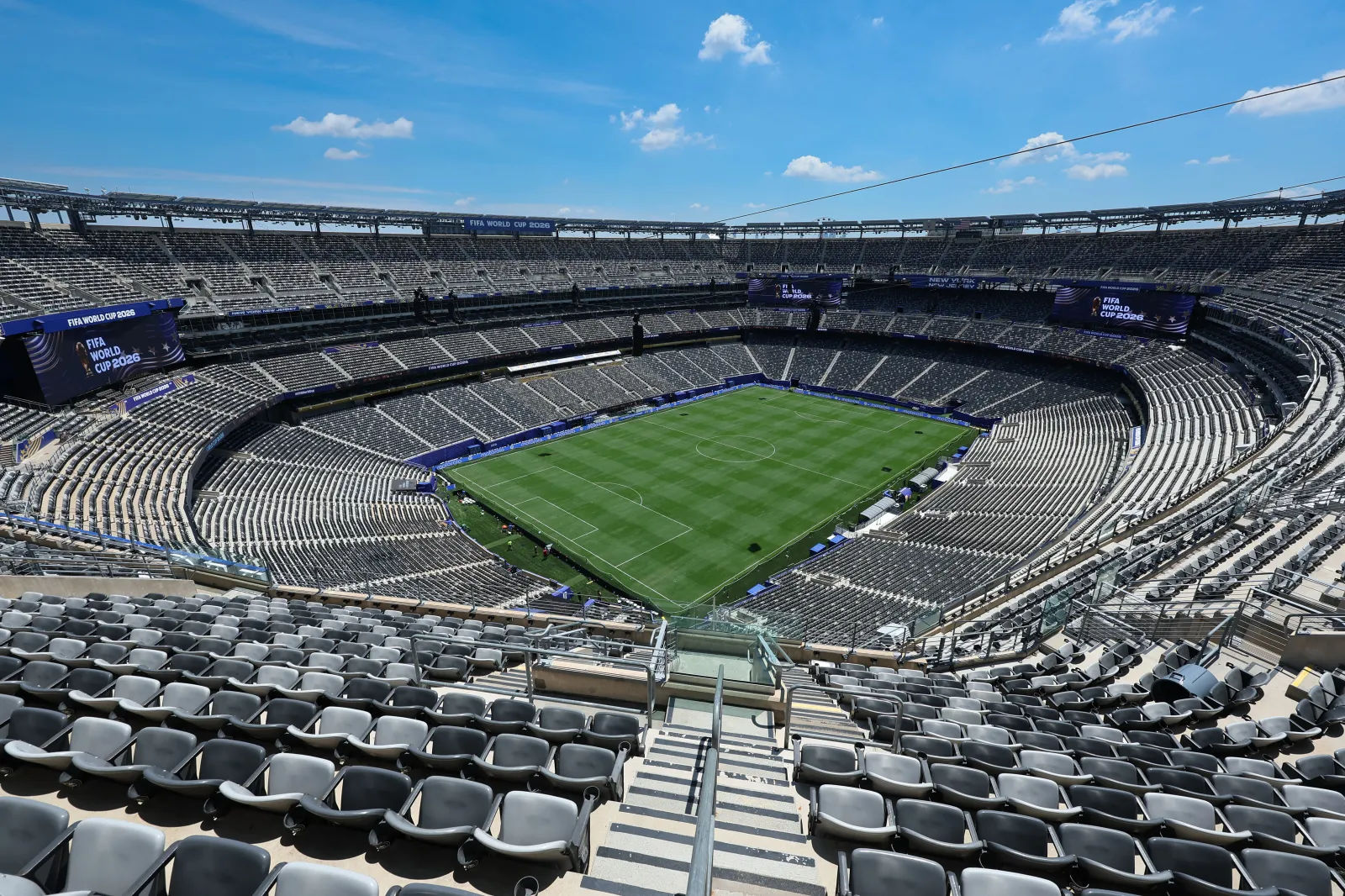
But in addition to falling resale prices, there remain hundreds of tickets still available for the July 19 final at MetLife Stadium. Newsweek calculated that there were 1,366 seats still available on FIFA’s main ticket terminal as of Friday morning, with prices ranging from $7,380 to $32,970. For reference, MetLife Stadium has an official World Cup capacity of 80,663.

...
Spare Seats and Falling Prices for the July 19 Final?
Supply and demand are in this case connected, according to Keith Pagello, founder of TicketData.com, who told Newsweek that a sharp price drop coincided with FIFA releasing an additional 1,500 tickets to the final.
“Most were priced at $7,380 each, which was about $1.5K below the lowest prices on resale sites at the time, which brought the broader market down,” he said.
Prices had been trending down before the latest release, Pagello notes, as well as for much of the knockout stage—which he described as a “very different animal” to the group-stage in terms of demand and the ability of fans to plan and save months in advance.

...
“There are only so many people who can book an international flight on three-four days’ notice and also spend thousands of dollars on a ticket,” he said. “So the knockout-stage buyer pool consists of a greater share of domestic fans and fewer international travelers.”
And the elimination of some of the more big-ticket teams—such as the hosts Canada, Mexico and the U.S.—has also “definitely helped accelerate the price declines,” he said, as many knockout-stage matches had, before their actual participants were revealed, been priced around a “best-case scenario” that never materialized.
“The final will probably be one of the most watched sporting events ever and the get in prices will most likely be higher than we have seen for any other sporting event,” said Shapiro, “just not as high as FIFA and brokers on the resale market priced those tickets to begin with.”
As for what could prove the most profitable outcome for organizers, Pagello said that an England-France fixture would “likely be the strongest possible matchup from a ticket-demand perspective.”
View 0 Comments
Submit Correction
View Editorial & AI Guidelines