10
Loading video...

By Sam Stevenson
Associate News Editor
0
Share
Newsweek is a Trust Project member
See more of our trusted coverage when you search.Prefer Newsweek on Googleto see more of our trusted coverage when you search.
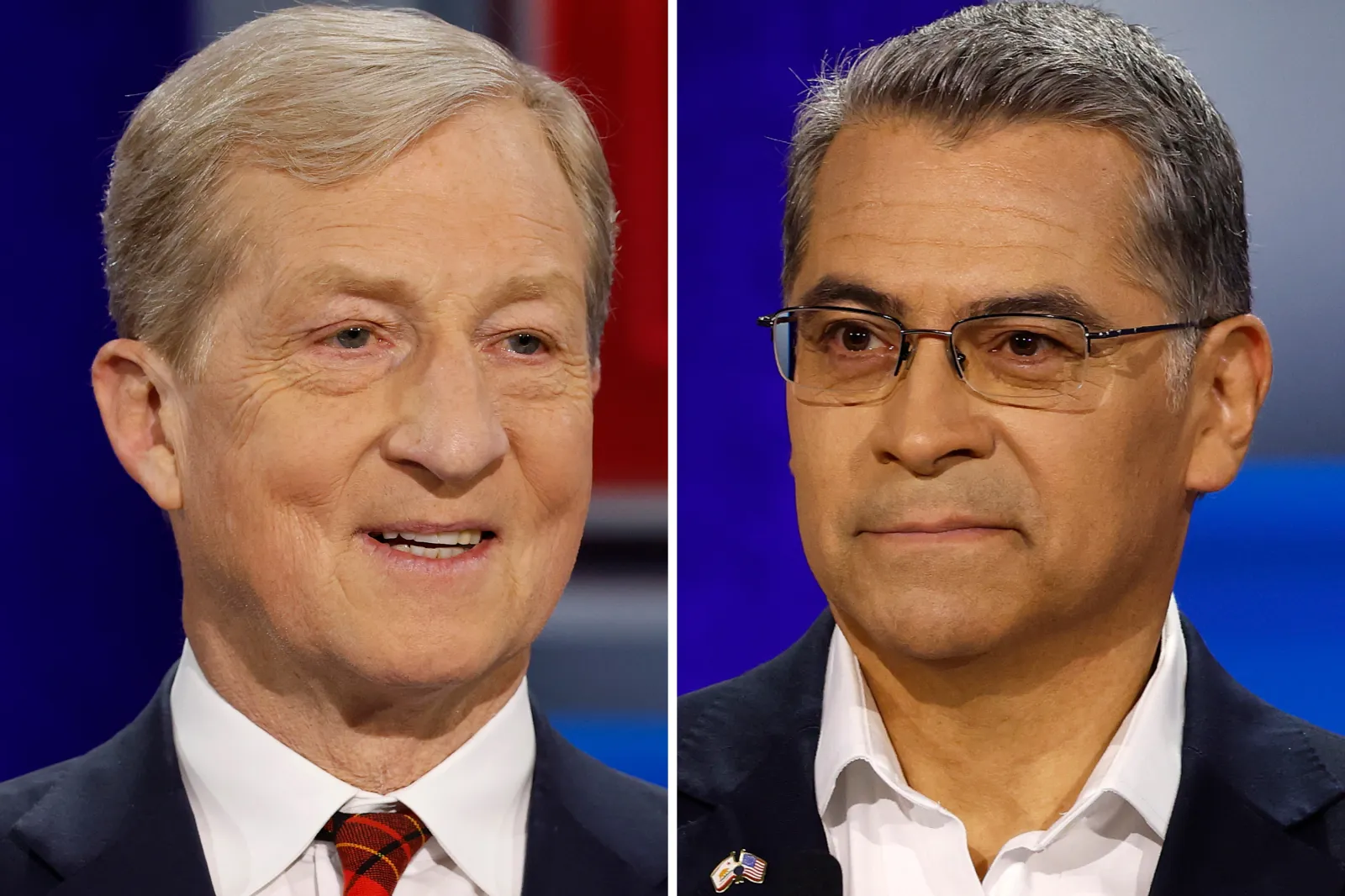
Former Democratic Health Secretary Xavier Becerra remains the clear favorite to win California’s governorship after the final primary debate on May 14, with prediction markets giving him roughly a 49-51 percent chance ahead of billionaire Democratic candidate Tom Steyer at around 32-35 percent.
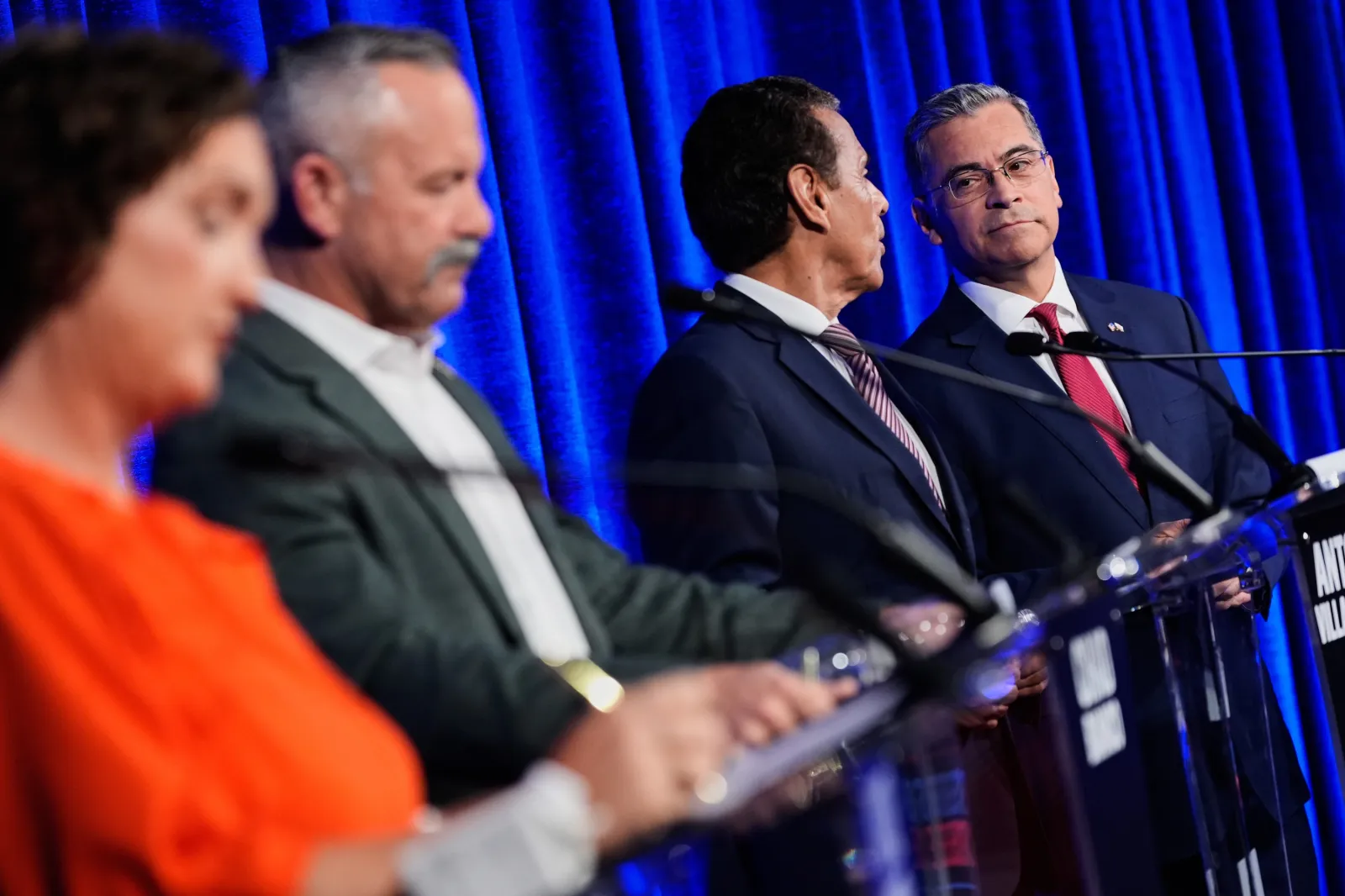
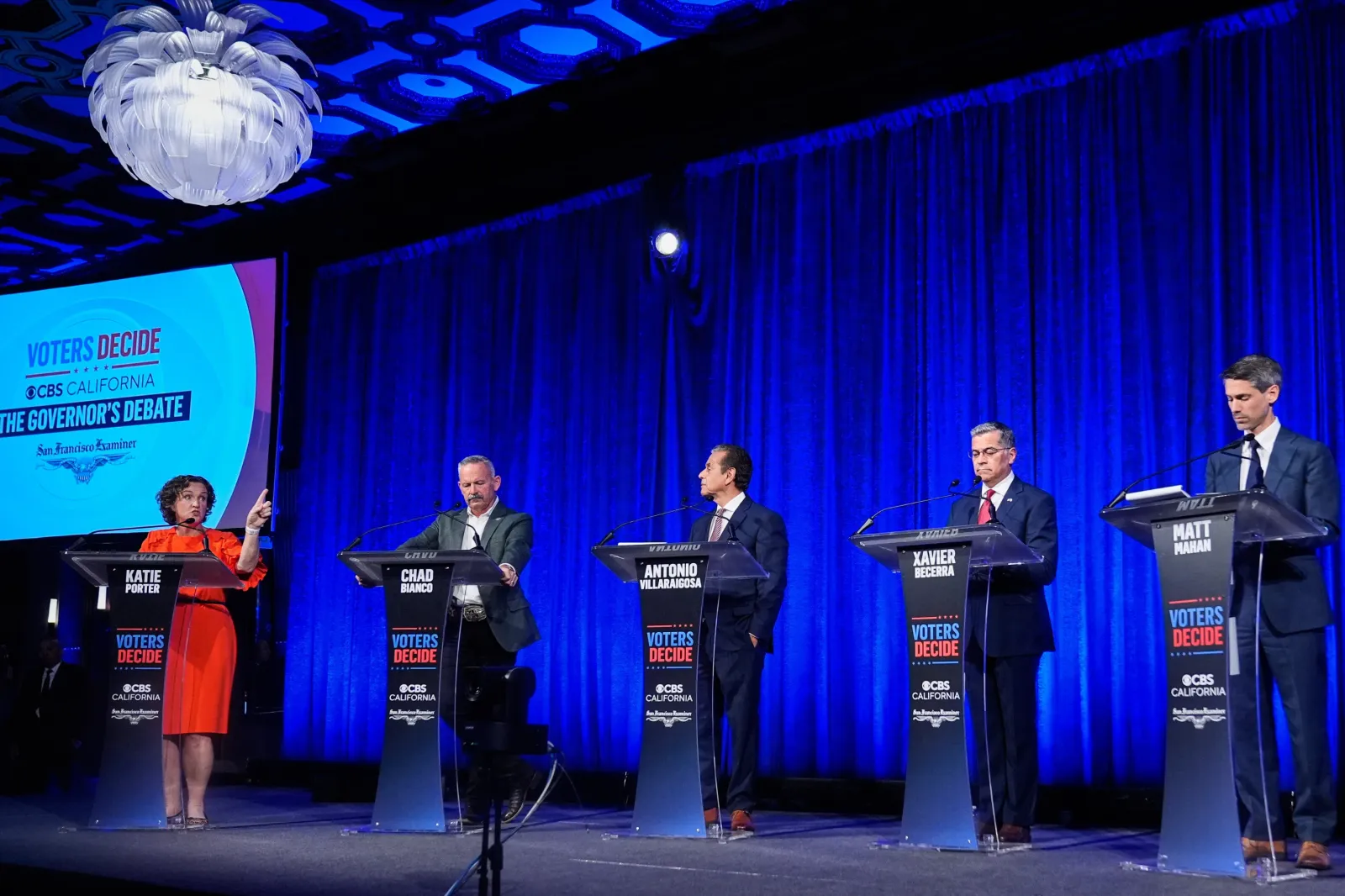
Seven leading candidates clashed in San Francisco on Thursday in a bruising final debate marked by sustained attacks on Becerra’s record, sharp exchanges over ethics and affordability, and last-ditch efforts to reshape the race before voting accelerates.
The debate could still shift the fight for second place with under three weeks until the June 2 primary, where under California’s system, the top two advance to the November general election regardless of party.
Read More on Politics
The aforementioned odds reflect both market consensus and a modest polling edge: Becerra led a recent Emerson survey with 19 percent, narrowly ahead of Steyer and Republican Steve Hilton at 17 percent each, highlighting a fragmented and volatile race.
Prediction Markets Show Becerra Ahead—But Momentum Shifts
...
At the time of writing, across major prediction platforms, Becerra remains the clear frontrunner, with markets broadly pricing his chances at around 49 to 51 percent, compared with roughly 32 to 35 percent for Steyer and under 10 percent for Republican Steve Hilton, who has been backed by President Donald Trump.
But beneath that headline lead, recent trading points to a notable late surge for Steyer, whose primary focus in the campaign has been climate change, in the closing days before the primary.
On Kalshi, Steyer’s implied probability has jumped from 25.1 percent on May 12 to around 35 percent by May 15—an increase of nearly 10 points in just a few days.
Over the same period, Becerra’s position has softened from about 52.6 percent to roughly 49 percent.
A similar pattern is visible on Polymarket. Steyer has risen from roughly 24 percent on May 13 to about 32 percent by May 15—a 7-point increase—while Becerra has edged down from around 55 percent to near 51 percent.
{ "@context": "https://schema.org", "@type": "WebPage", "name": "Will Xavier Becerra win the California Governor Election in 2026?", "description": "Prediction market: Yes 51% · No 49% on Polymarket.", "url": "https://polymarket.com/event/california-governor-election-2026", "publisher": { "@type": "Organization", "name": "Polymarket", "url": "https://polymarket.com" } }
Will Xavier Becerra win the California Governor Election in 2026?
Yes 51% · No 49%
View full market & trade on Polymarket
Taken together, the moves suggest traders are recalibrating expectations as late-campaign dynamics come into focus, particularly in the battle for the second runoff spot—and the possibility of a more competitive general election path than previously priced in.
Such late-stage swings often reflect new information entering the system—whether from polling, debate performances or shifts in campaign narratives—rather than a fundamental change in the underlying electoral structure.
Prediction markets can be useful because they aggregate real-time information and incentives into a single probability estimate, but they can also be limited by trader biases, liquidity gaps, and the risk of overreacting to short-term news.
...
Polling Underscores a Fragmented Race
Despite Becerra’s edge in prediction markets, polling suggests a far tighter and more fluid contest beneath the surface.
A recent Emerson College Polling/Inside California Politics survey conducted May 9-10 among 1,000 likely primary voters, with a margin of error of plus or minus 3 percentage points, found Becerra leading on 19 percent, with Republican Steve Hilton and Democrat Tom Steyer tied at 17 percent each.
Democrat Katie Porter followed on 10 percent and Democratic San Jose Mayor Matt Mahan on 8 percent, while 12 percent of voters remained undecided.
“Becerra tops the crowded California primary for the first time in an Emerson poll, his support increased by nine points since mid-April, driven by now being the top choice among Democratic voters at 31 percent,” Spencer Kimball, executive director of Emerson College Polling, said. “Hilton and Steyer closely follow at 17 percent respectively, Hilton’s support stagnant, while Steyer’s support increased three points since April.”
When undecided voters were pushed to lean, Becerra’s support edged up to 20 percent, Steyer to 19 percent and Hilton to 18 percent—further underscoring how narrow the gaps remain at the top of the field.
Crucially, the electorate remains soft: among voters who have chosen a candidate, 40 percent say they could still change their minds before Election Day.
This is the hallmark of an unsettled race—a low ceiling for the frontrunner, a tightly clustered field, and a large pool of persuadable voters capable of shifting the outcome late.
Final Debate Puts Target on Frontrunner
Thursday night’s final televised debate in San Francisco reinforced Becerra’s position as the candidate to beat.
Rivals from across the field repeatedly targeted the former Health and Human Services secretary on ethics, policy detail and his ties to Sacramento, reflecting a familiar primary dynamic: the frontrunner attracts concentrated attacks as opponents search for a breakthrough moment.
Becerra acknowledged the pressure directly during the debate, telling voters: “This is what happens when you take the lead in the polls.”
The sharpest line of attack centered on Becerra's former campaign aide who pleaded guilty in a fraud case tied to campaign funds.
Democratic rival Porter openly questioned his exposure, warning he “could still be implicated” despite the plea deal not naming him.
San Jose Mayor Mahan sharpened the broader critique, casting Becerra as “the embodiment of the status quo” in Sacramento, while pressing him on the lack of detail behind his policy proposals.
Republican Hilton also pushed back on Becerra’s claim to be leading outright, interjecting during the exchange that he—not Becerra—was ahead in some polling.
Becerra sought to contain the fallout, reiterating his denial of any wrongdoing and pointing to prosecutors’ statements that no candidate had been implicated. “Don’t take my word for it,” he said. “Take the words of the U.S. attorney.”
Elsewhere on the stage, Steyer attempted to pivot the race toward economic and environmental issues, arguing his campaign was focused on affordability and corporate accountability.
“They think I am coming for their profits—and they’re right,” he said, referring to fossil fuel companies.
For Mahan, the closing message was one of positioning between the parties. “I’m going to offer something different,” he said. “Not MAGA and not more of the same.”
For challengers like Steyer and Mahan, the debate offered a final opportunity to consolidate support and appeal to undecided voters before ballots begin to lock in—while for Becerra, it underscored both his advantage and his vulnerability as the race’s focal point.
...
The Top-Two System Could Reshape the Outcome
California’s electoral system remains the defining structural force in the race.
All candidates compete on a single ballot, with only the top two advancing to the general election, regardless of party affiliation.
In practice, that means the primary—not November—is the decisive battleground. While a Democrat is strongly favored to win statewide, the composition of the top two remains uncertain.
A Democrat-versus-Republican runoff remains the most likely outcome, but with Democratic support split across multiple candidates, a same-party general election matchup cannot be ruled out.
What Happens Next
With early voting underway and just weeks until the June 2 primary, the race is entering its most volatile phase.
View 0 Comments
Submit Correction
View Editorial & AI Guidelines