Getty Images

By Anna Skinner
Associate News Editor
0
Share
Newsweek is a Trust Project member
See more of our trusted coverage when you search.Prefer Newsweek on Googleto see more of our trusted coverage when you search.
New York City Mayor Zohran Mamdani appears to be borrowing from a high-profile political playbook, announcing a new Commission on Government Efficiency (COGE) that echoes the aims of the Trump-era push to slash bureaucracy and spending.
Mamdani announced the newly proposed commission in a post on X on Thursday morning.
"This morning we are introducing COGE — the Commission on Government Efficiency," Mamdani said in the post. "This Commission will find ways for our city to work smarter, faster, and more effectively for working people. New Yorkers deserve a city government as careful with their money as they are."
Read More on News
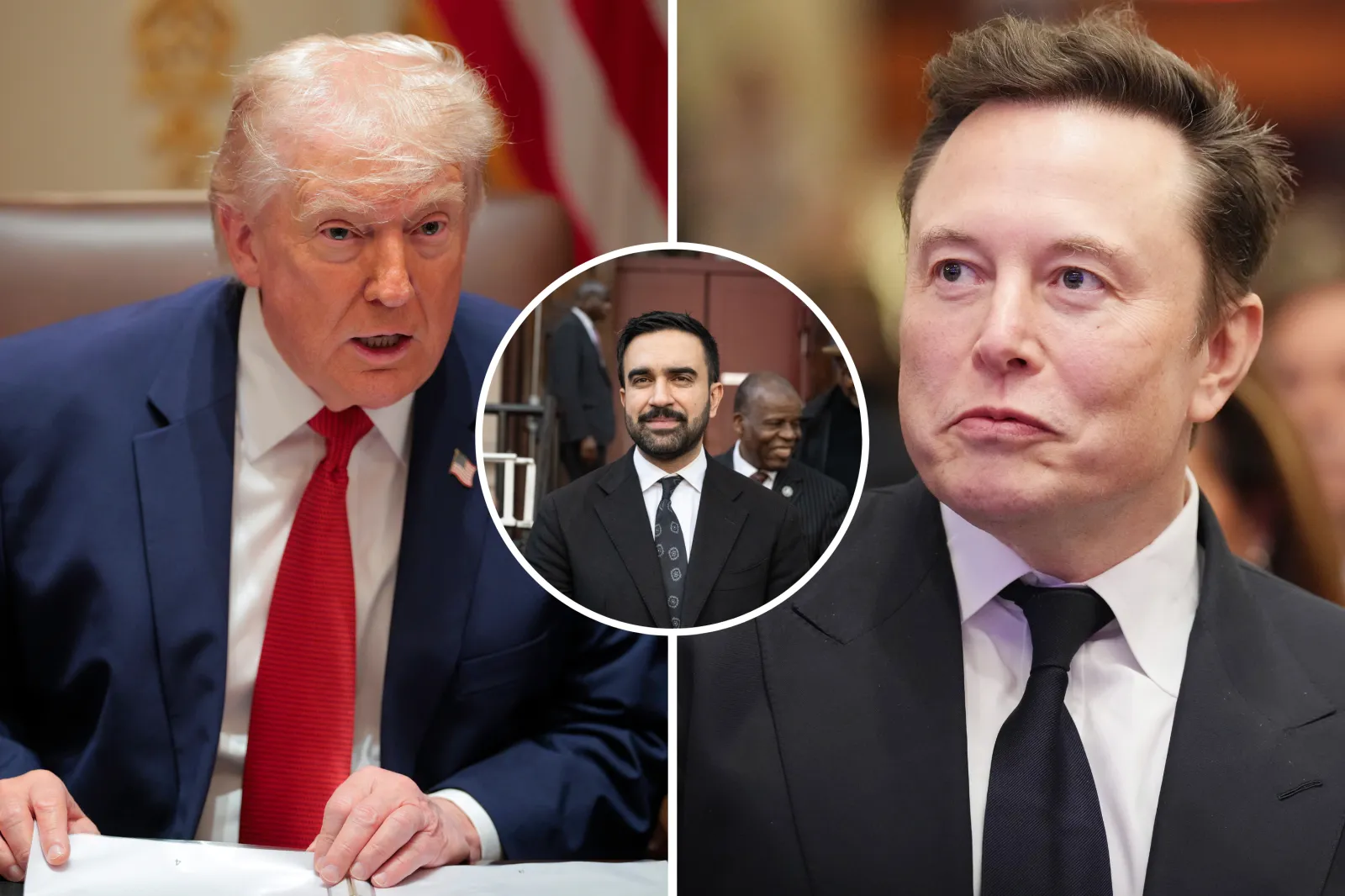
The rollout mirrors the messaging behind the federal Department of Government Efficiency, or DOGE—championed by President Donald Trump and Elon Musk—which promised to streamline government operations, cut costs and reduce waste. Several responses to Mamdani's post commented on how COGE seemed to resemble the mission of DOGE.
DOGE was a temporary U.S. government initiative established on January 20, 2025, via an executive order that reorganized the existing U.S. Digital Service. The project was intended to modernize federal technology, cut regulations, streamline agencies and eliminate what it described as wasteful spending.
Although originally structured as an 18‑month effort scheduled to run until July 4, 2026, the initiative effectively ended much earlier. By November 2025, officials said DOGE no longer existed as a centralized entity, with many of its functions absorbed into other government offices.
Newsweek reached out to the White House and Mamdani's press office by email for comment.
...
COGE: What We Know
COGE is a Charter Revision Commission aimed at improving how New York City government operates, according to a press release on the city's website. The panel, chaired by Patrick Gaspard, is tasked with reviewing the city’s governing charter to identify ways to modernize services, streamline operations and ensure agencies are better equipped to meet residents’ needs. Mamdani has proposed longtime public servant Ann Cheng as the commission’s executive director.
COGE will conduct a comprehensive review of the city charter, gather public input and put forward proposals for reform. The commission plans to hold public hearings across all five boroughs, giving residents an opportunity to weigh in before any proposed changes are presented to voters on the November ballot. The process is designed to combine expert analysis with feedback from New Yorkers on how government can function more effectively.
According to the administration, the commission’s work will focus on cutting bureaucratic delays, improving agency flexibility and modernizing government systems. Officials say this could include eliminating outdated rules that slow infrastructure projects, strengthening tools for service delivery and rethinking budget and savings practices. Mamdani and commission leaders framed the effort as part of a broader push to restore confidence in government and make it more responsive and efficient.
During a press conference Thursday, Mamdani said COGE was inspired by the DOGE name and what the federal department "should have been."
"You know, I think government efficiency—these are words that somehow have been understood as if they are Republican priorities, when in fact, they're the priorities of anyone who believes in the public sector," Mamdani said. "[And] yet, Elon Musk took that language and used it to cut as many jobs that were as critical as possible for so many of the neediest people across the country and across the world. Ours is going to be a focus on actually delivering efficiency. Not as a byword for cutting services, but actually a sincere commitment to efficiency.
"And we firmly believe not only in closing the last chapter of city government, but in starting the new one. The proposals that COGE will be looking at will be ones that we view as critical to unlocking the full potential of city government. We've seen today that we're discussing a number of our plans that are only possible thanks to the votes that New Yorkers cast this last fall, and we're looking forward to continuing to ensure that any tool at our disposal that we could use to build more housing, that we could use to be more efficient in our operations, those are the tools that we want to unlock."
Amazon founder Jeff Bezos, in response to Mamdani's post on X, proposed eliminating taxes for part of the New York City population.
"This is great and they do deserve that," he wrote. "And, with some of the savings, we can zero out taxes on the bottom half of earners. The best way to put money in people's pockets is not to take it out in the first place."
Cities With Similar Initiatives
Several other municipalities across the U.S. have launched efficiency and spending-reduction initiatives since DOGE was introduced last year, though not all explicitly said their efforts were modeled on it.
In Florida, the Jacksonville City Council created a special committee called Duval DOGE, and the city’s official committee page says it is tasked with analyzing growth in city departments and programs for potential savings, evaluating services for potential savings, and considering a budget lapse while weighing service impacts.
In Texas, Houston Mayor John Whitmire released a citywide efficiency study in February 2025 covering the city's 22 municipal departments, with the city saying the review identified areas for improvement and cost savings in operations. Then, when Houston’s budget passed on June 4 of that year, the mayor’s office said the budget included $122 million in strategic cuts and that it was guided by the efficiency study. The study was commissioned in late 2024, before the creation of DOGE.
In California, San Diego Mayor Todd Gloria announced what the city called a series of “operational efficiencies, consolidations and spending reductions” to save taxpayer dollars and preserve city services amid a budget deficit.
In Illinois, Chicago Mayor Brandon Johnson signed an executive order in April 2025 launching a citywide review and budget working group to address structural budget gaps.
Mamdani's Message on City Spending
Throughout his mayoral campaign and during his first five months in office, Mamdani has often spoken about cutting waste to close the city's budget gap.
He has broadly centered his messaging on budgets, deficits and the use of public funds, often framing fiscal policy as both a governing issue and a political one. In one instance, he outlined a plan to eliminate the city's $12 billion debt while avoiding placing additional strain on working residents.
His proposals have generally pointed to a mix of higher taxes on wealthier households, outside financial support and identified savings.
What Happens Next
The commission is set to begin its work in early June, with an initial public meeting, followed by a series of hearings across the city. Feedback gathered during the sessions will inform potential charter revisions, which could then be placed before voters later this year. The timeline and scope of any reforms will likely depend on the commission’s findings, public response and the level of support from city officials and residents.
View 0 Comments
Submit Correction
View Editorial & AI Guidelines