...

By Andrew Stanton
Reporter
0
Share
Newsweek is a Trust Project member
See more of our trusted coverage when you search.Prefer Newsweek on Googleto see more of our trusted coverage when you search.
Abdul El-Sayed electrified Michigan's Democratic voter base during the party's endorsement convention over the weekend, but some on the left remain concerned that candidates such as U.S. Representative Haley Stevens and state Senator Mallory McMorrow would be better positioned in a general election.
The race for Michigan's Senate seat, left open by retiring Democratic Senator Gary Peters, is expected to be among the most competitive of the 2026 midterm elections. Michigan is a key battleground state divided almost evenly between Democrats and Republicans, and the outcome of the Democratic primary could shape the contours of the race against former Representative Mike Rogers, who is viewed as the front-runner in the GOP primary.
Joetta Appiah, a spokesperson for Stevens' campaign, told Newsweek: "Just last week, yet another poll—the eighth of the cycle—showed Haley winning the primary, as she continues to be the best and only Democrat who can beat Mike Rogers. What matters is who can win in November, and poll after poll shows Haley Stevens is the strongest Democrat to take on Mike Rogers, with a unique ability to win over the independent and Black voters."
Read More on Politics
Newsweek has contacted the El-Sayed and Rogers campaigns for comment via email.
Why It Matters
Michigan's Senate race is a must-win for Democrats, who are hoping President Donald Trump's declining approval rating will fuel a favorable national environment and allow them to reclaim control of a majority. A defeat in Michigan would complicate their path to a Senate majority, which is already difficult with only a handful of clear pickup opportunities.
Abdul El-Sayed's Chances in Democratic Primary
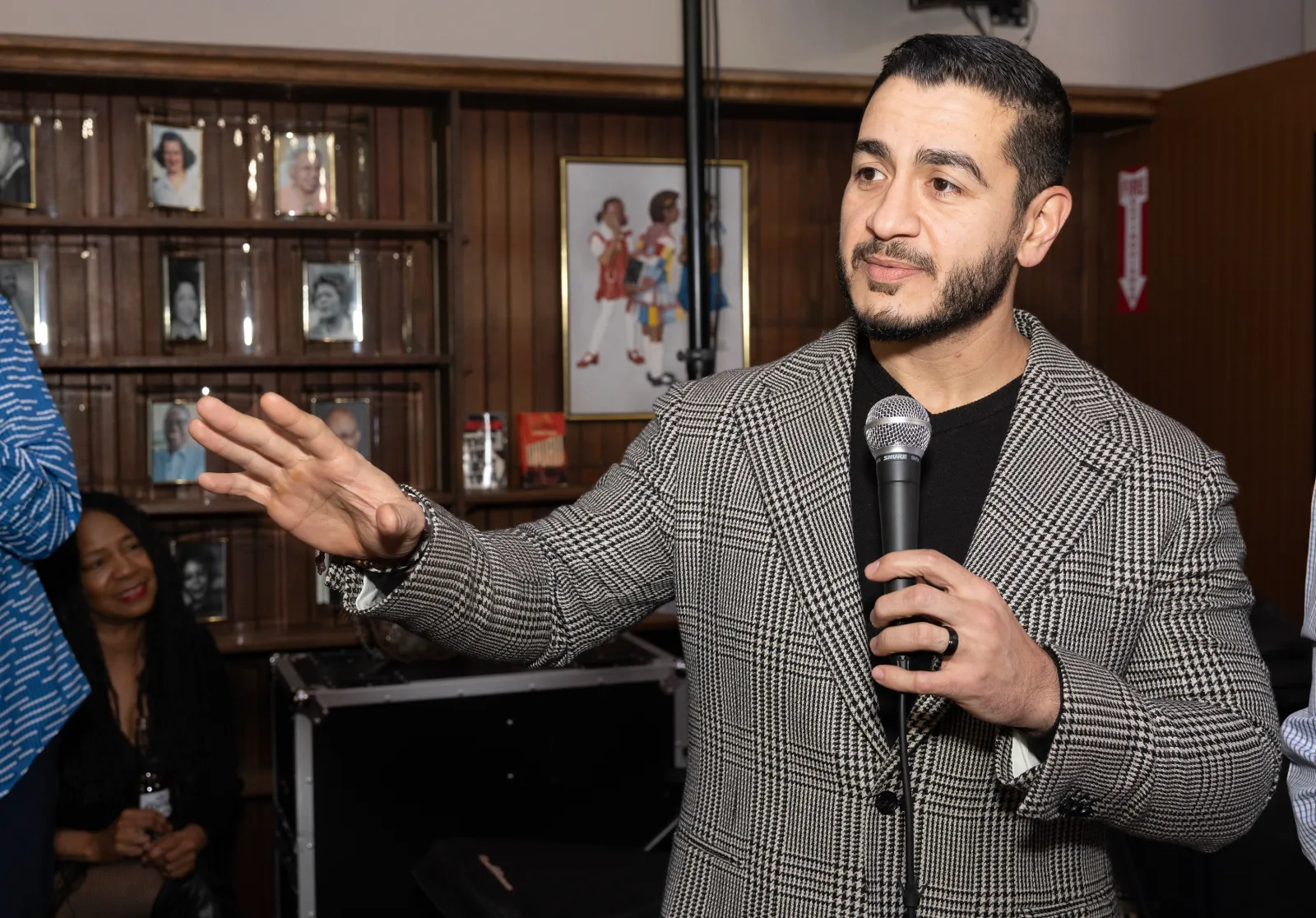
During the convention, El-Sayed, McMorrow and Stevens made their cases to Michigan Democrats about why they were the strongest candidate to take on Rogers in the general election. El-Sayed, the former Wayne County health director, is viewed as the most progressive candidate in the race and is known for his support for Medicare for All and critiques of Israel.
The physician saw plenty of enthusiasm for his campaign during the convention. According to Michigan Live, some delegates began to chant "Abdul, Abdul, Abdul" following a speech from McMorrow. El-Sayed was welcomed to the stage with a standing ovation from the crowd, according to the report.
Still, some Democrats have raised concerns that his policy positions could alienate more moderate voters in a general election. El-Sayed's decision to attend rallies with streamer Hasan Piker, who has divided the Democratic Party, has also drawn criticism from more centrist Democrats.
"According to this poll, El Sayed has almost reached his vote share from his loss in 2018. But McMorrow's support is growing with Dem voters as they realize she is the only candidate who can win the primary AND knit the party back together in the general," Democratic activist Shannon Watts wrote on X earlier in April.
...
Watts made the comment while responding to a new Emerson College poll of the Democratic primary, which showed El-Sayed and McMorrow tied at 24 percent, while Stevens trailed at 13 percent. Three percent said they would vote for another candidate, while 36 percent were undecided. The poll surveyed 519 likely voters from April 11-13 and had a margin of error of plus or minus 4.3 percentage points.
Progressive commentator Mehdi Hasan also responded to the poll, writing: "Plus 8 for @AbdulElSayed. Damn that campaigning with @hasanthehun really hurt him (!)"
A Data for Progress poll of 515 likely voters from April 2-8 showed Stevens with a slight lead. She received 23 percent support in that poll, while El-Sayed and McMorrow each received 22 percent.
A Global Strategy Group poll, sponsored by McMorrow, showed her up 5 points with 30 percent support, compared to El-Sayed's 25 percent and Stevens' 23 percent. It surveyed 800 likely voters from March 19-22 and was first reported by Politico.
Prediction markets gave McMorrow an advantage on Monday morning. Kalshi showed her with a 50 percent chance of winning, compared to El-Sayed's 44 percent chance. Polymarket, meanwhile, gave McMorrow a 49 percent chance of winning and El-Sayed a 45 percent chance.
El-Sayed told Newsweek about his economic message in a 2025 interview.
"We have to see people's pain, understand it, and then help them to believe that it can get better and then make it better," he said.
Abdul El-Sayed vs. Mike Rogers: What Polls Show
The latest general election polls underscore the competitive nature of the race. An Emerson College survey, which polled 1,000 likely voters from January 24-25, showed Stevens with the strongest lead over Rogers: 47 percent to 42 percent.
McMorrow led Rogers by 3 points in that poll, 46 percent to 43 percent, while El-Sayed and Rogers were tied at 43 percent. It had a margin of error of plus or minus 3 percentage points.
A Glengariff Group poll, reported by The Detroit News, gave Rogers a lead over each Democratic candidate. He led Stevens by less than a half a percentage point (44.1 percent to 43.7 percent), McMorrow by about 3 points (45.7 percent to 42.4 percent) and El-Sayed by just over 6 points (48 percent to 41.6 percent).
The poll surveyed 600 likely voters from January 2-6 and had a margin of error of plus or minus 4 percentage points.
Both the Cook Political Report and Sabato's Crystal Ball classify the race as a toss-up.
In January, Sabato's Crystal Ball analyst Kyle Kondik wrote that Democrats faced a "messy primary" in the state that may not produce a nominee as strong as Democratic Senator Elissa Slotkin in 2024, who won her race despite Trump also carrying the state.
"The flip side is that Rogers' best chance to win was probably with Trump driving Republican turnout at the top of the ticket in 2024, and the midterm environment could just paper over whatever problems Democrats have in this race," Kondik wrote.
Michigan Voting History
Michigan has emerged as a major swing state over the past decade. Former President Barack Obama carried the state easily in both of his runs—by more than 16 points in 2008 and by just under 10 points in 2012. But President Donald Trump flipped it in 2016, carrying it by less than half a percentage point.
Trump lost the state in 2020, when former President Joe Biden carried it by just under 2 points. But Michigan flipped back to the Republican Party in 2024, with Trump winning it by about 1.4 points—the strongest showing for a Republican presidential candidate since 1988.
At the same time, Slotkin managed to win an open seat by less than half a percentage point.
Democrats Face Challenging Senate Map
Democrats are facing a difficult Senate map in 2026. Republicans hold a 53-47 majority, so Democrats would need to flip four seats to win control of the chamber. The vice president serves as the tiebreaking vote.
Republicans are targeting Michigan and Georgia, where Democratic Senator Jon Ossoff is defending a seat in a state that also narrowly backed Trump in 2024. Democrats view GOP-held seats in Maine—which backed former Vice President Kamala Harris by about 7 points in 2024—and North Carolina, which backed Trump by about 3 points in 2024, as their top targets.
But there are no other Harris-won or single-digit Trump states up for grabs, meaning Democrats must compete in double-digit Trump states to win a majority. They're investing in states such as Alaska, Iowa, Ohio and Texas to make those races competitive—and polls show close races in those states.
But a loss in Michigan would make it even more difficult for Democrats to reclaim control of the Senate.
What Happens Next
Michigan's primary is scheduled for August 4.
View 0 Comments
Submit Correction
View Editorial & AI Guidelines