...

By Newsweek Editors
0
Share
Newsweek is a Trust Project member
See more of our trusted coverage when you search.Prefer Newsweek on Googleto see more of our trusted coverage when you search.
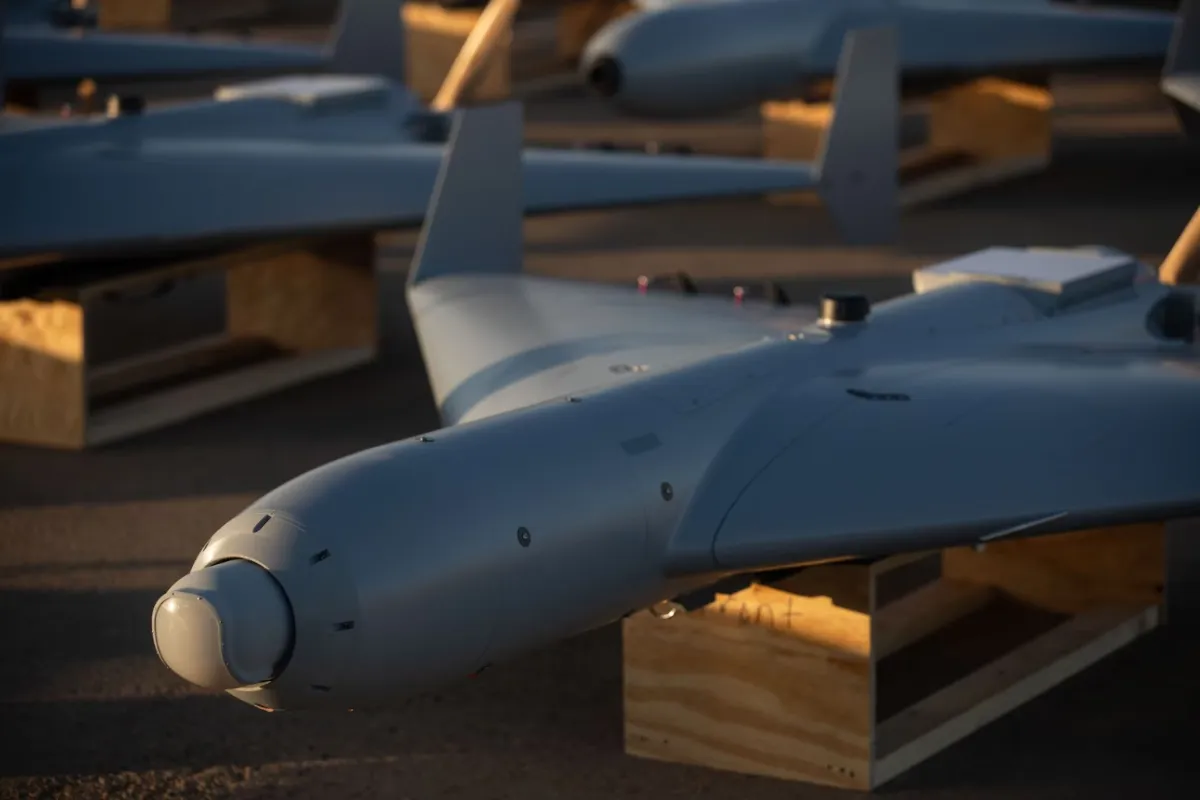
An American littoral combat ship in the Persian Gulf flicked a switch just before dawn on December 16 and hurled a stub-nosed delta-wing into the sky. The drone—LUCAS, for Low-Cost Uncrewed Combat Attack System—arced off the USS Santa Barbara’s flight deck and sped toward a test range.
The twist is what LUCAS is, and where it comes from. The U.S. has taken the ubiquitous Shahed Iranian kamikaze drone, reverse-engineered it, and now fields a $35,000 American version that can launch from ships, trucks, or catapults. In a war of attrition, price matters. And in the current Iran crisis—where the White House talks tough one hour and "de-escalation" the next—it suggests a new kind of U.S. leverage: beat Iran’s drone game with Iran’s own design.
Common Knowledge
President Donald Trump has spent the past two weeks warning Tehran and confusing Washington. On January 2, he wrote that if Iran "violently kills peaceful protesters… the United States of America will come to their rescue." Later, he insisted he had assurances the "killing has stopped" and that executions were off the table—claims no independent monitor could verify.
Read More on News
The left, however, fears that airstrikes would backfire by validating regime propaganda and risking wider war.
Uncommon Knowledge
Away from the threats and counter-threats, America isn’t just countering Iran's one-way drone doctrine; it's copying it. LUCAS is a Shahed-136 derivative—a low-cost, catapult-launched, ship-launchable "kamikaze" drone. The Pentagon has already stood up a one-way-attack drone squadron in CENTCOM—Task Force Scorpion Strike—and proven a first-ever shipborne launch in the Gulf.
The headline benefit is price. LUCAS is pegged at roughly $35,000 per airframe. Now compare that to the U.S. workhorse, the MQ-9 Reaper. The Reaper is a sophisticated $30-million sensor-laden system designed to loiter for 20-plus hours and carry precision munitions. Operating it costs hundreds or even thousands of dollars per flight hour. The point isn’t that a Reaper is "overpriced," it’s that it is hard to scale.
Two further details matter for Iran policy in the event of a conflict. First, LUCAS can go to sea. The Santa Barbara launch means these drones can be fired from shallow-draft ships without runways, which is useful when Gulf partners get nervous about basing rights or when the U.S. wants to distribute risk across many platforms. Second, about scalability: the design is intended for multiple manufacturers and mass production. That means it can flood a battlespace with decoys and real threats, saturating defenses the way Iran's own proxies have tried to do.
So, while cable news argues over whether Trump will push the red button, a transformative shift is already underway: the U.S. military is normalizing cheap, expendable, reverse-engineered strike drones as a routine tool. It's precisely the kind of kit that can punish Iranian radar, air defenses, and logistics without risking a $30-million-class airframe or a carrier deck slot. It's the Shahed-fication of Western airpower—Americanized, networked, and now, potentially, turned back on the regime that inspired it.
If you’re enjoying Uncommon Knowledge, please share. If you have suggestions for future editions or feedback, email subscriber.feedback@newsweek.com. We want to hear your voice.
View 0 Comments
Submit Correction
View Editorial & AI Guidelines