...

By Mandy Taheri
Reporter
0
Share
Newsweek is a Trust Project member
See more of our trusted coverage when you search.Prefer Newsweek on Googleto see more of our trusted coverage when you search.
Prior to the U.S.-Israeli coordinated attack on Iran in “Operation Epic Fury” on Saturday, recent polls showed Americans were divided on the matter.
Why It Matters
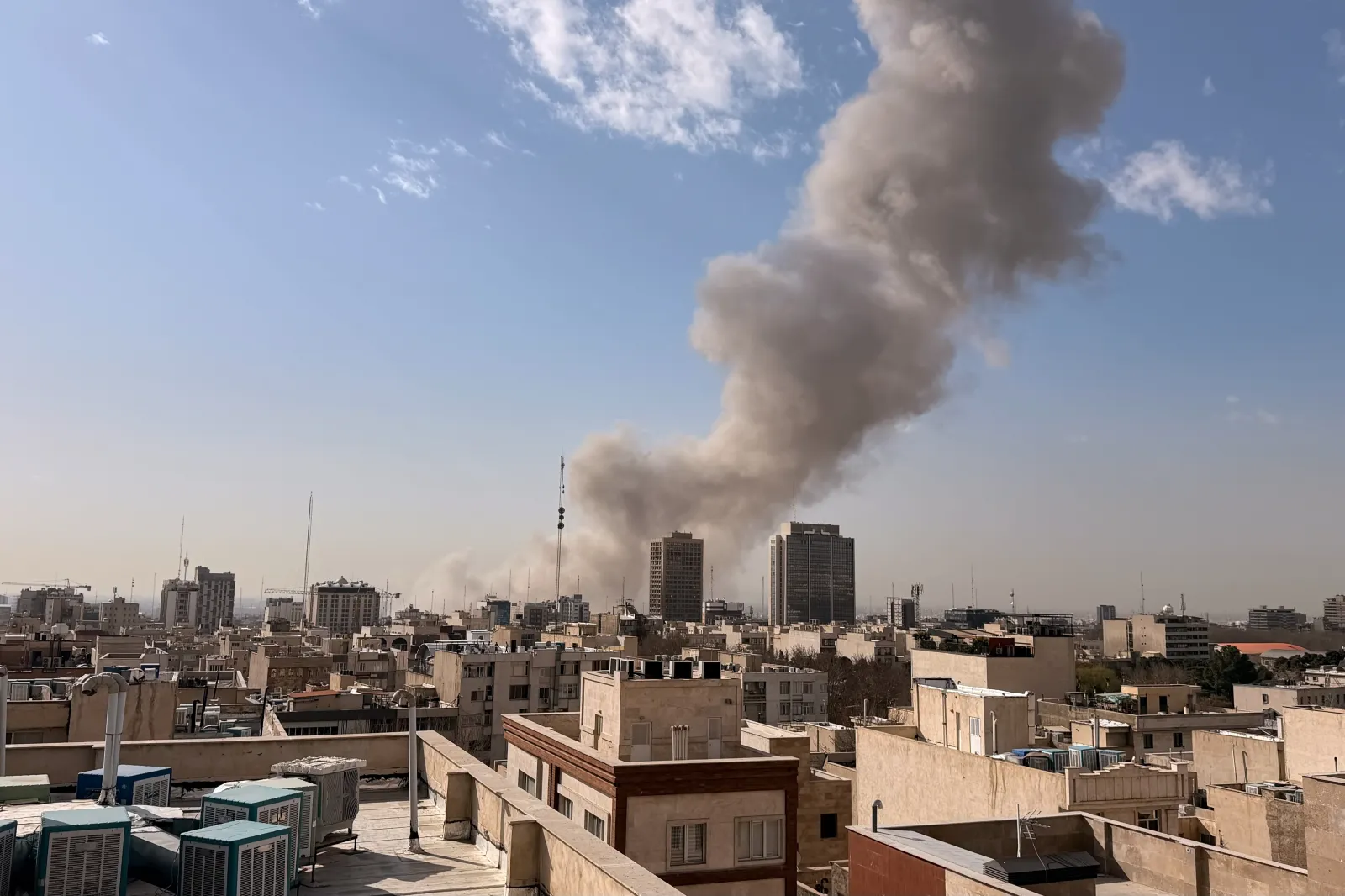
The U.S.-led strikes on Saturday morning struck multiple targets in Iran, killing at least 200 people, and injuring over 740, according to Iran's Red Crescent, per state television. The Islamic Republic then launched retaliatory strikes across U.S. bases in the Middle East, widening the conflict.
Read More on News
The attacks mark a sharp escalation following recent nuclear talks between Washington and Tehran and raise the risk of a wider regional conflict. They come as the U.S. has deployed additional warships, aircraft and air defenses to the Middle East in what analysts describe as the largest U.S. buildup there since the Iraq war in 2003.
President Donald Trump campaigned on an “America First” platform during the 2024 election, but his second term has featured major foreign interventions, including a U.S. operation that captured Venezuelan leader Nicolás Maduro and U.S. strikes on Iran last June in coordination with Israel that the administration dubbed “Operation Midnight Hammer.”
What To Know
Polling has consistently showed many Americans are opposed to the U.S. using military force in an attack on Iran.
An Economist/ You Gov poll of 1,551 people conducted between February 20 and 23 found 49 percent of Americans are somewhat or strongly opposed to U.S. military action in Iran, while 27 percent support such an intervention. More participants strongly oppose the intervention than those who strongly support it, 31 percent to 12 percent.
The poll also found 48 percent of Americans disapprove of the way the president is handling the situation in Iran, while 31 percent approve. Again, the poll found a larger percentage strongly disapprove of the president’s handling, 36 percent, while 16 percent strongly approved. The poll has a margin of error of plus or minus 3.3 percentage points.
A CBS News/YouGov poll of 2,264 people released Saturday after the strikes, but conducted February 25–27, found Americans split on U.S. military action against Iran, with 51 percent in favor and 49 percent opposed.
However, 74 percent of participants said Trump needs approval from Congress prior to striking, while 26 percent said he does not. Trump did not receive congressional approval for the massive attack.
The poll has a margin of error of plus or minus 2.5 percentage points.
Prior polling back in June, following the strikes in Iran, found that most Americans support immediately ending the U.S.’s involve in the conflict. Three major nuclear facilities—Fordow, Natanz and Isfahan—were damaged in the strikes that took place in June 2025, and the U.N. nuclear watchdog, the International Atomic Energy Agency (IAEA), has said it has been unable to fully assess Iran’s program since Iran curtailed inspector access after the attacks.
A Reuters/Ipsos conducted between June 21-23, 2025, immediately after the U.S. strikes on the three Iranian nuclear facilities, found that 36 percent of Americans supported the strikes, with 45 percent opposing them. A majority of Americans, 50 percent, also did not approve of Trump’s handling of Iran, while 35 percent approve. The poll has a margin of error of plus or minus 3.2 percentage points.
...
What People Are Saying
Nader Hashemi, a Georgetown University professor and co-editor of The People Reloaded: The Green Movement and the Struggle for Iran's Future, told Newsweek in an email Saturday: "Regime change is goal but the second-best option for the US and Israel is state collapse. The aim is to turn Iran into another Lebanon or Syria where the state can no longer effectively exercise control over within its own territory or project power beyond its borders."
Alex Vatanka, senior fellow at the Middle East Institute, told Newsweek in an email Saturday: "The internal trajectory—whether the public mobilizes against the regime or whether fractures appear within the state—will hinge in part on whether the United States and Israel have a coherent endgame. That includes whether their efforts to target senior Iranian officials are successful, amid persistent rumors that several high-ranking figures have been killed. Without a wider, intelligence-driven plan for political transition, airstrikes alone are unlikely to generate sustained internal momentum against the Khamenei–IRGC leadership, particularly in the absence of an organized opposition ready to act. That could change quickly, as the leadership is widely blamed for the crisis, but the window is narrow, and Trump’s appetite for a prolonged conflict remains uncertain."
Senator Lindsey Graham, a South Carolina Republican, on X: "A word of advice to our regional Arab partners and other allies: get behind President Trump and go all in to ensure the ayatollah’s Iran, which has become the largest state sponsor of terrorism in the world is no more. Stand with the people and stand against the ayatollah. You won’t regret it if you do."
Representative Yassamin Ansari, an Iranian American Democrat, said in a Saturday statement: "As the daughter of Iranian immigrants who fled this regime, I know personally what its violence means. Members of our family and friends were brutalized and murdered by the Islamic Republic. I carry that history with me every day. At the same time, as a U.S. Congresswoman sworn to uphold the Constitution and protect the American people, I am deeply concerned by President Trump’s decision to launch an illegal, dangerous war without Congressional authorization. Under Article I, Section 8 of the Constitution, the power to declare war rests solely with Congress. Consistent with my previous votes, public statements, and the consensus in my district, I believe no president–Republican or Democrat–has the authority to launch military strikes of this magnitude without Congressional approval."
Senator Mark Kelly, an Arizona Democrat, said in an X post: "After promising to keep America out of war and instead focus on lowering costs for families, Donald Trump has launched a large-scale military operation against Iran...When I launched on my first combat mission during Operation Desert Storm 35 years ago, I understood the mission and the end goal. So did Congress. So did the American people. That’s the minimum level of leadership this country deserves. And Donald Trump has failed again at that. The Senate needs to come back to Washington immediately and do its Constitutional duty."
Representative Thomas Massie, a Kentucky Republican, said in an X post: “I am opposed to this War. This is not ‘America First.’ When Congress reconvenes, I will work with @RepRoKhanna to force a Congressional vote on war with Iran. The Constitution requires a vote, and your Representative needs to be on record as opposing or supporting this war."
Secretary-General of the United Nations Antonio Guterres said in a Saturday statement: “I condemn today’s military escalation in the Middle East. The use of force by the United States & Israel against Iran, and the subsequent retaliation by Iran across the region, undermine international peace & security. All Member States must respect their obligations under international law, including the Charter of the @UN…I call for an immediate cessation of hostilities & de-escalation. Failing to do so risks a wider regional conflict with grave consequences for civilians & regional stability. I strongly encourage all parties to return immediately to the negotiating table.”
What Happens Next
The region is on edge as security alerts remain in place and officials brace for possible further military action.
In a polarized era, the center is dismissed as bland. At Newsweek, ours is different: The Courageous Center—it's not "both sides," it's sharp, challenging and alive with ideas. We follow facts, not factions. If that sounds like the kind of journalism you want to see thrive, we need you.
When you become a Newsweek Member, you support a mission to keep the center strong and vibrant. Members enjoy: Ad-free browsing, exclusive content and editor conversations. Help keep the center courageous. Join today.


View 0 Comments
Submit Correction
View Editorial & AI Guidelines