...

By Danish Manzoor Bhat
Editorial Director, Asia
0
Share
Newsweek is a Trust Project member
See more of our trusted coverage when you search.Prefer Newsweek on Googleto see more of our trusted coverage when you search.

...
On February 4, 2026, the Drug Enforcement Administration announced a significant disruption in the fight against fentanyl, unveiling the results of “DEA Operation Meltdown.” In its statement, the agency said it seized more than 200 internet domains tied to illegal online pharmacies operated by an India-based transnational criminal organization and linked the network to “at least six fatal and four non-fatal overdoses” in the United States.
The investigation, led by Rocky Mountain Field Division of DEA, had been ongoing since 2022 and resulted in arrests, administrative actions, and the dismantling of a sophisticated online distribution model.
Read More on World
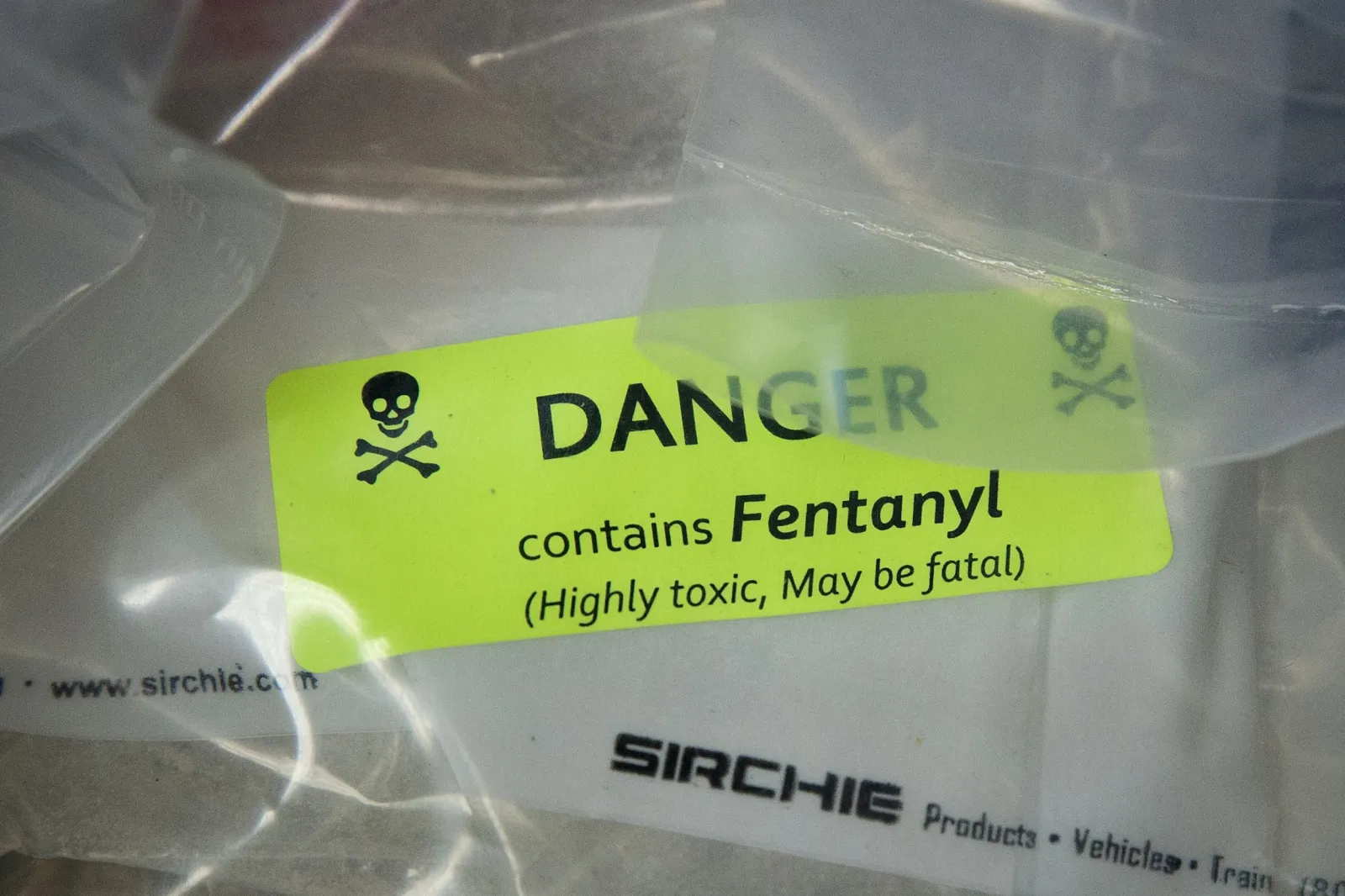
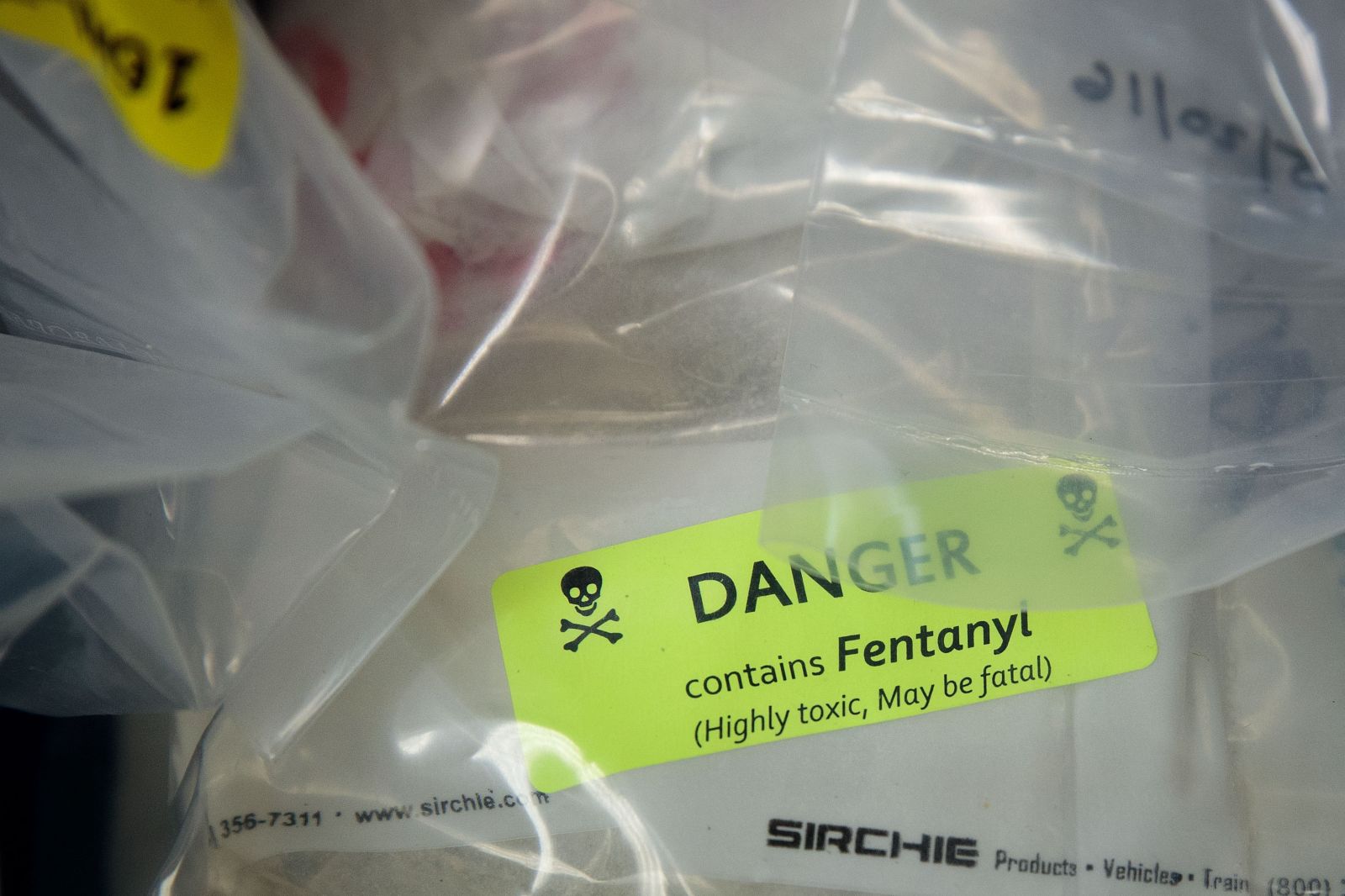
The announcement highlighted a growing threat vector in the fentanyl crisis: counterfeit prescription pills sold online, often shipped directly to U.S. consumers. These pills, frequently marketed as legitimate medications, are often laced with fentanyl, a synthetic opioid so potent that a single tablet can be fatal.
“This operation strikes at the heart of the criminal networks poisoning our communities,” the DEA said.
Equally important, though less prominent in the release, was a line about collaboraton with India that pointed to how such operations are increasingly made possible. The DEA said, “Leveraging its global reach, DEA actively collaborates with our Government of India law enforcement partners to identify, investigate, and dismantle dangerous criminal organizations that engage in these types of illegal drug trafficking operations.”
The fentanyl story in the United States is not static. It mutates. Traffickers adapt to law enforcement pressure by shifting routes, swapping chemicals, moving money through new channels, and changing the way drugs are sold. Over time, the pipeline becomes less like a single route and more like a global logistics system designed to be flexible. That is why an American takedown of fake online pharmacies can hinge on cooperation with India, thousands of miles away, and why the quality of that cooperation matters as much as seizures and arrests.
It also explains why the headline numbers in Operation Meltdown are only the surface. By the time fentanyl appears as a pill on a U.S. countertop, it is usually too late. The most effective disruptions are upstream. They happen before a precursor becomes fentanyl, before a shipment reaches a clandestine lab, and before a counterfeit tablet enters an online distribution stream.
Why U.S-India Cooperation Matters in the Fentanyl Fight
It is an established fact that the fentanyl crisis continues to pose a serious challenge for the United States. Although overdose deaths declined significantly in 2024, reaching a five-year low, federal health data still recorded roughly 80,000 overdose deaths that year, with synthetic opioids remaining the primary driver. As enforcement pressure has increased, traffickers have adapted, shifting from traditional street-level distribution to online platforms and exploiting international logistics systems.
Stopping fentanyl after it enters the United States is far harder than preventing its production and distribution in the first place. That upstream focus has naturally increased the importance of international partnerships, particularly with countries that sit at key nodes of the global chemical supply chain.
In March 2025, the Annual Threat Assessment of the U.S. Intelligence Community stated, “China remains the primary source country for illicit fentanyl precursor chemicals and pill pressing equipment, followed by India.” The assessment reflected a growing understanding of how traffickers’ source and move precursor chemicals globally.
At the same time, U.S. agencies emphasized that the presence of legitimate industry in a country does not equate to government inaction. In India’s case, U.S. officials consistently describe an enforcement environment characterized by increasing coordination, responsiveness, and operational alignment with U.S. priorities. But this comprehensive cooperation doesn’t often make it to catchy headlines.
India is one of the world’s largest producers of pharmaceuticals and chemical intermediates, supplying a substantial share of the U.S. generic drug market. That scale creates both opportunity and responsibility. Legitimate trade flows are essential to global health and commerce, but they can also be exploited by criminal actors seeking to divert chemicals for illicit drug production.
Recognizing this challenge, Indian authorities have emphasized coordination and intelligence-led enforcement. Newsweek reached out to India’s Home Secretary Govind Mohan, IAS through ADG Media, Ministry of Home Affairs, the Indian government described a comprehensive approach to preventing diversion.
“The Modi government has a clearly chiseled-out strategy to pin down illicit diversion of drugs,” read the Indian MHA response. “Broadly, this strategy hinges on the convergence of the agencies that are mandated to eradicate the menace.”
The Indian Home Ministry explained that India's Central Drugs Standard Control Organization issues an Export No Objection Certificate “meant for drugs that are to be used only for legitimate purposes.” It added, “Although the CDSCO is officially not a part of the NCORD (Narco Coordination Centre) mechanism, the NOC they issue makes it easier for the anti-narcotics agencies to distinguish illegal use of drugs from the illegal one. To put it simply, anyone who cannot produce this certificate for the consignment of drugs they possess is likely to be a drug trafficker.”
It then described how Indian law enforcement agencies share data and coordinate under the Narco Coordination Centre mechanism: “Once the path for the investigation is clutter-free, all the anti-narcotics agencies from the apex level to the district level seamlessly share data and information and coordinate among themselves under the umbrella body NCORD, which is where they converge and arrive at the desired end of busting drug cartels.”
Indian authorities describe their enforcement philosophy as evolving in response to the changing nature of drug trafficking. “Under the visionary leadership of Narendra Modi and the firm policy direction of the Amit Shah, India has consciously shifted from a seizure-centric approach to a network-centric enforcement strategy,” the Home Ministry explained.
"The net has been tightened through sharing post-shipment confirmation for high-risk consignments, exchanging real-time operation intelligence with the U.S. DEA, INTERPOL, and INCB, exchanging vessel data, and sharing a suspicious exporters list. Risk analysis and x-ray screening of foreign-origin consignments are now conducted as SOPs making the grid nearly foolproof," Indian offical told Newsweek.
The response emphasized backward and forward investigations to identify both sources and end destinations, noting that enforcement in India now targets every component of trafficking networks, from chemical suppliers and logistics providers to financiers and digital enablers. Aggressive financial investigations under India’s Narcotic Drugs and Psychotropic Substances Act, 1985, are also used to seize assets generated through drug trafficking.
“No one can escape the claws of the laws [in India], whether it is the manufacturer, clandestine laboratory, chemical supplier, equipment provider, logistics and transport facilitator, financier (including crypto-based channel), darknet vendor, digital enabler, international handler, or foreign linkages.” India’s response also highlighted SOPs used across agencies “leaving no room for cartels to hide.”
Policy debates often return to scheduling and bans. India and the United States both face versions of the same question: whether to impose broader, class-wide controls over fentanyl analogs and their precursors, or to keep substance-by-substance scheduling that can lag behind traffickers’ innovation.
“No one can escape the claws of the laws [in India], whether it is the manufacturer, clandestine laboratory, chemical supplier, equipment provider, logistics and transport facilitator, financier (including crypto-based channel), darknet vendor, digital enabler, international handler, or foreign linkages.”
Indian home ministry
India’s legal framework includes exceptions for medical and scientific use, and fentanyl itself has been treated in India as an “essential narcotic drug” for medicinal pain management. That creates legitimate reasons for caution about overly broad scheduling that could stifle research and medical access. At the same time, the absence of class-wide control can leave space for chemists and manufacturers to tweak molecules and remain outside the banned list even while producing substances of similar potency and danger.
It is vital to reiterate that the Precursor chemicals have legitimate industrial and pharmaceutical uses. Newsweek's investigation found that criminals often exploit this by selling them openly on business-to-market websites, sometimes with slight misspellings or under aliases. In fact, in many cases as one chemical is controlled, traffickers shift to its unregulated analogues (for instance the shift from 4-MMC to 3-MMC among others). This is a challenge that the international control system is struggling to keep up with this cat-and-mouse game.
This is where the operational reality often overtakes the policy debate. A country can strengthen laws, but it still cannot police a vast chemical economy without intelligence.
...
What FBI and State Department said about India
U.S. agencies have echoed the assessment about India being an active partner in enforcement. In response to Newsweek’s questions on the issue, the FBI said, “Over the last six months, cooperation from Indian government agencies has grown significantly.”
The FBI noted, "Once fentanyl precursors were raised as a priority—something Director Patel personally underscored in his engagements with senior Indian security officials—the government of India responded. Most recently the Indian prime minister called for a new counter-narcotics initiative among the Group of 20 countries to combat dangerous drugs like fentanyl. This shows that the government of India is tracking this issue at the highest levels."
“Cooperation today is strong,” the FBI says. “We’re seeing faster information-sharing and more coordinated operational responses.” The bureau also identified shared challenges, "The main challenge is the complexity of global chemical supply chains—India’s industry is vast, and traffickers exploit gaps in documentation and Know-Your-Customer compliance. Another challenge is the dual use of some of the pre-cursors and the need for better regulations for these chemicals. Strengthening end-user verification and tightening due-diligence norms across the sector would make it harder for bad actors to misuse legitimate commerce. Despite these challenges, collaboration is on a very positive trajectory, driven by strong operational partnerships and leadership-level engagement, including Director Patel’s continued focus on this issue."
The U.S. State Department has framed India’s role within a broader global strategy. In a response provided to Newsweek on background, a State Department spokesperson said, “The Administration continues to work closely with the Indian government on counternarcotics operations, including through the U.S.-India Counternarcotics Working Group (CNWG) launched in 2020 under the first Trump Administration and its continuation as the U.S.-India Drug Policy Framework for the 21st Century.”
The same response noted U.S. efforts to secure commitments from China to control fentanyl precursors, underscoring that Washington’s approach combines diplomatic engagement, enforcement cooperation, and targeted pressure across multiple countries.
Beyond what U.S. and Indian officials have shared publicly, several areas that Newsweek uncovered merit closer examination to fully understand how this cooperation functions on the ground. One such case is a lesser known but widely praised bust of an alleged internet pharmacy operation in Udupi district in Karnataka, which Indian officials privately describe as the product of multi-agency coordination involving the Narcotics Control Bureau, state police, and information shared through diplomatic channels.
Another area that warrants scrutiny is capacity-building: U.S. officials have referenced specialized DEA training programs for Indian agencies, including laboratory and chemical identification modules, but details about their scope, certification, and implementation with the NCB remain sparse in the public domain.
"Over the last six months, cooperation from Indian government agencies has grown significantly.”
the fbi on india
Dual-Use Chemicals and the Need for Intelligence
A central challenge in fentanyl enforcement is the dual-use nature of precursor chemicals. Many substances used in illicit drug production also have legitimate pharmaceutical or industrial applications. This makes blanket bans impractical and highlights the importance of intelligence-driven enforcement.
Shipments often appear lawful until linked to suspicious buyers, routes, or end uses. That linkage frequently depends on shared intelligence between countries that see different parts of the supply chain. U.S. agencies often have downstream visibility through overdose data, seized pills, and cartel investigations, while Indian agencies have upstream oversight of exporters, manufacturers, and documentation.
In March 2025, the U.S. government described a case that illustrated how U.S. agencies are targeting upstream chemical suppliers directly, including in India. The Justice Department said an India-based chemical manufacturing company and three high-level employees were charged in federal court in Washington, D.C., related to illegally importing precursor chemicals used to make illicit fentanyl. The DEA described the same case in detail, alleging the company advertised fentanyl precursor chemicals worldwide and that from March through November 2024, the defendants conspired to distribute a fentanyl precursor chemical knowing it would be unlawfully imported into the United States and used to make fentanyl that would then be unlawfully imported into the United States.
On two occasions, in March 2024 and August 2024, the defendants sold an undercover agent 25 kilograms of a fentanyl precursor chemical: 1-(tert-Butoxycarbonyl)-4-piperidone, also called N-BOC-4-piperidone, described as a List-I chemical. It was further alleged by the DEA that the defendants negotiated a four-metric-ton purchase of the chemical, two metric tons to be shipped to Sinaloa, Mexico, and two metric tons to be shipped to the United States, for a total price of approximately $380,000, “knowing that the N-BOC-4P would be unlawfully imported into the United States and used to manufacture fentanyl that would be unlawfully imported into the United States.”
The case underscored the U.S. government’s willingness to pursue upstream suppliers when evidence supports criminal intent, while also highlighting the complexity of policing dual-use chemicals.
In September 2025, the U.S. Embassy in New Delhi revoked and denied visas for Indian business executives and their family members involved in trafficking fentanyl precursors. Reuters reported that the embassy thanked the Indian government for its “close cooperation,” signaling that enforcement actions were taken within a framework of ongoing partnership.

...
The Trump-Modi Leadership-Level Alignment against Fentanyl
At the 2025 G20 Leaders’ Summit in South Africa, Indian Prime Minister Narendra Modi framed fentanyl as a shared global challenge. “Another critical issue is drug trafficking, particularly the rapid spread of highly lethal substances like fentanyl,” Modi said. “This has emerged as a serious challenge to public health, social stability, and global security. It also serves as a significant channel for financing terrorism.”
The statement aligned with how U.S. officials increasingly view fentanyl, not only as a public health crisis but as a transnational security issue requiring coordinated international responses. The overall timing matters because it underscores the main takeaway. Even as the U.S. and India navigated periods of trade tension and bargaining, the counternarcotics track continued. That pattern supports the argument that the counternarcotics partnership has not been merely transactional, and it continued with vigor even when trade issues were contested.
“Another critical issue is drug trafficking, particularly the rapid spread of highly lethal substances like fentanyl,”
Modi on fentanyl at g20
The Bigger Picture Behind Operation Meltdown
Operation Meltdown was a visible enforcement success. The collaboration behind it is less visible but equally important. The DEA’s acknowledgment of its work with Indian law enforcement partners, the Indian Home Ministry’s detailed descriptions of India’s enforcement mechanisms, the FBI’s assessment of improved cooperation, and the State Department’s emphasis on institutional frameworks all point to the same conclusion.
“India is a reliable partner in the global fight against fentanyl. The public perceptions also need to evolve as operational realities have become clearer, and the evidence now shows a partnership that is maturing, data-driven, and increasingly effective. In a fight defined by adaptation and speed, that alignment is not just helpful. It is essential,” a former DEA agent who has previously worked in India on an assignment told Newsweek, on conditions of anonymity.
India is a complicated node in the global fentanyl supply chain, but it is also a terrain where U.S. and Indian agencies are working together, sometimes quietly, to disrupt fentanyl networks before the drugs ever reach American streets.
View 0 Comments
Submit Correction
View Editorial & AI Guidelines