...

By Joe Edwards
Reporter
0
Share
Newsweek is a Trust Project member
See more of our trusted coverage when you search.Prefer Newsweek on Googleto see more of our trusted coverage when you search.
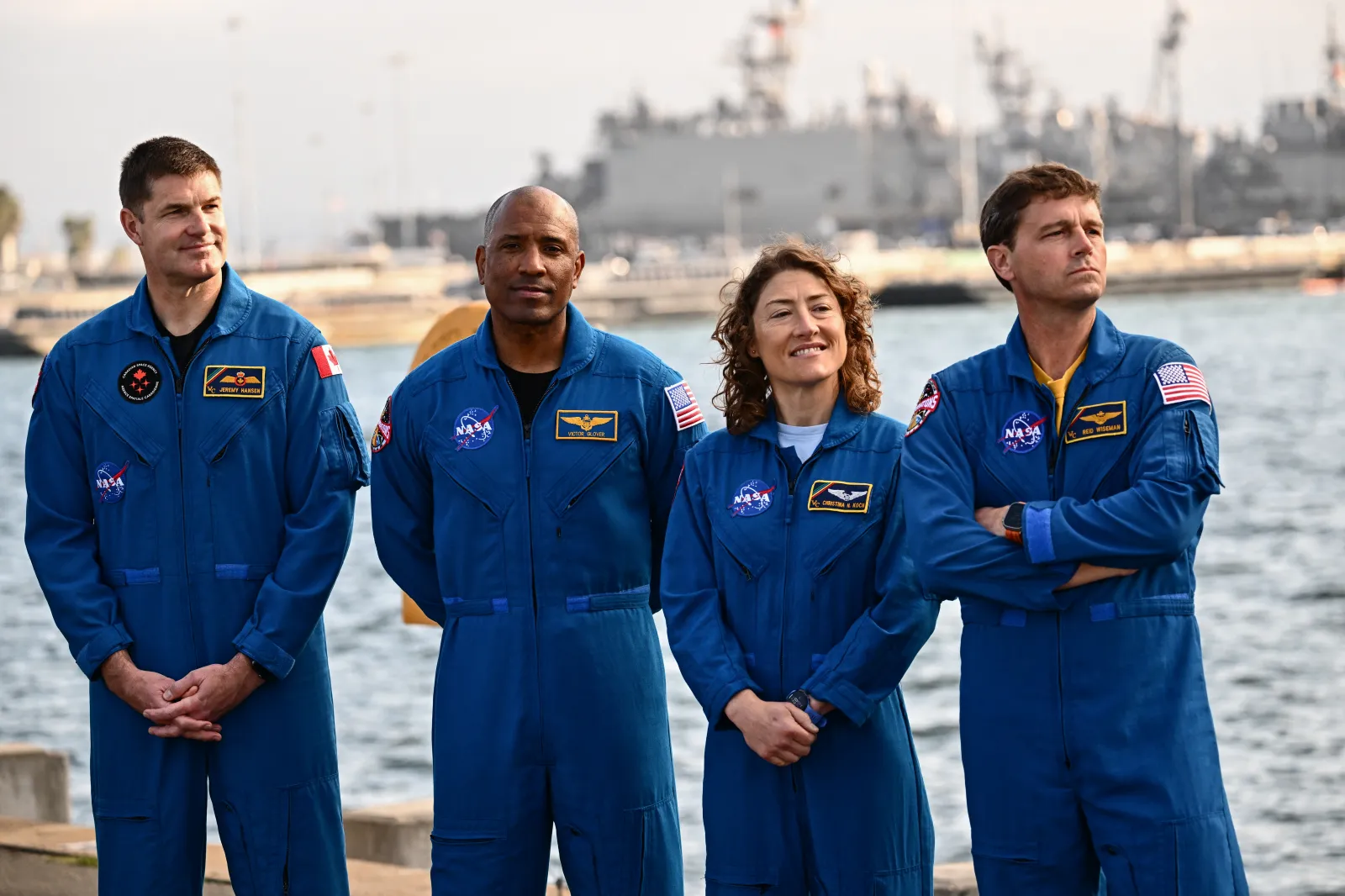
The four-strong crew of astronauts aboard the Artemis II mission’s Orion spacecraft achieved another historic first on Tuesday when they shared a ship-to-ship call with their colleagues on the International Space Station—the first ever moonship-to-spaceship radio linkup.
Why It Matters
During NASA’s Apollo missions of the 1960s and 1970s, the last time humans traveled into deep space, crews had no off‑world presence alongside them.
Read More on News
The call also comes after the crew eclipsed the record for the furthest human space flight on Monday, traveling 248,655 miles from Earth and surpassing the record previously set by the Apollo 13 mission in 1970, NASA said.
What To Know
"Flight controllers in NASA's International Space Station flight control room connected audio from the station’s Space-to-Ground communication with Orion’s Orion-to-Earth communication loop," a NASA spokesperson told Newsweek. "NASA uses the same setup during commercial crew mission arrivals to the space station."
NASA said that the station crew voiced their interest in the differences between the two spacecraft, while the Artemis II crew described what it was like to see the Moon up close.
The Artemis II crew were heading back to Earth after completing a lunar flyby that sent the spacecraft around the Moon.
"We have been waiting for this like you can’t imagine," Artemis II commander Reid Wiseman said, according to the Associated Press.
The call between the Artemis II astronauts and the ISS’s four residents was arranged by Houston’s Mission Control, AP reported, adding that the off-Earth conversation represented a reunion for Orion crew member Christina Koch and Jessica Meir on the space station as the pair conducted the first all-female spacewalk together in 2019.
"I’m so happy that we are back in space together," Meir said, "even if we are a few miles apart."
Newsweek contacted NASA for comment via email on Wednesday.
...
What People Are Saying
Artemis II astronaut Christina Koch said during the call: "The thing that changed for me looking back at Earth was I found myself noticing not only the beauty of the Earth but how much blackness there was around it. It just made it even more special.
"It truly emphasized how alike we are—how the same thing keeps every single person on planet Earth alive. We evolved on the same planet, we have shared things about how we love and live that are just universal, and the specialness and preciousness of that is emphasized when you realize how much else there is around it."
What Happens Next
The Artemis II crew is scheduled to splash down off the San Diego coast on Friday, according to NASA.
Update 4/9/26, 1:02 p.m. ET: This article was updated with comment from NASA.
View 0 Comments
Submit Correction
View Editorial & AI Guidelines