...

By Ian Randall
Deputy Science Editor
0
Share
Newsweek is a Trust Project member
See more of our trusted coverage when you search.Prefer Newsweek on Googleto see more of our trusted coverage when you search.
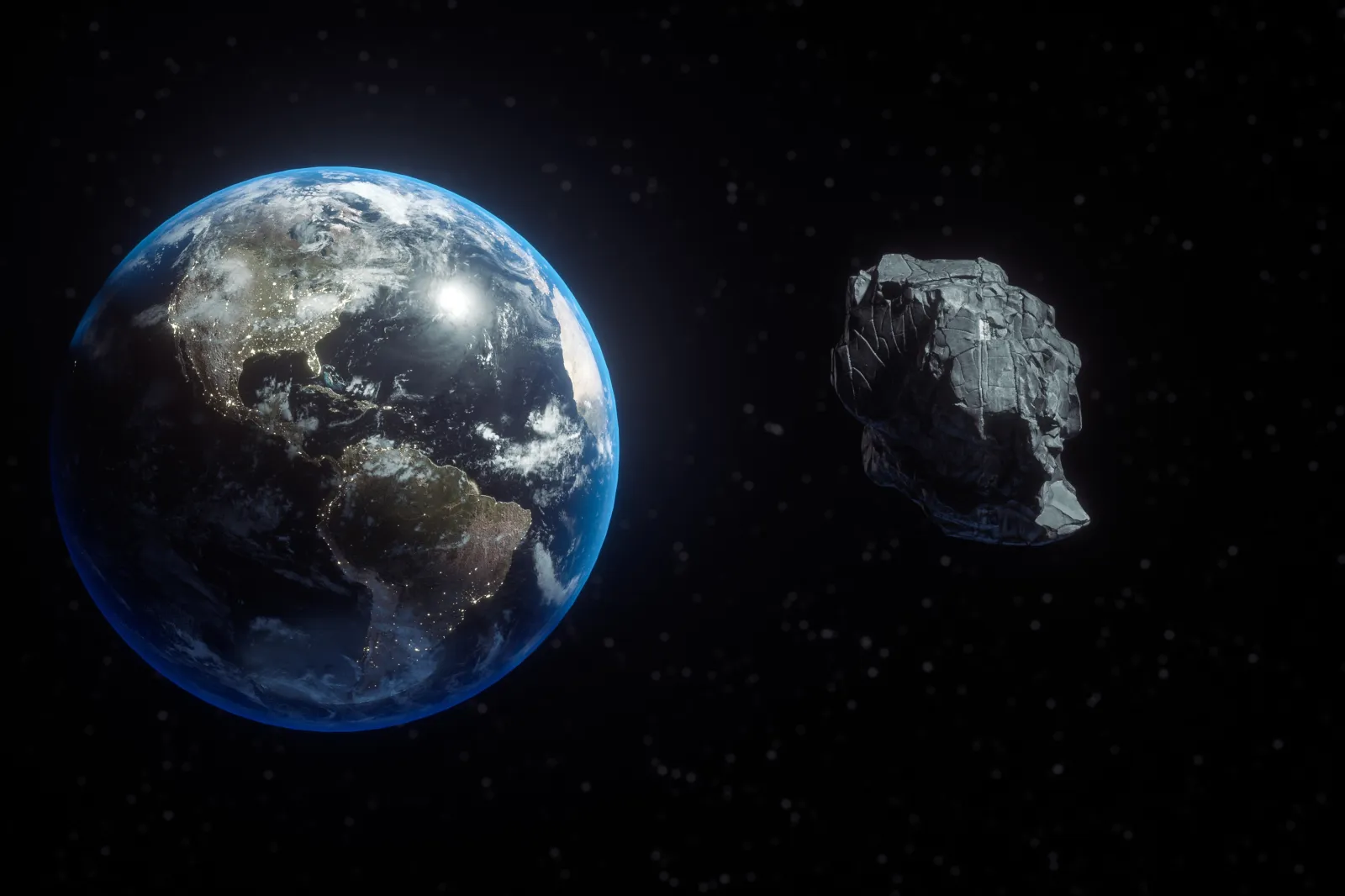
NASA is tracking a trio of vehicle-sized asteroids set to whizz by close to the Earth today—with one getting three times nearer than the orbit of the moon.
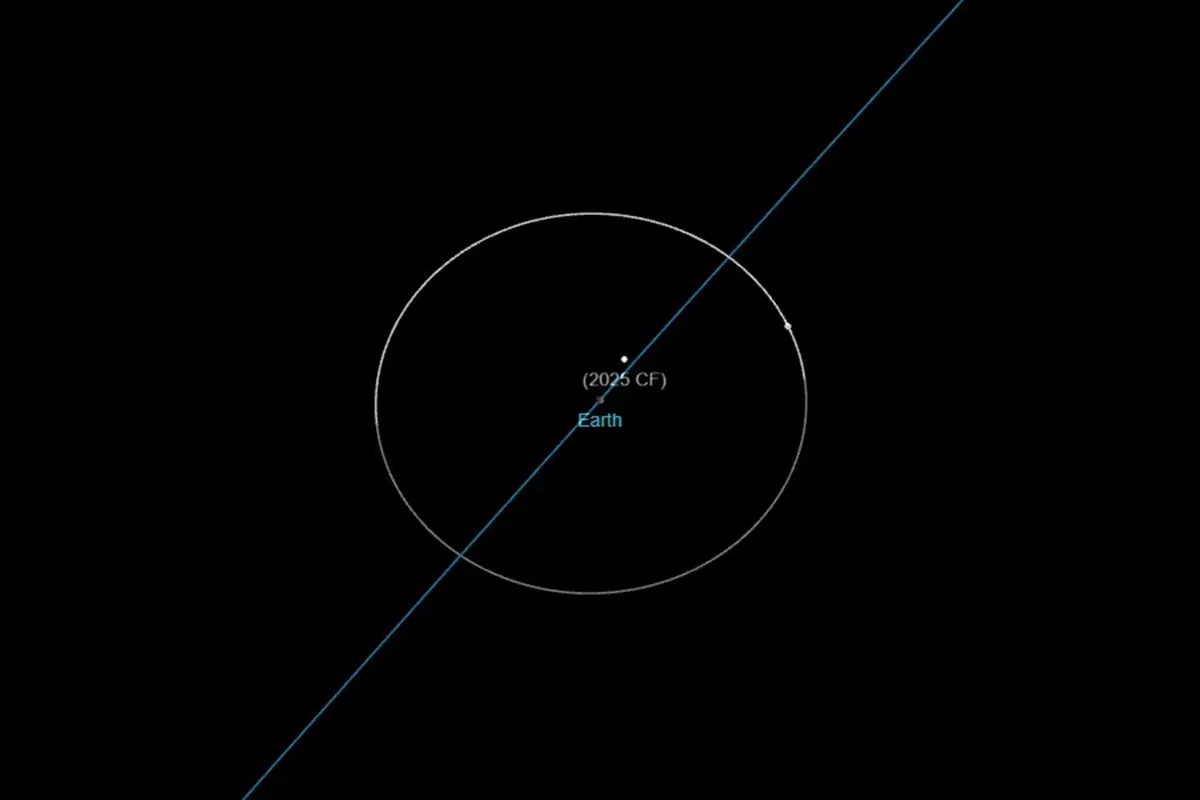
That space rock—named "2025 CF"—is estimated by NASA's Jet Propulsion Laboratory to be some 12 feet across, making it about the size of a small car.
It will miss the Earth by a (cosmically) mere 77,200 miles before hurtling off across the solar system, not to return back to our neck of the woods until March 2032.
Read More on Science
Also passing by today are the more-bus-sized pair of 2025 CD (which is 22 feet across) and 2025 CE (43 feet), with closest approaches of 396,000 miles and 680,000 miles.
...
Asteroids are airless, rocky bodies left over from the formation of the solar system some 4.6 billion years ago. They are primarily found in the main asteroid belt, orbiting the sun between the paths of Mars and Jupiter.
Gravitational interactions (typically with Jupiter) can sometimes send asteroids flying out of the belt, however, potentially bringing them into the inner solar system and even near Earth.
"Scientists continuously monitor Earth-crossing asteroids, whose paths intersect Earth's orbit, and near-Earth asteroids that approach Earth's orbital distance to within about 28 million miles and may pose an impact danger," NASA states on its website.
Other asteroids—the so-called "trojans"—share orbits with planets in the solar system. Jupiter has the most trojans, but they are also found in association with Mars, Neptune and even Earth.
Asteroids are known to range in size from around 329 miles in diameter (i.e. Vesta, which accounts for 9 percent of the total mass of all asteroids) down to a matter of feet across, like today's passersby.
...
The bodies passing us today are, fortunately, not projected to be on a collision course with Earth.
However, the same cannot be said of another asteroid—"2024 YR4," which was first sighted and cataloged by NASA back in late December 2024.
According to the space agency's Center for Near-Earth Object Studies, the 196-foot-wide space rock has around a one percent chance of hitting Earth in December 2032.
Scientists have estimated that, were it to hit Earth, 2024 YR4 would release eight megatons of energy. This is more than 500 times that released when the U.S. dropped an atomic bomb on the Japanese city of Hiroshima near the close of World War II.
Do you have a tip on a science story that Newsweek should be covering? Do you have a question about space? Let us know via science@newsweek.com.
View 0 Comments
Submit Correction
View Editorial & AI Guidelines