10
Loading video...

By Anna Skinner
Associate News Editor
0
Share
Newsweek is a Trust Project member
See more of our trusted coverage when you search.Prefer Newsweek on Googleto see more of our trusted coverage when you search.
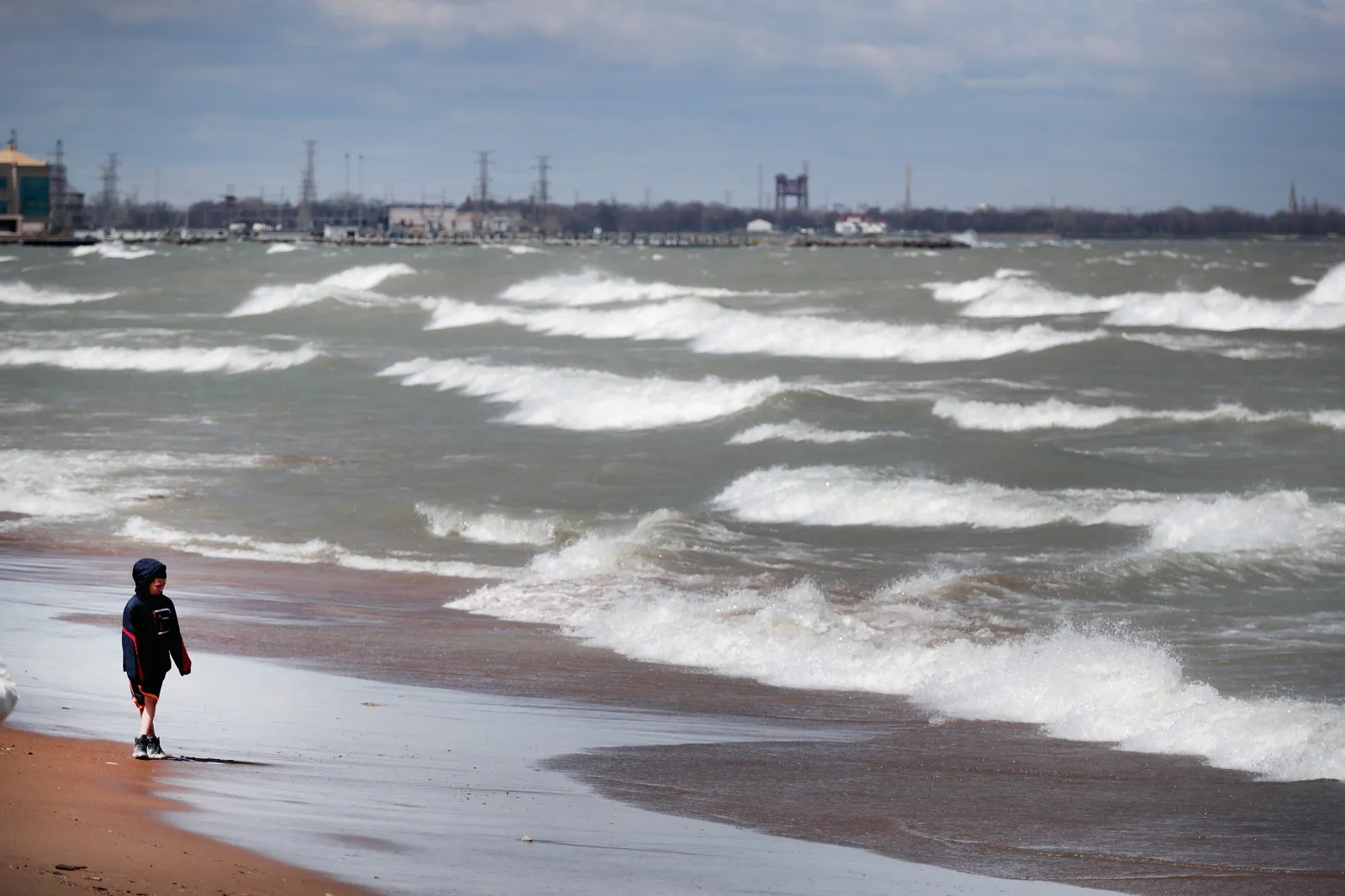
The National Weather Service (NWS) has issued beach hazard statements across Wisconsin and Illinois, warning more than 5 million people not to enter Lake Michigan as life-threatening waves and dangerous rip currents batter the lakeshore.
The warnings come as people are still visiting Lake Michigan beaches to soak up the last few days of summer. Although rip currents and dangerous waves are more commonly associated with ocean beaches, the Great Lakes can also be affected.
Additionally, after Labor Day, lifeguards do not staff Great Lakes beaches, Great Lakes Surf Rescue Project (GLSRP) executive director Dave Benjamin told Newsweek, so paying attention to the beach hazards warning is especially important.
Read More on Weather
Strong winds cause the dangerous waves, NWS meteorologist Rafal Ogorek, who works at the Chicago office, told Newsweek.
What Is a Beach Hazards Statement?
A beach hazards statement is a weather alert issued by the NWS when beach conditions can make it dangerous to enter the water. This can include rip currents, longshore currents, or large waves.
In many instances, the NWS warns people not to enter the water while a beach hazards statement is in place.
...
Where Was the Alert Issued?
On Thursday afternoon, the NWS offices in Milwaukee and Chicago issued beach hazards statements for the Lake Michigan shoreline.
For the Chicago warning, the beach hazards statement goes into effect Thursday night and will remain in place through Friday afternoon. Lake, Illinois, and Cook County fall under the warning area, including millions in the Chicago area. NWS meteorologists warned that swimming conditions would be "life-threatening," particularly for inexperienced swimmers.
"High wave action and dangerous currents expected at Lake Michigan beaches. Waves of 3 to 6 ft expected," the alert said. "An additional period of dangerous swimming conditions is expected Friday night into early next week. Remain out of the water to avoid dangerous swimming conditions and do not venture out onto piers, jetties, breakwalls, or other shoreline structures."
The Milwaukee alert had a similar message. It is in place for Milwaukee, Racine and Kenosha counties from Friday morning through Friday afternoon. Waves as high as 4 feet were expected, along with dangerous currents.
How To Survive a Rip Current
A rip current is a fast-moving channel of water that runs perpendicular to the shoreline. If caught in a rip current, people are urged not to panic. The current will not pull swimmers under. It could, however, carry them further away from shore. To escape the current, swimmers should swim parallel to the shoreline and then angle back to shore once out of the current's grip. If they become tired, float and wave for help.
Related Story

Republican Lawmaker Wants to Rename Lake Erie
Lake Michigan Deaths This Year
Most drownings at the Great Lakes this year have occurred at Lake Michigan, according to data from the Great Lakes Surf Rescue Project. Of the 73 drownings that occurred at the Great Lakes this year, 41 were at Lake Michigan. The most recent drowning was reported on Friday last week in Chicago at Monroe Harbor. Authorities have not yet released the person's name or age.
There have been 1,488 Great Lakes drownings since 2010.
What Happens Next
The warnings will expire by Friday night, although the Chicago alert warned that more dangerous water conditions were expected to begin Friday night and persist into early next week. People in the impacted areas were urged to stay out of the water and follow water safety guidance.
Contact Newsweek editors on this story: Samantha Beech and Sam Wilson.
View 0 Comments
Submit Correction
View Editorial & AI Guidelines