Photo-illustration by Newsweek/Getty

By Robert Alexander
Senior Crime & Court Reporter
0
Share
Newsweek is a Trust Project member
See more of our trusted coverage when you search.Prefer Newsweek on Googleto see more of our trusted coverage when you search.
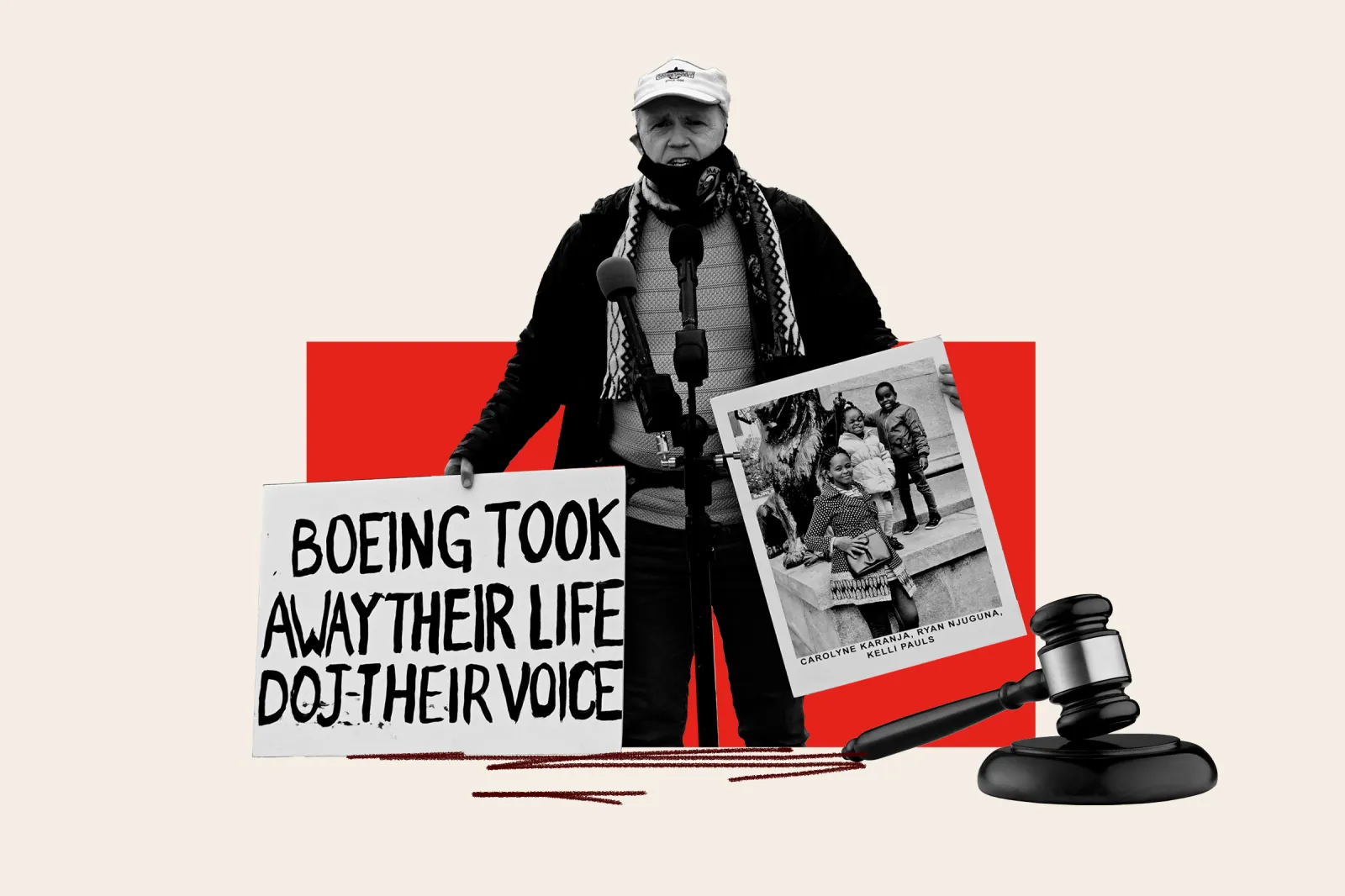
The families of the 346 people killed in the two Boeing 737 Max 8 crashes have filed a rare petition for a writ of mandamus, urging the U.S. Court of Appeals for the Fifth Circuit to reverse a district court decision that dismissed Boeing’s felony charge of conspiracy to defraud the United States.
Filed Thursday, November 13, the request marks an extraordinary escalation in a case that has already tested the limits of federal criminal procedure, victims’ rights, and judicial oversight of corporate crime.
Newsweek spoke exclusively with Robert A. Clifford and Tracy Brammeier of Clifford Law Offices in Chicago, representing the families, asking them to reflect on how years of secrecy, shifting government positions and the ultimate dismissal have shaped the families’ fight for justice, corporate criminal accountability, and the future of aviation safety enforcement.
Read More on News
Newsweek contacted the DOJ and the attorney for Boeing for comment.
Why It Matters
The families of victims killed in the two Boeing 737 Max 8 crashes are asking a federal appeals court to reverse the dismissal of Boeing’s criminal conspiracy charge—a rare and unusual legal move that highlights the broader stakes of the case.
Their mandamus petition challenges the Justice Department’s decision to end prosecution through a non-prosecution agreement, a decision even the trial judge criticized as failing to secure “necessary accountability.”
At its core, the appeal tests how far victims’ rights extend in federal criminal cases, how much oversight courts can exert over DOJ charging decisions, and whether aviation manufacturers can be held publicly accountable when safety failures lead to mass casualties.
The outcome could reshape future aviation law enforcement and corporate crime prosecutions nationwide.

...
What To Know
What Was Wrong With The Boeing 737 MAX And When Did Boeing Know?
The two crashes that killed 346 people were traced to a flawed flight-control system called the Maneuvering Characteristics Augmentation System (MCAS), software Boeing added to the 737 MAX to compensate for the aircraft’s larger engines and altered aerodynamics.
MCAS could push the aircraft’s nose down repeatedly based on a single faulty angle-of-attack sensor, leaving pilots with little ability to counteract it.
Internal Boeing communications show that company test pilots had identified problems with the system as early as 2016, two years before the first crash.
After the Lion Air and Ethiopian Airlines crashes in October 2018 and March 2019, the global MAX fleet was grounded while Boeing redesigned the software, added sensor redundancy, and updated pilot training.
The FAA approved the fixes and cleared the aircraft to return to service in November 2020.
Early Secrecy And The Start Of The Criminal Investigation (2018–2020)
The legal battle over the federal government’s handling of the Boeing 737 Max criminal case has entered a new phase, as families of those killed seek an extraordinary writ of mandamus—a court order that essentially tells officials, “Do your job”—to revive the prosecution.
Their petition, filed on November 13, 2025, asks the U.S. Court of Appeals for the Fifth Circuit to reverse the decision by a Texas federal judge who dismissed Boeing’s felony conspiracy charge at the Department of Justice’s request.
This case is important because it could decide whether big companies like Boeing can avoid full criminal trials after deadly failures, and it may change how victims' families are treated and how aviation disasters are handled in court for years to come.
The filing underscores years of controversy surrounding the government’s investigation, its agreements with Boeing, and the limits of judicial oversight when corporate crimes result in mass casualties.
...
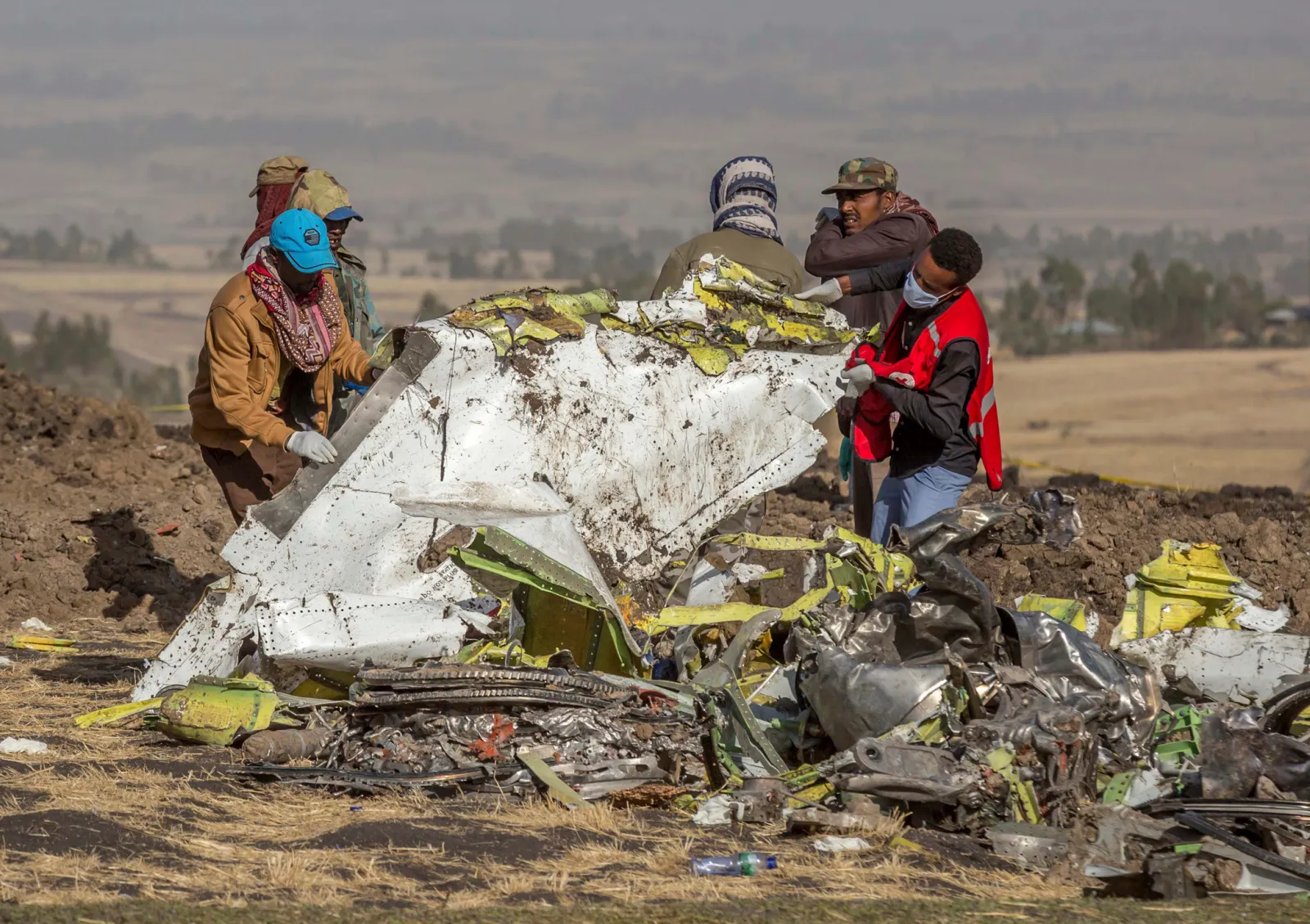
The dispute traces back to the aftermath of the 2018 Lion Air and 2019 Ethiopian Airlines crashes.
While the DOJ had opened a criminal inquiry into Boeing’s conduct, the families were initially told such an investigation did not exist.
In February 2020, the DOJ’s Victims’ Rights Ombudsman informed family representative Thomas Gallagher that “the FBI ha[d] advised… that they do not have a criminal investigation into this crash, nor are they aware of any open cases at the Department of Justice.”
Months later, prosecutors charged Boeing with conspiracy to defraud the United States for misleading the FAA about the aircraft’s Maneuvering Characteristics Augmentation System, or MCAS.

...
The 2021 Deferred Prosecution Agreement And Families’ CVRA Challenge
In January 2021, the DOJ and Boeing entered into a Deferred Prosecution Agreement in which Boeing acknowledged misconduct, paid penalties, and committed to implementing a compliance and ethics program.
Under the DPA’s terms, a breach would allow the government to resume full prosecution of the felony charge.
The families later argued that the secrecy surrounding the investigation and the DPA negotiations deprived them of their rights under the Crime Victims’ Rights Act (CVRA), which requires federal prosecutors to inform and consult with crime victims during criminal proceedings.
Their CVRA challenge prompted U.S. District Judge Reed O’Connor to hold an evidentiary hearing in 2022 to determine whether Boeing’s admitted conspiracy had proximately caused the crashes.
In a pivotal ruling, the judge concluded that “Movants have established causation,” and held that the families had standing as crime victims under federal law.
The finding was unprecedented, formally linking Boeing’s admitted misconduct to the chain of events that led to the two fatal accidents.
Boeing’s Breach Of The DPA And The DOJ’s 2025 Non-Prosecution Agreement
The case took another turn in May 2024, when the DOJ notified the court that Boeing had breached the DPA.
Prosecutors reported that Boeing failed to “design, implement, and enforce a compliance and ethics program to prevent and detect violations of the U.S. fraud laws throughout its operations.”
Under the agreement, the breach authorized the DOJ to reinstate the criminal charge and proceed toward trial.
Instead, in May 2025, DOJ negotiated a new Non-Prosecution Agreement that dismissed the felony charge and committed the government not to pursue further criminal action for the conduct described in the deal.
That sequence—breach, followed by dismissal—became a major source of outrage for many families.
They objected to the government’s motion to dismiss the case, arguing that the NPA contradicted the purpose of the DPA, undermined accountability, and again marginalized their CVRA rights.

...
Judge O’Connor acknowledged these concerns and made clear he disagreed with the government’s resolution.
In his November 2025 dismissal order, he wrote that the NPA “fails to secure necessary accountability to ensure the safety of the flying public” and stated he did not believe the dismissal served the public interest.
But he also emphasized that “poor discretion may not be countered with judicial overreach,” concluding that Rule 48(a) of the Federal Rules of Criminal Procedure—which says that “The government may, with leave of court, dismiss an indictment, information, or complaint” —left him little choice but to grant the DOJ’s request.
The Families’ Mandamus Petition And What The Fifth Circuit Must Decide
The families now argue that this conflict—between the judge’s concerns about accountability and his constrained authority—justifies appellate intervention.
A writ of mandamus is granted only in exceptional circumstances, but the families contend this case meets that standard.
They point to the DOJ’s initial denial that an investigation existed, the breach of the DPA, the subsequent decision to negotiate an NPA rather than prosecute, and the judge’s own discomfort with the government’s approach.
Their legal team describes the situation as uniquely complex.
In an exclusive interview, Tracy A. Brammeier, partner at Clifford Law Offices representing the families, told Newsweek, “Everything about the case is really unprecedented… this is not how this case should have unfolded or how it should have been handled by the government.”
She added that “Boeing bought itself a get out of jail card paid for by future families who will find themselves in our position, seeking justice for yet another plane full of innocent victims. The judge recognizes there was a miscarriage of justice… Unfortunately, he feels the power to right this wrong is limited by legal precedent.”

...
Statements From Families’ Attorneys
Robert A. Clifford, founder of Clifford Law Offices and a veteran aviation attorney who first worked on the 1979 crash of American Airlines Flight 191 in Chicago, and who has represented families in major aviation disasters since then, told Newsweek: “Boeing knew about the defect in the 737, and then they lied to the FAA, they lied to the President of the United States to keep the fleet in the air,” adding that “They kept it from the world… They guessed wrong, and people died.”
Brammeier added, “The judge recognized there was a miscarriage of justice… Unfortunately, he feels the power to right this wrong is limited by legal precedent. This case… raises the question of whether this is one of those unique circumstances where the judiciary must get involved.”
Legal Background: The Fifth Circuit’s Role
The Fifth Circuit addressed related issues in its 2023 In re Ryan decision, recognizing the Boeing families as crime victims under the CVRA but finding it was premature to address limits on the remedies available to challenge DOJ charging decisions.
Now that the case has been dismissed, the new petition asks the appeals court to consider those limits in light of the unusual circumstances of the Boeing case, including the scale of the disaster, the government’s findings of a breach, and the judge’s stated concerns.

...
Implications For The Justice System
A ruling in the families’ favor could reinstate the criminal charge, require greater judicial scrutiny of non-prosecution agreements, or redefine the scope of CVRA protections in complex corporate cases.
A denial would reinforce the DOJ’s broad discretion to resolve corporate misconduct without judicial interference, even in cases involving mass loss of life.
Civil litigation in the Chicago federal court continues, with families seeking damages and broader accountability.
But for the families pressing the mandamus petition, the criminal case remains the clearest measure of whether the federal justice system will impose consequences when corporate failures have catastrophic human costs.
As the Fifth Circuit weighs the petition, the outcome promises to shape not only the future of the Boeing case but also the broader landscape of aviation safety enforcement, corporate criminal accountability, and the role of crime victims in federal prosecutions.
What People Are Saying
Tracy A. Brammeier, partner at Clifford Law Offices and the families’ attorney, told Newsweek: “Everything about the case is really unprecedented… historically, aviation crashes have only rarely been subject to criminal investigation and prosecution in the United States. While there just isn’t a lot of legal precedent for this particular circumstance, there’s no question that this is not how this case should have unfolded or how it should have been handled by the government.”
Judge Reed O’Connor in dismissing the original case and recognizing the families as crime victims under the CVRA, said: “Poor discretion may not be countered with judicial overreach… the Court acknowledges that it does not have the authority to deny leave because it disagrees with the Government that dismissing the criminal information in this case is in the public interest.”
Javier de Luis, family member who lost his sister, said: “The judge in this case agrees that Boeing cannot be trusted to put safety ahead of their own bottom line. He agrees that the DOJ motion is not in the public interest. Unfortunately, he also believes that he is powerless to do anything about it. But it is important for the public to understand these points. Boeing bought itself a get-out-of-jail-free card. I pray it is not paid for by future families that will find themselves in our position, seeking justice for yet another plane full of innocent victims.”
What Happens Next
The mandamus petition now moves to the Fifth Circuit, which must first decide whether the families’ challenge to Boeing’s dismissal meets the high bar for extraordinary relief.
If accepted, the court will order briefing from the DOJ and Boeing, potentially hold oral arguments, and then determine whether to reinstate the criminal case, require additional judicial scrutiny, or leave the dismissal in place.
The outcome will decide whether federal prosecutors can end major corporate-crime cases through non-prosecution agreements with limited judicial oversight, or whether victims can compel deeper accountability when admitted misconduct contributes to mass casualties.
Meanwhile, the civil litigation in Chicago continues regardless of what happens on the criminal side.
Photo-illustration by Newsweek/Getty
View 0 Comments
Submit Correction
View Editorial & AI Guidelines