Getty Images

By Anna Skinner
Associate News Editor
0
Share
Newsweek is a Trust Project member
See more of our trusted coverage when you search.Prefer Newsweek on Googleto see more of our trusted coverage when you search.
Parts of California could face a higher risk of hurricane-related impacts in 2026, as forecasters warn that warm Pacific waters could increase the chances of rare but potentially dangerous tropical systems affecting the state.
The Eastern Pacific hurricane season begins on May 15 and runs through November 30. For the incoming hurricane season, which at times could affect California and other Southwestern states, AccuWeather is predicting 17 to 22 named storms, nine to 13 of which could strengthen into hurricanes. Of those, four to eight could strengthen even further into major hurricanes.
While hurricanes rarely make direct landfall in California, the new report from AccuWeather underscores growing concern among meteorologists that changing ocean conditions, largely influenced by the increasing chances of an El Niño year, could increase the likelihood of moisture-rich tropical storms or weakened hurricanes moving into the Southwestern U.S., bringing heavy rain, flooding, and dangerous surf to coastal and inland areas.
Read More on Weather
...
How El Niño Impacts Hurricane Season
El Niño is a climate pattern marked by warmer-than-average ocean temperatures in the central and eastern Pacific. It can play a major role in shaping hurricane seasons in both the Pacific and Atlantic oceans.
In the Pacific basin, warmer waters and reduced wind shear can create more favorable conditions for storms to form and intensify, increasing the odds that systems could survive long enough to impact the U.S. West Coast.
...
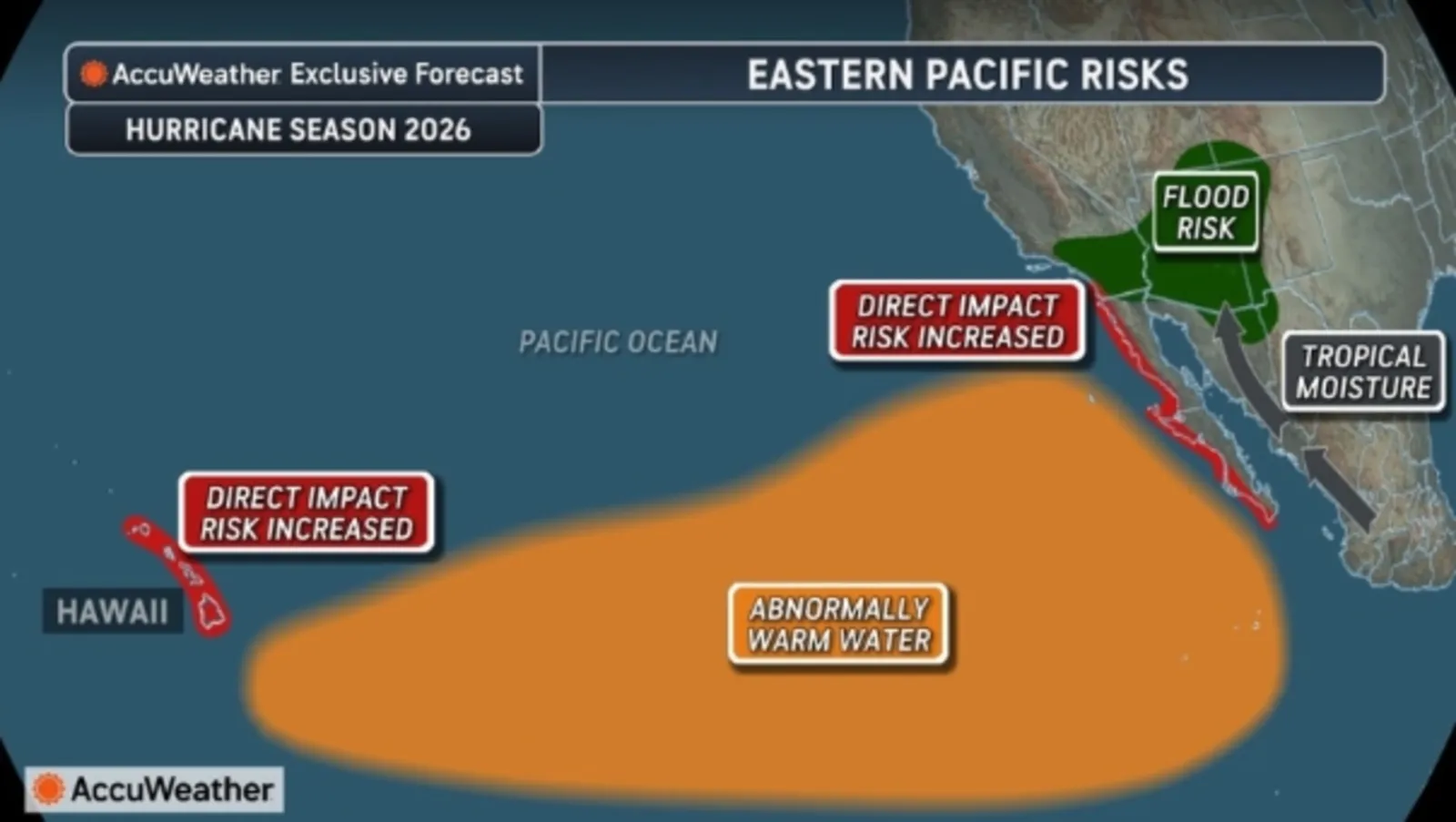
Elevated risk zones extend northward from Baja California toward the U.S. West Coast, reflecting concerns that warmer waters could allow tropical systems to survive farther north than in a typical year. AccuWeather meteorologists caution that storms that weaken before reaching land can still deliver heavy rainfall, flooding and dangerous coastal conditions well outside the tropics.
Southern California counties at greatest risk of hurricane-related impacts this year include San Diego County, Orange County, and Riverside County, AccuWeather Lead Hurricane Expert Alex DaSilva told Newsweek.
The greater chance of impacts will likely stay south of Los Angeles, although there is still a risk that Los Angeles County could see impacts as well, DaSilva said.
The map of possible California impacts this year should not be interpreted as a forecast of any specific storm hitting California. Instead, it reflects shifting climate factors that may increase the odds of Pacific systems posing a greater threat to the state, a reminder that hurricane risk in California, while still comparatively low, is not zero.
Ocean surface temperatures are cooler close to the California coast, which means most storms fall apart before they reach the Golden State. However, those temperatures are expected to be warmer than normal this year because of the developing El Niño, and although they won't be warm enough to support tropical development, the warm waters could allow storms to move farther north than normal.
El Niño is known to favor increased hurricane activity in the eastern Pacific by limiting vertical wind shear that can otherwise tear storms apart. At the same time, AccuWeather says ocean waters across large parts of the Pacific are not only warmer at the surface but also unusually warm hundreds of feet below, supplying extra energy for storms to rapidly strengthen and maintain their structure.
California Impacts May Come Without Direct Landfall
Even without a hurricane striking California directly, tropical systems in the Pacific can still have major consequences. Previous storms have shown that moisture pulled northward from decaying hurricanes can trigger flash flooding, mudslides, and coastal erosion, particularly in areas recently affected by wildfires.
Southern California and the broader Southwest are especially vulnerable to heavy rain events tied to tropical moisture surges. Such setups can overwhelm drainage systems and lead to rapid flooding in desert and urban areas alike.
"There may not be a full-fledged hurricane barreling into Southern California," DaSilva told Newsweek. "But even if a storm is able to maintain its organization, that moisture can stream northward and impact Southern California."
How El Niño Could Affect Other States
Other Southwestern states also face an increased risk. As storms move up the Baja peninsula, they can push moisture further into New Mexico and Arizona, heightening flash flood risk for those states. A storm threatening 4 to 8 inches of rain would be "catastrophic" in places like Phoenix, Arizona, DaSilva said, because these areas don't typically see that amount of rain.
"Even a couple of inches can be pretty destructive if it's all coming at one time," he said.
In addition to increasing Pacific hurricane impacts, El Niño can influence wet weather across many Southern U.S. states, including Southern California, Arizona, New Mexico, Texas, Southern Louisiana, Southern Mississippi, Southern Alabama, and Florida. However, the Southwest will likely see those increased impacts in the summertime with the Pacific hurricane season, whereas the Southeast will more likely be impacted by flooding rains in the late fall and winter, DaSilva said.
Hawaii also faces an increased chance of direct impacts from hurricanes and tropical storms this year.
Atlantic Outlook Contrasts With Pacific Threats
While El Niño is expected to boost Pacific hurricane activity, it typically has the opposite effect in the Atlantic Basin. Stronger upper-level winds associated with El Niño can hinder storm development there, often resulting in fewer or weaker Atlantic hurricanes during El Niño years.
“This could be an unusually active and potentially impactful year in the Pacific basin, unlike the Atlantic basin, where we are forecasting fewer storms than the historical average,” DaSilva said in the AccuWeather report.
View 0 Comments
Submit Correction
View Editorial & AI Guidelines