10
Loading video...

By Mandy Taheri
Reporter
0
Share
Newsweek is a Trust Project member
See more of our trusted coverage when you search.Prefer Newsweek on Googleto see more of our trusted coverage when you search.
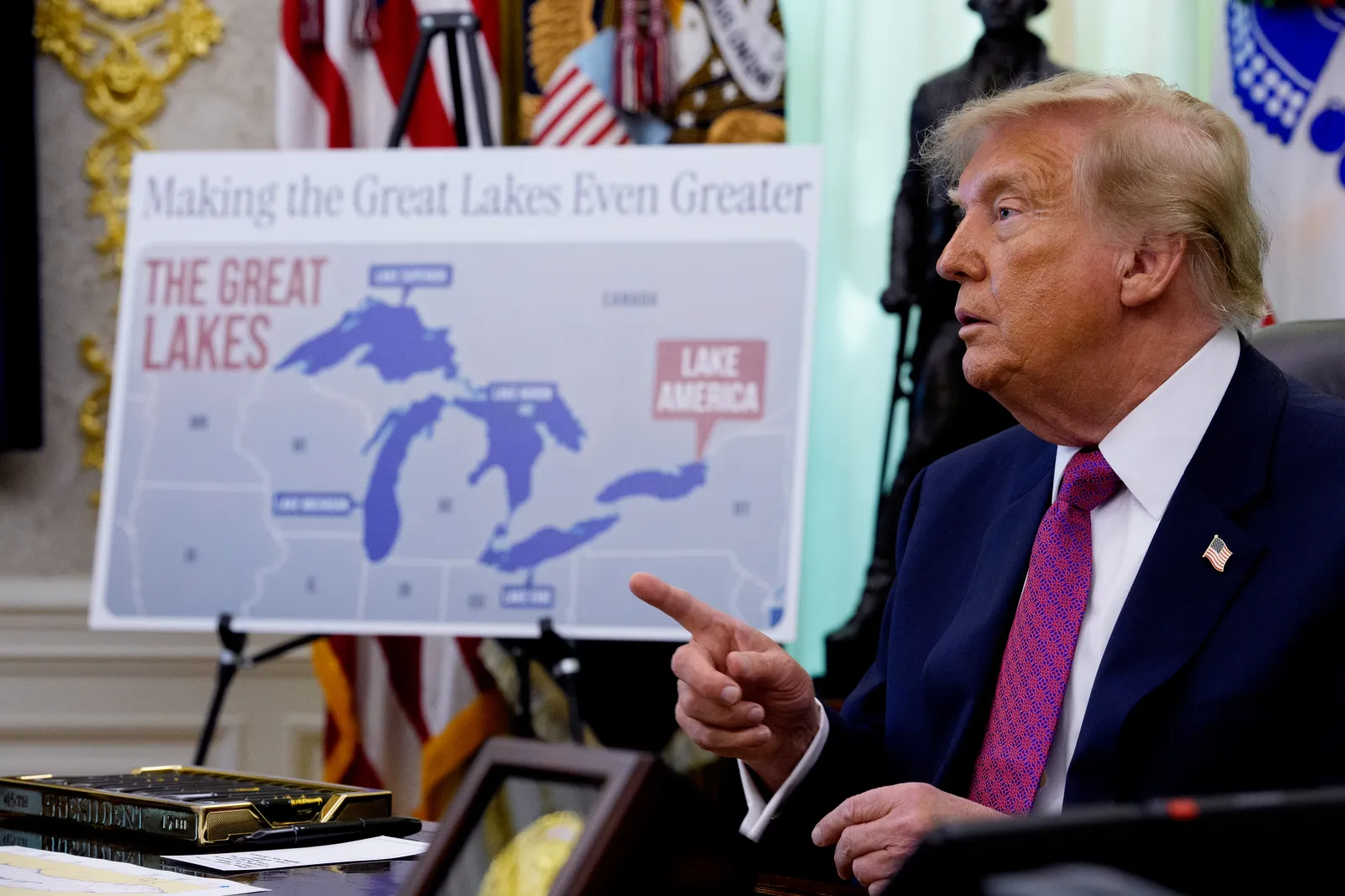
President Donald Trump's executive order directing federal agencies to refer to Lake Ontario as "Lake America" has drawn attention to landmark and geographic names on both sides of the border, particularly those that share his last name.
Following Trump's executive order, Ottawa officials are considering renaming Trump Avenue, a residential street named after the president, with suggested replacements including "Taco Avenue" amid ongoing U.S.-Canada trade tensions.
Can Canada Rename the Trump Geographical Landmarks?
Geographic names in Canada are approved by provincial and territorial naming authorities and the Geographical Names Board of Canada.
Read More on News
While the federal government maintains the Canadian Geographical Names Database, decisions to rename most lakes, islands, mountains and other features typically originate with the relevant provincial or territorial authority and often involve consultation with local communities, Indigenous groups and other stakeholders.
Related Story
Can Trump Claim an Ocean? The Legal Limits of a President’s Renaming Power
What Is Named Trump in Canada?
Official Canadian records show several geographic features bearing the Trump name across the country, including lakes, islands and waterways, mainly located in Ontario and Newfoundland and Labrador. Most are not connected to Trump or his family and generally predate his political career.
The landmarks include the Trump Islands, a pair of small islands in Notre Dame Bay off Newfoundland's northeast coast. The islands, known as North Trump Island and South Trump Island, were once the site of a small mining and fishing community of a couple dozen residents in 1901 before being abandoned in the early 20th century. They are uninhabited, but locals visit the islands for cookouts, serenity and hikes.
Some bodies of water share the name, such as Trump Lake in Ontario, as well as East Trump Lake, West Trump Lake, and Trump Creek, all of which are located in the province.
Unlike lakes, islands and waterways listed in the federal geographical names database, municipal street names are governed locally and can be changed through city processes.
Every place in Canada named Trump
Ten officially named features in the federal gazetteer — four lakes, three islands, a creek and two abandoned settlements — plus one Ottawa street. Neither settlement is inhabited today. Select any marker for its record.
Loading map…
Select a marker or a name below to see its record.
Source: Canadian Geographical Names Database, Natural Resources Canada; City of Ottawa. Boundaries from Natural Earth.
When Were They Named 'Trump?'
Most of the Canadian geographic features bearing the Trump name were named long before President Trump's political career and, in some cases, long before he was born.
The Trump Islands in Newfoundland and Labrador, for example, were known by that name in the 19th century and once supported a small mining and fishing settlement. They were updated in the government database with the Trump name in 1954, the National Post reported, as well as Trump Lake and Trump Creek.
The outlet reported that East Trump Lake and West Trump Lake were named in 1973.
However, Ottawa's Trump Avenue received its name about 25 years ago as part of the Central Park neighborhood's New York City theme, alongside streets such as Manhattan Crescent and Staten Way. Trump was then best known as a New York real estate developer.
Trump Avenue
Ottawa Councilor Riley Brockington said he plans to work with residents to rename Trump Avenue following the city's October election. He described the street's current name as an embarrassment, CBC News reported.
Ottawa City Council unanimously voted Wednesday to begin considering a new name for Trump Avenue. The Ottawa community has previously tried to change the name back in 2021. At the time, 62 households on the street were asked if they would like to rename it, with a split vote of 21 yeas, 21 nos and 20 no votes.

...
"Taco Avenue" is among the suggestions received, Councillor Tim Tierney told CNN. The proposed street name references an acronym coined in 2025 that means "Trump Always Chickens Out." The shorthand became popular online following the president's threats to implement steep global tariffs.
"I think the time has come when you look at the damage and carnage that the president has caused, including with our own country," Brockington said. "We're past the point of debating."
Tierney said other name suggestions for the street included Pelosi Avenue, Obama Avenue, Gulf of Mexico Avenue and even Rosie O'Donnell Avenue. Newsweek contacted the White House for comment on the matter for a related article.
Why Did Trump Rename Lake Ontario?
Trump's executive order directed the Interior Department and the U.S. Board on Geographic Names to replace "Lake Ontario" with "Lake America" in the federal Geographic Names Information System within 30 days. Federal agencies must also use the new name on government maps, contracts, documents and other communications.
The order described the lake as an important part of American history and commerce, citing its role in shipping, energy production and the War of 1812. It also argued that the United States had contributed more than Canada to protecting the Great Lakes and keeping their shipping routes open.

...
The change applies only within the U.S. federal government. Trump cannot require Canada, international organizations or private mapmakers to use "Lake America." Canadian Prime Minister Mark Carney has rejected the new name, noting that "Ontario" comes from the Wendat word "Ontari'io," referring to a beautiful or great lake.
The move echoes Trump's earlier effort to rename the Gulf of Mexico as the "Gulf of America," another attempt to rebrand a prominent geographic feature through executive action.
The Trump administration has argued the name Lake Ontario change recognizes the lake's significance to U.S. commerce, transportation and national history. The executive order cited American investment in Great Lakes infrastructure and maritime security.

...
Canadian officials have rejected the name change. Prime Minister Mark Carney said the lake's name predates both Canada and the United States and comes from the Wendat word "Ontari'io," which he said in an X post means “the lake is beautiful, the lake is big."
Carney said Canada would continue to use the name Lake Ontario, while noting that the U.S. order applies only to federal agencies and cannot dictate how Canada, international organizations or private mapmakers refer to the waterway.
Although debate over naming geographic areas has intensified amid U.S.-Canada trade and diplomatic tensions, most Canadian landmarks bearing the Trump name have existed for decades and are largely unrelated to the American president.
Contact Newsweek editors on this story: Jason Lemon and Gray R. Thomas
View 0 Comments
Submit Correction
View Editorial & AI Guidelines