10
Loading video...

By Anna Skinner
Associate News Editor
0
Share
Newsweek is a Trust Project member
See more of our trusted coverage when you search.Prefer Newsweek on Googleto see more of our trusted coverage when you search.
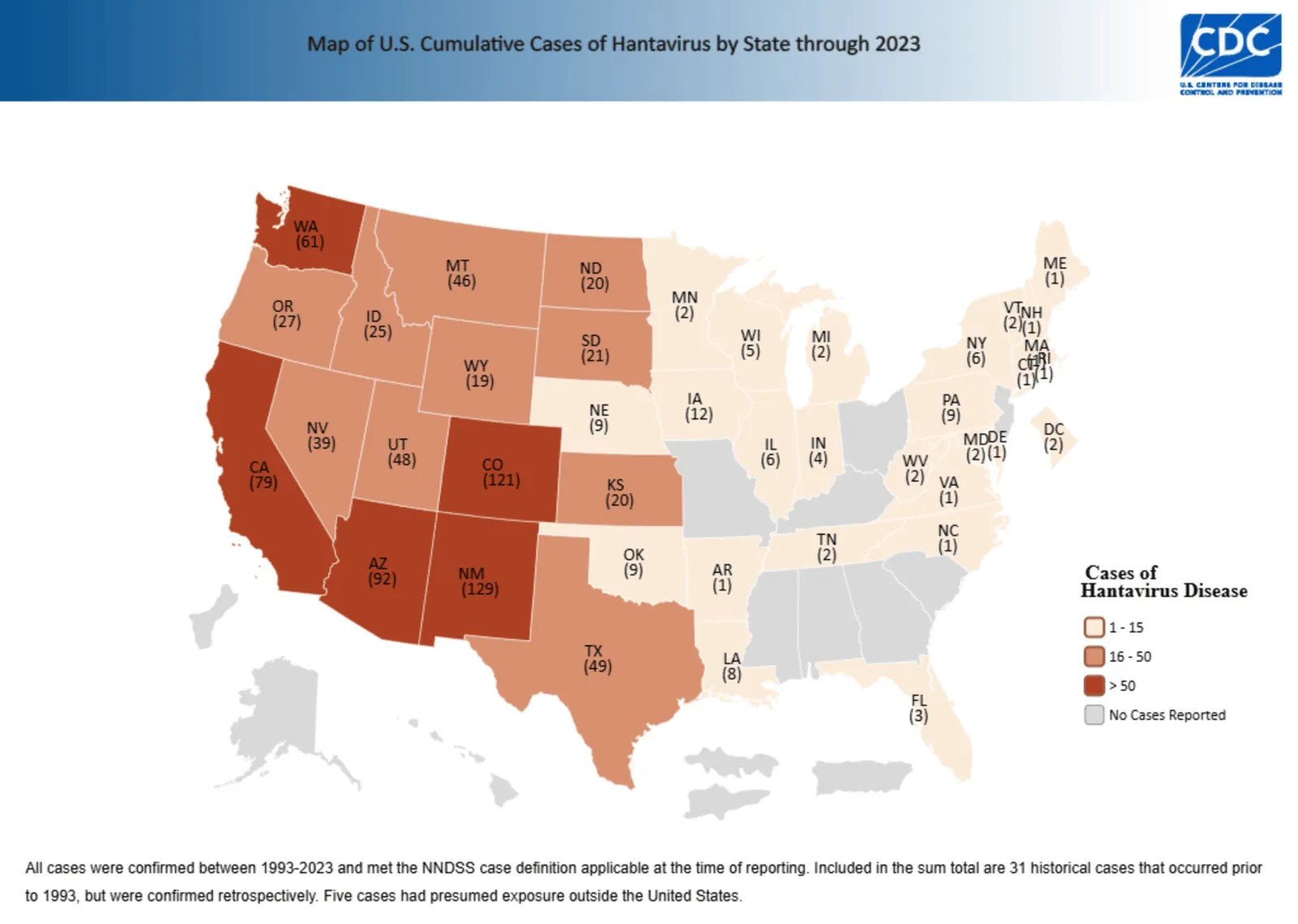
More than 300 people have died from hantavirus in the U.S. since the Centers for Disease Control and Prevention (CDC) began surveillance of the disease in 1993, a map from the CDC shows.
Hantavirus, which is a rare but often severe disease most commonly spread to humans through contact with infected rodents, typically by inhaling virus particles from their urine, droppings, or saliva, has recently caused the deaths of three people following an outbreak on the MV Hondius ship, which set sail from Argentina a month ago.
In the United States, most cases are linked to the Sin Nombre virus, a strain carried by deer mice. The Andes strain, by contrast, found mainly in South America, is the only hantavirus shown to allow limited person‑to‑person transmission, a distinction that has drawn renewed attention amid the recent international cases.
Read More on News
Newsweek reached out to the CDC and the Department of Health and Human Services (HHS) for comment.
Between 1993 and 2023, some 890 cases of hantavirus have been reported in the U.S., CDC data shows. More than 34 percent, or 309 people, suffering from confirmed hantavirus cases in the U.S. have died.
The states with the most confirmed cases include New Mexico, Colorado, Arizona, California and Washington. Of the confirmed cases, 54 people died in New Mexico, 45 died in Colorado, 32 in Arizona, 24 in California and 20 in Washington.
Nearly every U.S. state has reported at least one case of hantavirus since 1993, although the reports are lower in the East.
Hantavirus Symptoms
Hantavirus symptoms often begin one to eight weeks after exposure and usually start out flu‑like, which can make the illness hard to recognize at first. Early symptoms commonly include fever, fatigue and muscle aches, particularly in large muscle groups such as the thighs, hips and back. Many patients also experience headaches, chills, dizziness, nausea, vomiting, diarrhea or abdominal pain, according to the CDC and the World Health Organization (WHO).
As the disease progresses, some patients—especially those infected with strains circulating in the Americas—can develop hantavirus cardiopulmonary syndrome (HPS), a severe and life‑threatening condition. Later‑stage symptoms include coughing and shortness of breath as fluid builds up in the lungs, sometimes rapidly leading to respiratory failure and shock. WHO and CDC officials say the illness can worsen quickly once breathing problems begin, which is why early medical care is critical.
Of the 890 hantaviruses cases reported in the U.S. between 1993 and 2023, 859 have developed HPS. More than 60 percent of the infected people were male, with 94 percent of cases occurring west of the Mississippi River, according to CDC data.
...
Is There Vaccine for Hantavirus?
There is currently no widely available vaccine to prevent hantavirus infection in the United States.
According to the CDC and the WHO, prevention focuses on avoiding contact with rodents and their urine, droppings or saliva, rather than vaccination, because no approved vaccine exists for the strains that cause hantavirus pulmonary syndrome (HPS) in the Americas.
Some vaccines have been developed and used in parts of Asia to protect against strains linked to hemorrhagic fever with renal syndrome, but those vaccines are not approved in the U.S. and do not protect against the hantavirus strains most commonly found in North America, health authorities say.
Researchers are continuing to work on potential vaccines, and experimental candidates are in early‑stage development, but experts say any broad rollout remains years away. For now, public health officials emphasize rodent control, safe cleanup of rodent‑infested areas, and early medical care as the primary ways to reduce the risk of severe illness.
View 0 Comments
Submit Correction
View Editorial & AI Guidelines