...

By Ryan Chan
China News Reporter
0
Share
Newsweek is a Trust Project member
See more of our trusted coverage when you search.Prefer Newsweek on Googleto see more of our trusted coverage when you search.
China aims to build six additional aircraft carriers within a decade as part of efforts to significantly bolster its naval power, the Pentagon said in a report released on Tuesday.
"The future development plans for China's aircraft carriers will be comprehensively considered based on national defense needs," Liu Pengyu, a spokesperson for China's Embassy in Washington, D.C., previously told Newsweek, adding that the East Asian power's military development and improvement were not directed at any third party.
The Chinese Foreign Ministry did not immediately respond to a request for comment.
Read More on World
Why It Matters
In pursuit of the ambitious goal of building "world-class" armed forces by 2049, China is undergoing rapid military modernization. With over 370 vessels, including three aircraft carriers, Beijing has the world's largest navy by hull count. Still, its aircraft carrier fleet is far behind that of its top rival: the United States, which has the world's largest with 11 carriers.
Aircraft carriers are considered a key indicator of a nation's military strength, as they serve as floating air bases to project power beyond the coastline. The Chinese military has regularly deployed its aircraft carriers on missions in the broader western Pacific to challenge the U.S. island chain strategy aimed at limiting its regional military presence.
What To Know
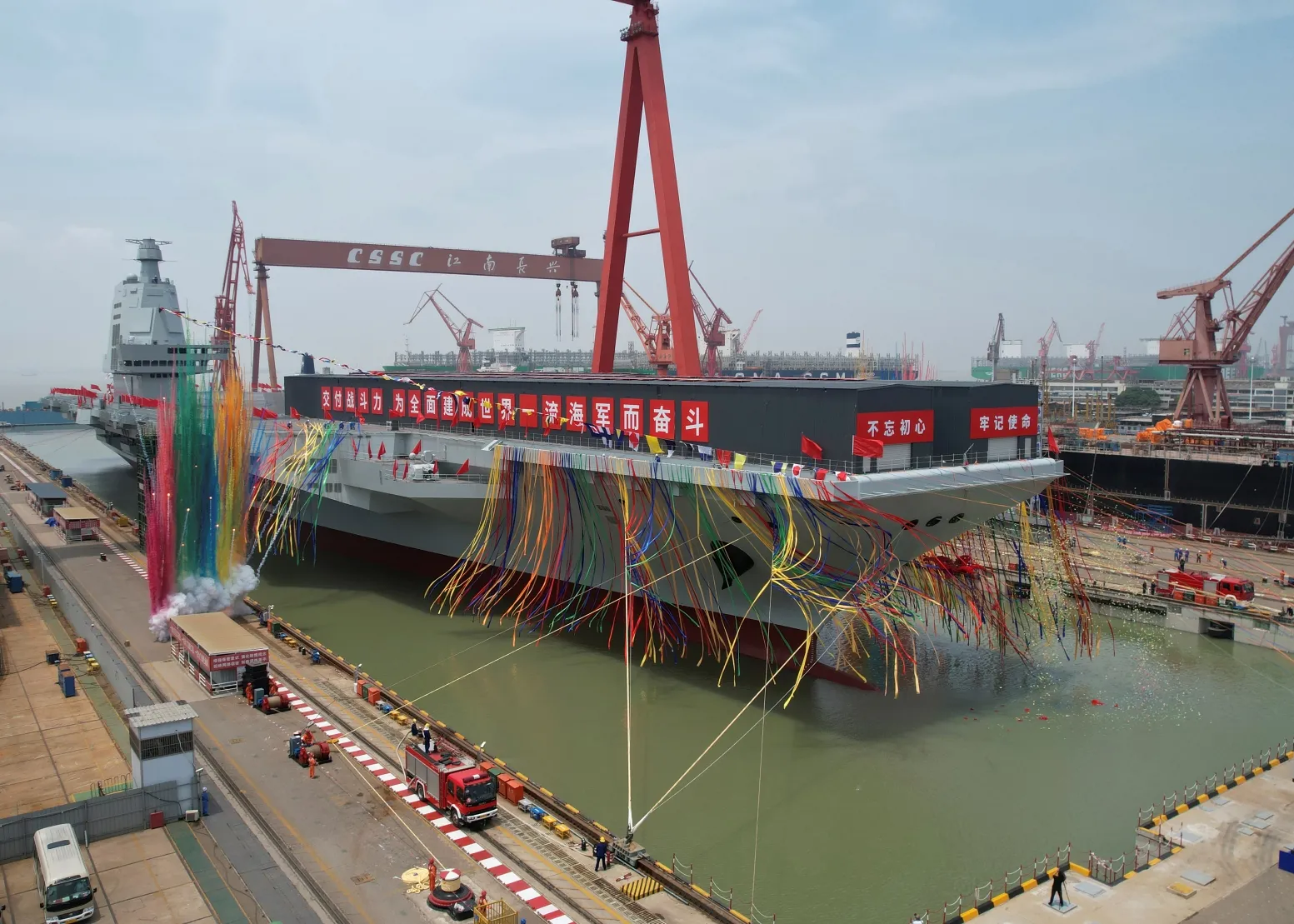
In its annual report to Congress on Chinese military power, the Pentagon said China aims to have nine aircraft carriers by 2035, including those already in service: CNS Liaoning, CNS Shandong and CNS Fujian, which was commissioned in November.
...
This marks a major shift in the Pentagon's assessment of China's development plan for aircraft carriers. In last year's report, it said "additional carriers [are] to follow" the commissioning of the Fujian, currently the country's most advanced aircraft carrier.
Alex Luck, a naval analyst in Australia, described the Pentagon's claim as remarkable.
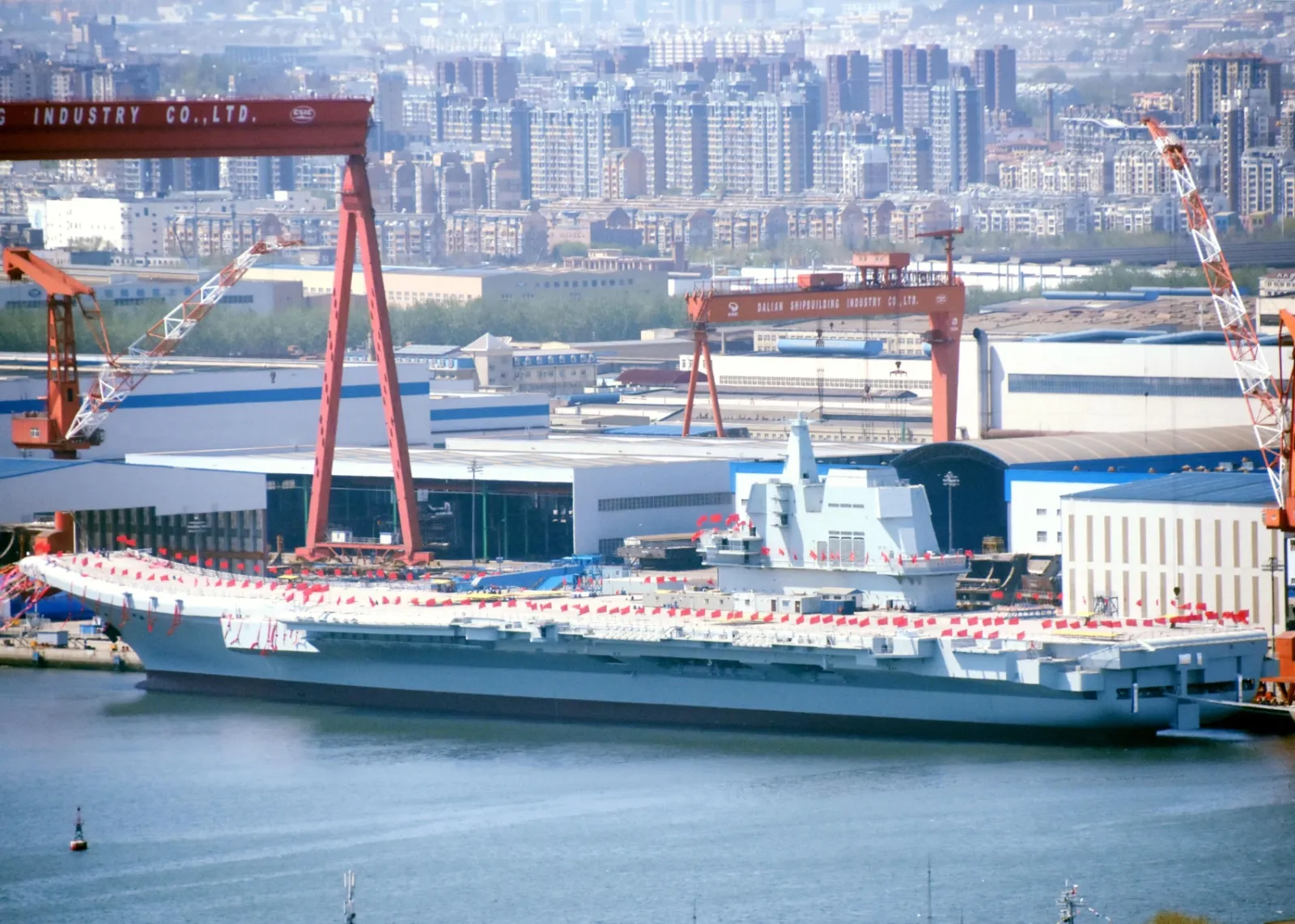
"We assume Type 004 is under construction at Dalian. No indications yet of new work at JN," the analyst wrote on the social media platform X, referring to the Chinese shipyards—Dalian and Jiangnan—that built the Shandong and the Fujian, respectively.
"Even assuming accelerating parallel work I am not sure this is achievable," he added.
Andrew Erickson, a professor at the U.S. Naval War College's China Maritime Studies Institute, wrote on X that while China's goal of expanding its aircraft carrier fleet is a "big deal," it does not necessarily mean all nine vessels will be operational by 2035.
The Type 004 is commonly referred to as China's fourth aircraft carrier and is expected to be the country's first nuclear-powered aircraft carrier, according to the defense outlet the War Zone. Beijing has not yet confirmed construction of a new aircraft carrier.
...
By comparison, the U.S. has one shipyard—operated by Huntington Ingalls Industries' Newport News Shipbuilding in Virginia—capable of constructing its nuclear-powered aircraft carriers. Two Gerald R. Ford-class aircraft carriers are being built concurrently.
The U.S. Navy is required by law to maintain at least 11 operational aircraft carriers. Under the Navy's shipbuilding plan covering fiscal 2025 to 2054, its aircraft carrier fleet would include up to 12 vessels for only three years during the 30-year period.
What People Are Saying
The Pentagon said in its Chinese military power report: "China's People's Liberation Army (PLA) has for decades marshaled resources, technology, and political will to achieve its vision of a world-class military. The PLA is a key component of China's ambition to displace the United States as the world's most powerful nation. The PLA measures its concepts and capabilities against the 'strong enemy' of the United States."
Liu Pengyu, a spokesperson for the Chinese Embassy in Washington, D.C., previously told Newsweek: "China's development and improvement of weaponry are not directed against any country or specific target, nor do they pose a threat to any country or region. They are solely for the purpose of safeguarding national sovereignty, security, and development interests."
What Happens Next
It remains to be seen whether China will disclose its future aircraft carrier development plans, as significant fleet growth would greatly enhance its ability to project power in the western Pacific and deter U.S. military intervention in a regional conflict.
View 0 Comments
Submit Correction
View Editorial & AI Guidelines