...

By John Feng
China Editor
0
Share
Newsweek is a Trust Project member
See more of our trusted coverage when you search.Prefer Newsweek on Googleto see more of our trusted coverage when you search.
Chinese President Xi Jinping arrived in Pyongyang on Monday to begin a two-day summit with North Korean leader Kim Jong Un.
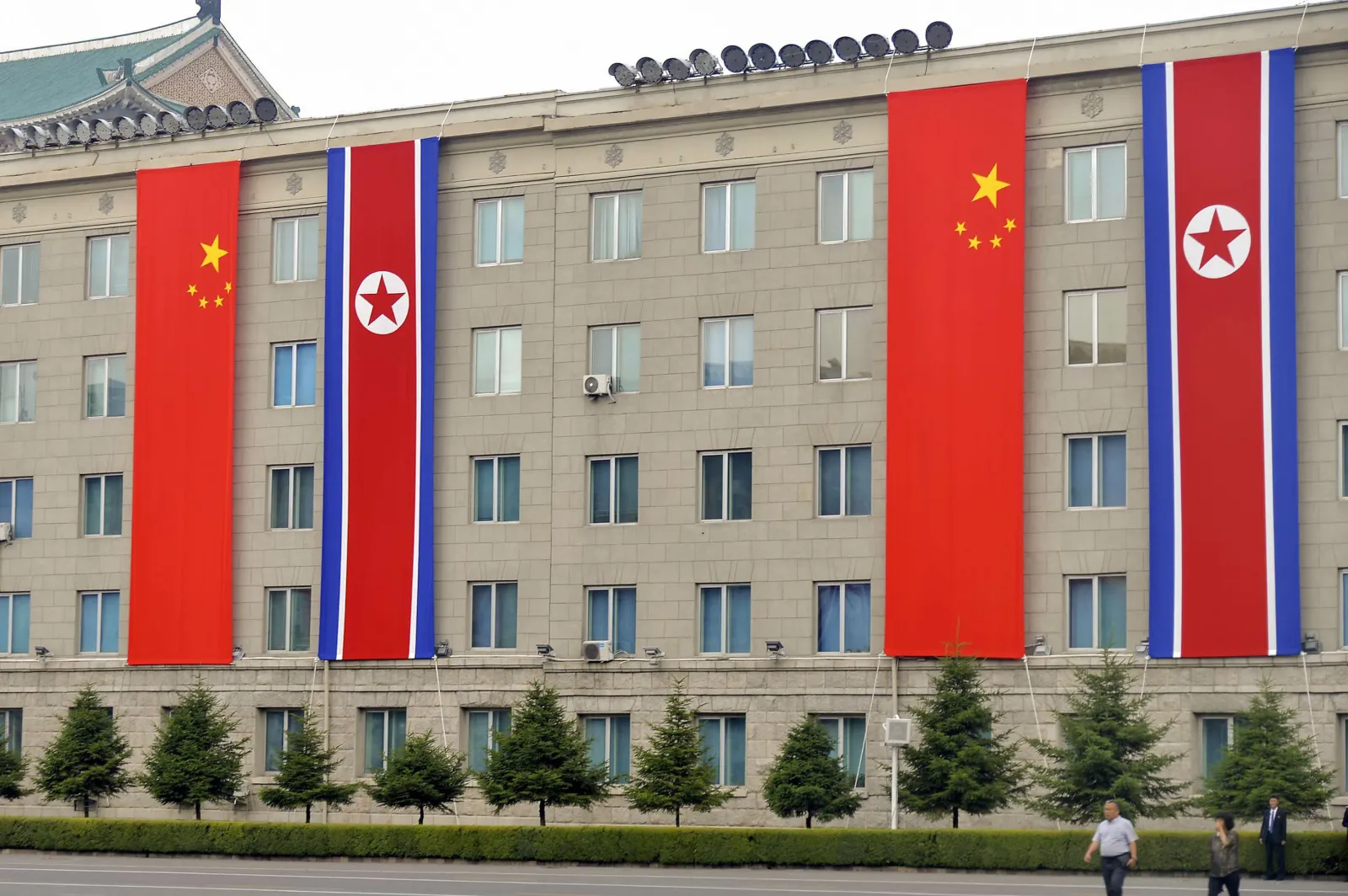
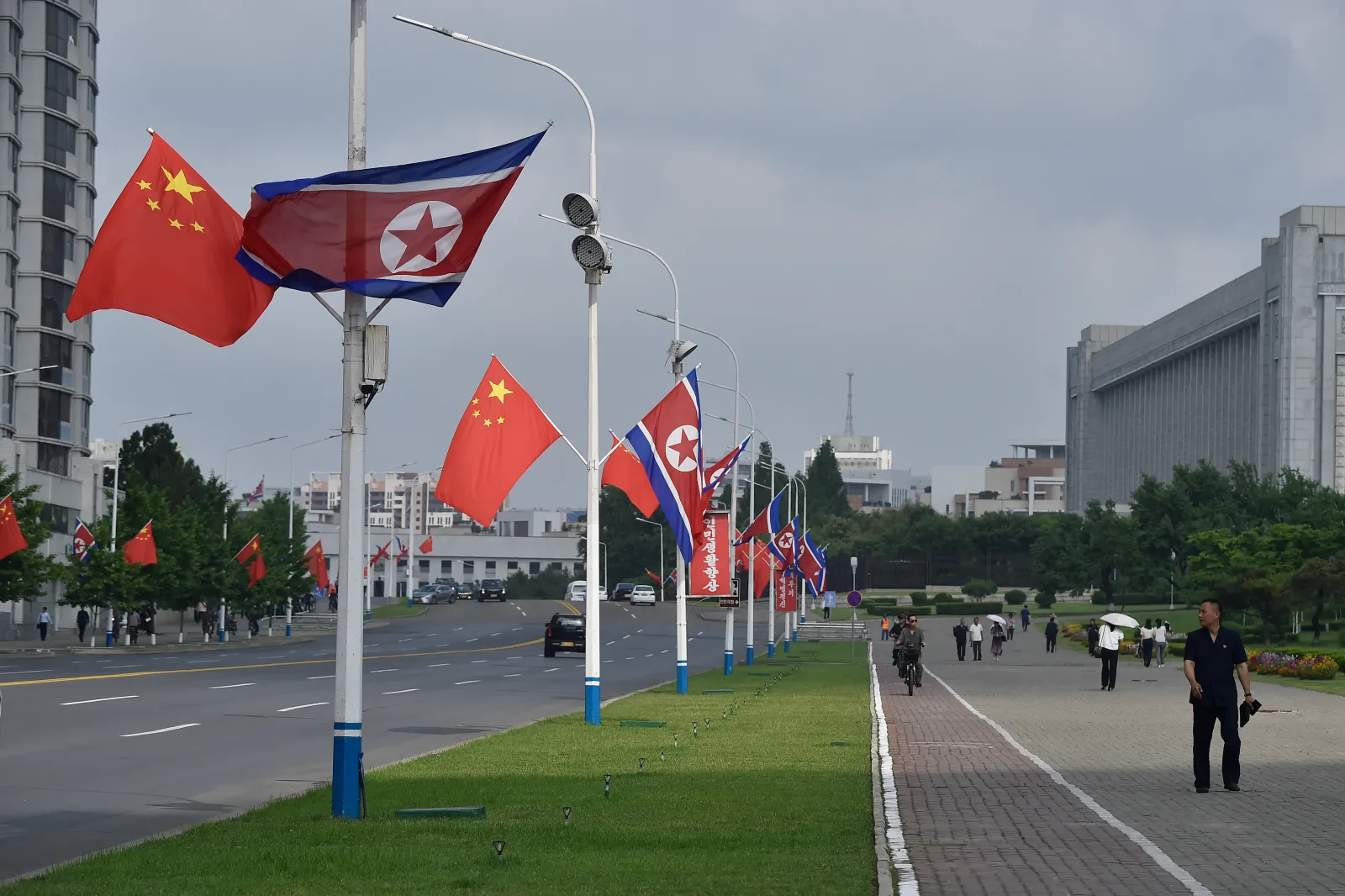
Xi was met by Kim Jong Un and his wife, but his teen daughter, his likely successor, was not present. Chinese and North Korea flags lined the streets as his motorcade drove into central Pyongyang for a welcome ceremony on Kim Il Sung Square, which commemorates Kim Jong Un's grandfather.
Officially, Xi is visiting to mark the 65th anniversary of their mutual defense treaty, the only such pact China has ever signed, inked just days after North Korea went into an alliance with the Soviet Union.
Read More on World
...
Xi’s last state visit to North Korea took place in June 2019. It was his first since taking office and followed a series of historic meetings between Kim Jong Un and U.S. President Donald Trump in 2018 and 2019.
Pyongyang and Moscow signed a new security pact in June 2024, formalizing North Korean aid in Russia’s war in Ukraine, and last month, North Korea sent soldiers to march for the first time in Russia’s Victory Day parade in Moscow.
North Korea once again finds itself being courted by its two powerful neighbors, China and Russia, at a time of global instability. Trump may also be seeking an audience soon.
In remarks published in the Rodong Sinmun, the official newspaper of North Korea’s ruling Workers’ Party, Xi hailed the enduring relationship between the two countries.
"We must oppose hegemony and power politics, as well as all attempts and actions to revive militarism and endanger regional security and stability," Xi said.
Kim’s Ties With Xi and Putin
The talks between Xi and Kim Jong Un are expected to touch on economic ties including the possibility of more tourism. China is North Korea’s largest trading partner and has long been its main lifeline to buffer international sanctions targeting its nuclear and ballistic missile programs.
Inter-Korean relations likely will also be on the agenda as the North moves further away from a possible joint future with the South.
Potential tripartite coordination with Russia on issues of mutual concern could also be covered.
President Vladimir Putin of Russia was in Beijing last month for talks with Xi that followed Trump’s own visit days earlier. China’s president likely will carry both Moscow and Washington’s sentiments to Pyongyang.
...
Since becoming North Korea’s supreme leader in 2011, Kim Jong Un has traveled five times to Beijing to meet Xi, including most recently in September, where he and Putin attended a Chinese military parade marking the 80th anniversary of the end of World War II.
"I think Xi is seeking to maintain China’s influence over North Korea amid Pyongyang’s strengthening ties with Russia," said Lami Kim, the leading Korea expert at the International Institute for Strategic Studies.
"At the same time, he may be trying to enhance his own status as a global leader capable of engaging with major international actors, especially after recently receiving both Trump and Putin and at a time when Kim remains unwilling to meet with Trump," she told Newsweek.
A Nuclear Korean Peninsula
North Korea’s nuclear capabilities are expanding and their delivery systems modernizing, experts say. However, at present, it has the lowest number of nuclear warheads—around 60—among the world’s nine nuclear-armed states.
Pyongyang views a nuclear deterrent as indispensable and in 2023 enshrined the force buildup into its constitution. It is perhaps less likely to change course after the U.S. and Israeli war against Iran, which the U.S. claimed was enriching uranium close to weapons-grade levels.
Trump and his officials have at times hinted at their recognition of North Korea as a nuclear power, alarming the South, but the readout of his Beijing summit said he and Xi both sought the "denuclearize North Korea."
The Chinese government’s readout did not reaffirm this, but Chinese Foreign Ministry spokesperson Lin Jian said on Monday that China’s position on the issue remained unchanged.
On Sunday, North Korea said its nuclear buildup was "an irreversible final conclusion to be carried out unconditionally," according to a statement in state media attributed to Kim Yo Jong, who is the North Korean leader’s sister.
"The DPRK's status as a nuclear weapons state is the line of no retreat and it is a stark reality whether anyone recognizes it or not," she said, using the country’s formal name, the Democratic People’s Republic of Korea.
Last week, North Korean state media published photographs of Kim Jong Un inspecting a new nuclear enrichment facility, likely in the northwestern city of Yongbyon, where he vowed to grow his nuclear forces.
"Pyongyang has long sought international recognition of North Korea as a nuclear weapons state and has repeatedly emphasized that denuclearization is nonnegotiable," Lami Kim said.
"If Xi does not raise the denuclearization issue during the summit, it could signal his tacit condonement of North Korea’s position," she said.
View 0 Comments
Submit Correction
View Editorial & AI Guidelines