...

By Toby Meyjes
News Editor
0
Share
Newsweek is a Trust Project member
See more of our trusted coverage when you search.Prefer Newsweek on Googleto see more of our trusted coverage when you search.
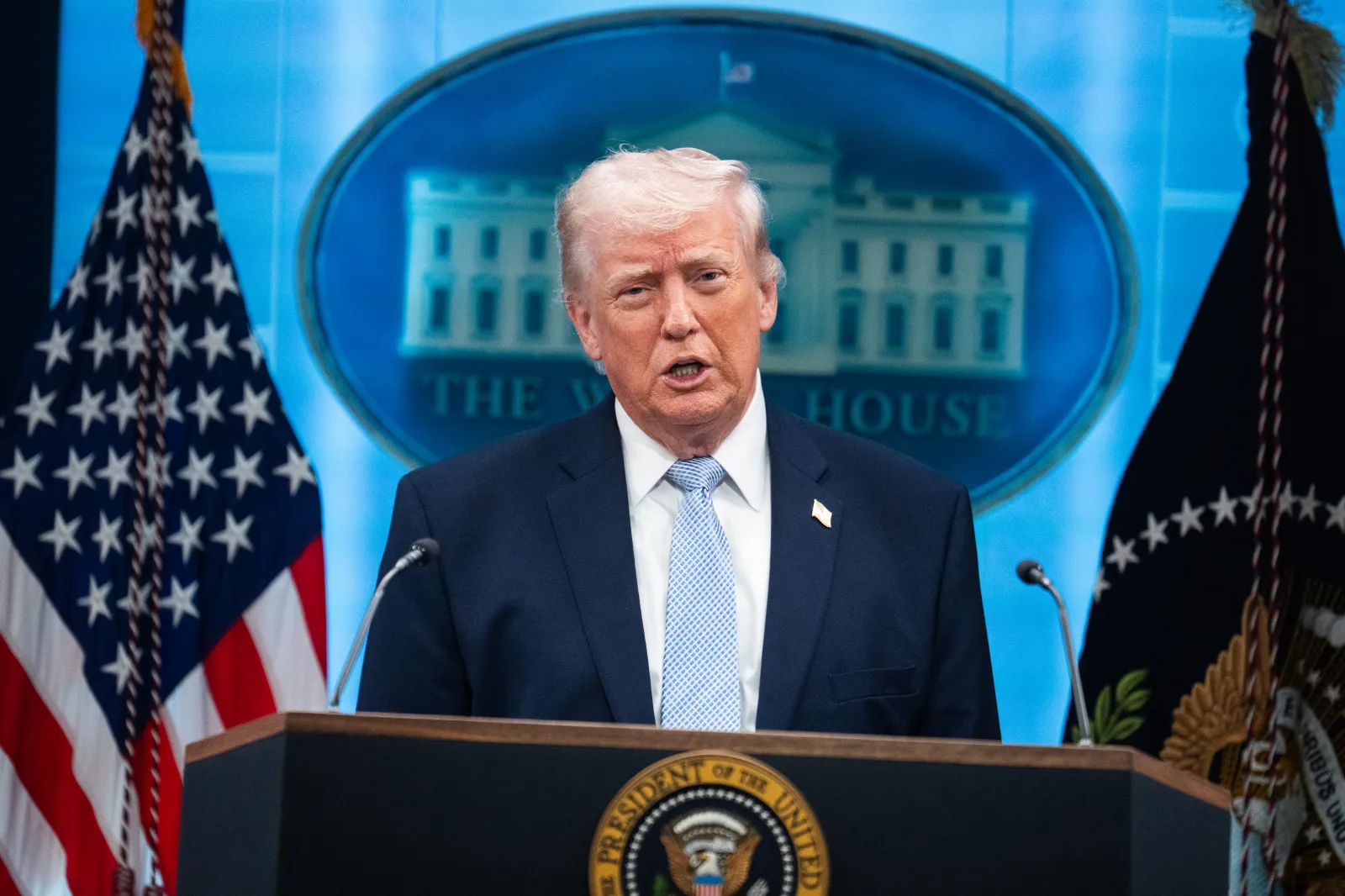
President Donald Trump has said the United States will "work closely" with Iran, which he said has undergone a "very productive regime change," hours after the two countries agreed to a two-week ceasefire.
Trump, writing on his Truth Social platform on Wednesday, gave more details on possible areas of cooperation between the two nations amid the first pause in the conflict since the U.S. and Israel launched "Operation Epic Fury" on February 28.
He said there would be "no enrichment of uranium" and that the United States "will, working with Iran, dig up and remove all of the deeply buried (B-2 Bombers) Nuclear 'Dust.'"
Read More on News
He added: "It is now, and has been, under very exacting Satellite Surveillance (Space Force!). Nothing has been touched from the date of attack. We are, and will be, talking Tariff and Sanctions relief with Iran. Many of the 15 points have already been agreed to."
...
Trump and members of his Cabinet have said that destroying Iran's chances of having a nuclear weapon was one of the key objectives for the war.
According to the International Atomic Energy Agency (IAEA), the U.N.'s nuclear watchdog agency, Iran has approximately 972 pounds of uranium that is enriched up to 60 percent. Uranium enriched beyond 90 percent is considered to be of a weapons-grade level.
Rafael Mariano Grossi, the IAEA director general, told The Associated Press last October that such a stockpile could build as many as 10 nuclear weapons should the regime decide to weaponize its program.
Last June, the U.S. carried out airstrikes on three Iranian nuclear sites—Fordow, Natanz and Isfahan—with seven B-2 stealth bombers dropping Massive Ordnance Penetrator bombs on the underground targets.
It had been questioned, during the recent conflict, how the U.S. would be able to achieve its objectives without a physical presence.
On Monday, before the ceasefire was agreed, Democratic Senator Richard Blumenthal of Connecticut told CNN’s Dana Bash on The Source: "They still have drones and missiles. We have not destroyed completely their capacity.
"And the really hard truth is, that bombing alone can’t accomplish any of President Trump’s objectives here, whether it’s regime change or controlling the enriched uranium or giving the Iranian people a chance at changing their regime,"
On Tuesday, a two-week ceasefire in the war was agreed, with Trump pulling back from threats to carry out strikes on bridges, power plants and other infrastructure targets 90 minutes before a deadline he had set Tehran.
Iran’s Supreme National Security Council said Iran would enter negotiations with the United States in Islamabad beginning Friday, while emphasizing that the ceasefire "does not signify the termination of the war."
Washington has put forward a 15‑point proposal to end the war. According to the alleged details, much of its focus is on Iran’s nuclear program, with demands including Tehran dismantling its nuclear capabilities.
Meanwhile, Tehran’s 10-point plan, which Trump wrote on Truth Social is a “workable basis on which to negotiate,” includes demands like the withdrawal of U.S. forces from the region and the lifting of sanctions.
Update 4/8/2026 9:42 a.m. ET: This article has been updated with more information
View 0 Comments
Submit Correction
View Editorial & AI Guidelines