...

By Gabe Whisnant
News Editor
0
Share
Newsweek is a Trust Project member
See more of our trusted coverage when you search.Prefer Newsweek on Googleto see more of our trusted coverage when you search.
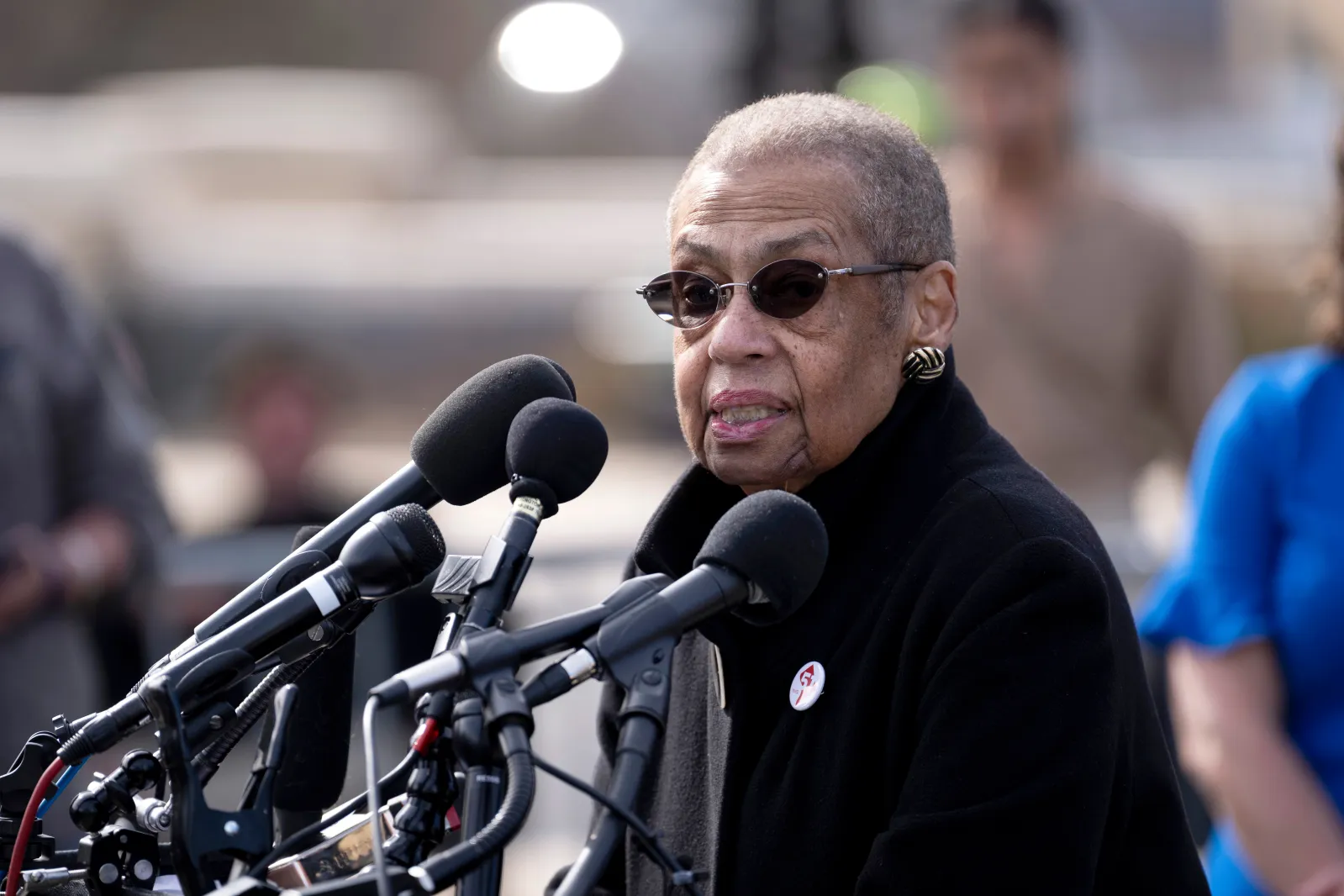
Eleanor Holmes Norton, the 18-term congressional delegate for the District of Columbia and a veteran of the Civil Rights Movement, has filed paperwork to end her reelection campaign, a step that appears to close a decades-long career in public service.
Norton, 88, has represented Washington, D.C., in Congress since 1991 as its nonvoting delegate, serving as the city’s sole voice on Capitol Hill. Her decision comes after months of questions about her effectiveness amid sweeping federal actions taken by the Trump administration that drastically reshaped governance and policing in the nation’s capital.
She posted on X: "With fire in my soul and the facts on my side, I’ve raised hell about the injustice of denying 700K taxpaying Americans in DC the same rights given to residents of the states for 35 years. Now, with pride in our accomplishments, gratitude to DC, and confidence in the next generation, I announced I'll retire at the end of this term."
Read More on News
Norton’s campaign filed a termination report with the Federal Election Commission on Sunday, signaling an end to her bid for another term.
Bowser, Allies Praise Norton’s Legacy
District of Columbia Mayor Muriel Bowser praised Norton’s career following the filing, describing her as a tireless advocate for the city.
“For 35 years, Congresswoman Norton has been our Warrior on the Hill,” Bowser wrote on social media. “Her work embodies the unwavering resolve of a city that refuses to yield in its fight for equal representation.”
Norton’s retirement is expected to set off a competitive Democratic primary in an overwhelmingly Democratic city. Several local lawmakers had already announced plans to seek the nomination, anticipating her eventual departure.
Pressure Mounts As Federal Power Expands In D.C.
While Norton remains a revered figure in Washington politics, she has faced growing calls in recent months to step aside. Some residents and local leaders questioned whether she could effectively counter the Trump administration’s aggressive intervention in the city.
Over the past year, the White House federalized the District’s police force, deployed National Guard troops from multiple states, and surged federal agents from the Department of Homeland Security into city neighborhoods. The moves sparked protests and legal challenges, including a lawsuit filed by the district’s attorney general.
Critics argued the city needed a more active and visible advocate in Congress as the Republican administration moved to override local authority and reverse D.C. laws.
An Influential Figure Without A Vote: 'Warrior On The Hill'
As a nonvoting delegate, Norton could not cast final votes on the House floor. Still, she carved out influence through committee work, legislative strategy and bipartisan negotiations.
Supporters dubbed her the “Warrior on the Hill” for her relentless advocacy for D.C. statehood and for federal workers across the region. She was a leading proponent of labor protections and fought efforts to limit the city’s autonomy.
Among her legislative achievements was securing passage of the D.C. Tuition Assistance Grant program, which provides up to $10,000 annually for District students attending public colleges outside the city and smaller grants for students at select private and historically Black colleges and universities.
...
In the 1990s, Norton played a key role in resolving the District’s financial crisis by brokering an agreement that shifted billions of dollars in unfunded pension liabilities to the federal government in exchange for changes to the city’s budget oversight. She also twice helped pass D.C. statehood legislation in the House, though the measures stalled in the Senate.
A Life Shaped By The Civil Rights Movement
Born and raised in Washington, D.C., Norton’s life closely mirrors the city’s modern history. She attended Dunbar High School as part of its final segregated class and grew up in a community deeply shaped by the struggle for civil rights.
“Growing up black in Washington gave a special advantage,” Norton said in her 2003 autobiography, Fire in My Soul. “This whole community of blacks was very race conscious, very civil rights conscious.”
She attended Antioch College in Ohio and later Yale Law School. In 1963, she split her time between law school and Mississippi, where she worked as an organizer during the Freedom Summer.
That year, civil rights leader Medgar Evers picked her up at the airport during one of her visits. He was assassinated later that night.
Norton also helped organize and attended the 1963 March on Washington, an experience she later described as formative.
In a 2023 interview with The Associated Press, she called the march “the single most extraordinary experience of my lifetime.”

...
Trailblazer In Law And Government
Before entering Congress, Norton built a career as a legal scholar and public servant. She became the first woman to chair the Equal Employment Opportunity Commission, where she oversaw enforcement of federal workplace anti-discrimination laws.
She entered electoral politics after her predecessor as D.C. delegate, Walter Fauntroy, retired to run for mayor, beginning her congressional tenure that would span more than three decades.
Norton’s retirement comes amid a broader wave of departures from Capitol Hill. More than one in 10 House members are not seeking reelection this year, opting to retire or pursue other offices.
As Norton prepares to leave Congress, allies say her legacy will endure in the city’s continued push for full representation and self-governance—a fight she carried for much of her life.
This article includes reporting by the Associated Press.
Update 1/27/26, 2:50 p.m. ET: This article was updated with new information and remarks.
In a polarized era, the center is dismissed as bland. At Newsweek, ours is different: The Courageous Center—it's not "both sides," it's sharp, challenging and alive with ideas. We follow facts, not factions. If that sounds like the kind of journalism you want to see thrive, we need you.
When you become a Newsweek Member, you support a mission to keep the center strong and vibrant. Members enjoy: Ad-free browsing, exclusive content and editor conversations. Help keep the center courageous. Join today.


View 0 Comments
Submit Correction
View Editorial & AI Guidelines