...

By Jordan King
Reporter
0
Share
Newsweek is a Trust Project member
See more of our trusted coverage when you search.Prefer Newsweek on Googleto see more of our trusted coverage when you search.
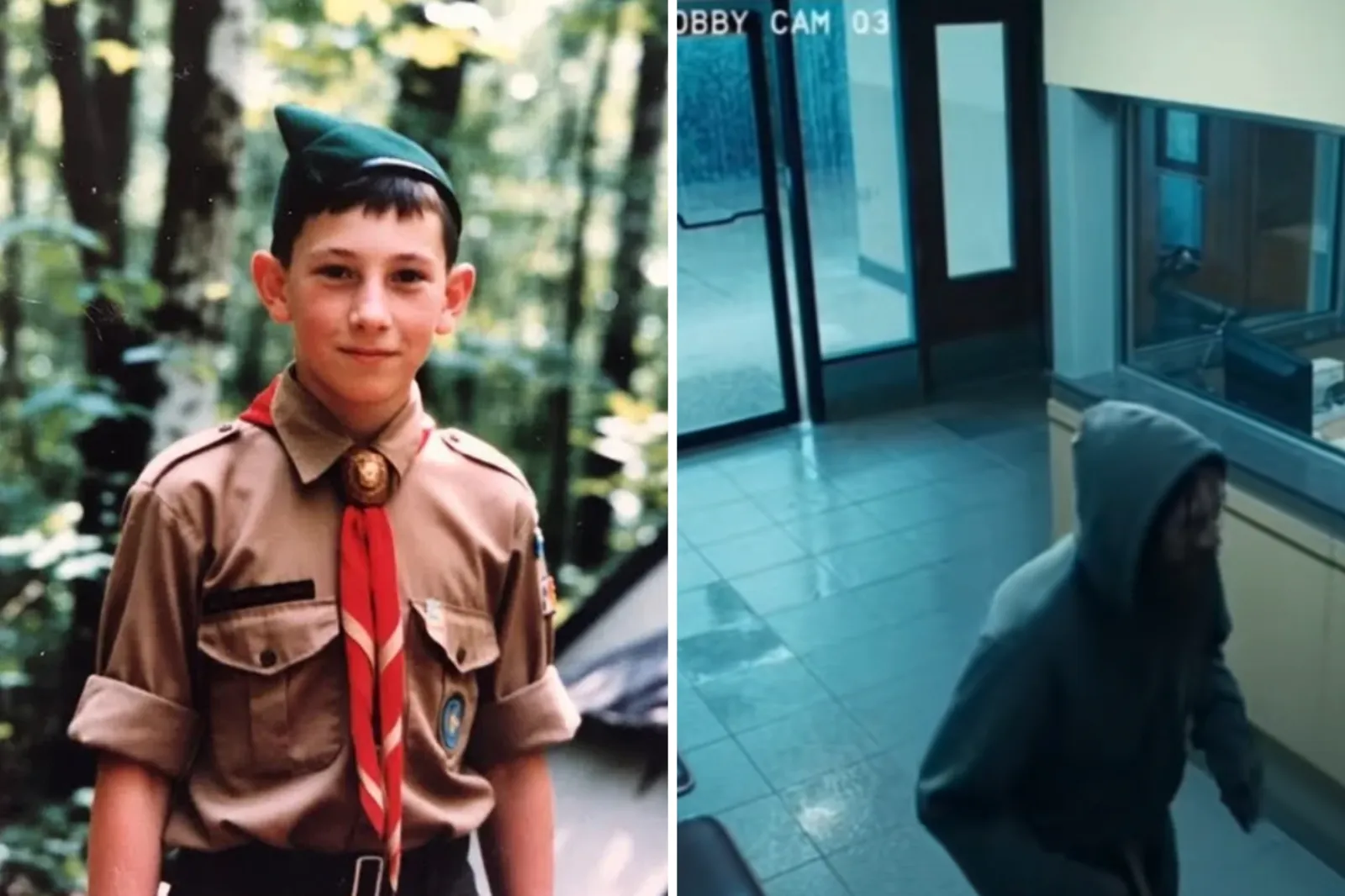
Images and videos of Eric Langford have been shared online—but multiple people have said in the comments that they suspect these are all AI-generated.
Newsweek has broken down whether the story is true or not.
Read More on News
The Claim
Langford vanished in New York State’s Adirondack forests in 1989, while away from home on his first Boy Scout camp.
A search was launched but when nothing had come of it three weeks later, Langford was declared dead, leaving his parents Robert and Linda Langford believing their son was gone.
But, in the fall of 2001, Langford showed up as a grown man at the Albany Police Department.
He told how, during his Boy Scout camp, he had volunteered to help collect water from a stream and while he was filling up a canister, a man coaxed him into following him to an "Indian cave" nearby.
The man, Charles Daniels, stun-gunned him until he was unconscious and, when Langford woke up, Daniels told the little boy that the world had "ended," that his parents were dead and that the only safe place left was the forest.
Langford was kept at a hunting lodge deep in the woods where he was forced to work and was punished for several attempts to escape before he managed to get away in September 2001, after Daniels collapsed. Police found Daniels but he died four days later. Langford now lives under a new name with his family.
...
The Facts
Versions of this story have been shared on multiple platforms this week, including from a YouTube account called UNKNOWN Files (@UNKNOWN_Files_stories), which describes itself as an account where "exciting stories come to life."
It posted a video with a voice narrating the story, showing an image of Langford in his uniform. The clip had more than 46,000 views as of Wednesday morning.
An article was posted on the website news.usstareveryday.com, which shared the same photo of Langford in his uniform. The site posted about the story on Facebook, under the name Fame Frenzy, too.
Scam Detector, a website-reputation and scam-risk rating service, flags that "the owner of the website is using a service to hide his/her identity," the number of visitors to the site is low. It also says that the domain is only one years old.
A TikTok account called ronalmpuse1, with more than 41,000 followers, also posted about the story multiple times, splitting it up into parts. It showed what appears to be CCTV of Langford walking into the police station and identifying himself: there are at least two different versions of this footage, with changes to the interior of the police station and the dialogue.
At least two of the videos have more than 20,000 likes and almost 4,000 saves.
New York State’s Albany Police Department (APD) confirmed to Newsweek that it has no record of Langford.
"This isn’t an Albany case," APD’s Public Information Officer, Megan Craft told Newsweek. "The officers depicted in the video are not Albany Police Department personnel. APD does not have a record of Eric Langford missing."
Newsweek also found no record of the story ever being reported in the media via Google search and searches via historical newspaper archives, including Elephind and NewspaperCat.
The Ruling
The story of Eric Langford going missing and then reappearing 12 years later is not real. The images and video clips shared with it appear to be AI-generated.
A story about a 14-year-old Boy Scout named Eric Langford going missing in 1989, being declared dead and then reappearing 12 years later has been doing the rounds online.
Fact check by Jordan King.
Learn more about Newsweek Fact Check

View 0 Comments
Submit Correction
View Editorial & AI Guidelines