10
Loading video...

By Joe Edwards
Reporter
0
Share
Newsweek is a Trust Project member
See more of our trusted coverage when you search.Prefer Newsweek on Googleto see more of our trusted coverage when you search.
When Vice President Kamala Harris sat down with Oprah Winfrey on Thursday night, it was clear what the White House contender stood to gain: a huge audience and an opportunity to set out her stall.
Winfrey said after the event that she was "inspired" by Harris' "historic nomination for President of the United States."
The "Unite for America" livestream event in the battleground state of Michigan also featured celebrity appearances from the likes of Chris Rock, Ben Stiller, Meryl Streep, and Julia Roberts.
Read More on Fact Check
Harris capitalized on the opportunity by attacking her opponent, former President Donald Trump, on a range of issues, such as crime and immigration, and touting her own credentials.
The VP also made bold claims about her plans (and Trump's) for the U.S. economy.

...
The Claim
Harris sought to persuade the audience that she had an economic policy which would deliver for businesses and for the American people, and that this "is why Goldman Sachs . . . is why Moody's, which is why Wharton School of Business, which is why 16 Nobel laureates, have collectively determined after analyzing our plans . . . mine would strengthen the economy, his would weaken it."
The Facts
Following a Goldman Sachs report published two weeks ago, there was media coverage suggesting that the U.S. economy would get a boost from a Kamala Harris victory, but that proposed increased import tariffs and immigration curbs under Trump would harm economic output.
"We estimate that if Trump wins in a sweep or with divided government, the hit to growth from tariffs and tighter immigration policy would outweigh the positive fiscal impulse, resulting in a peak hit to GDP growth of -0.5pp in 2025H2 that abates in 2026," the note read.
The laureates Harris referred to wrote an open letter in June, warning of the "risks to the U.S. Economy of a Second Trump Presidency".
"There is rightly a worry that Donald Trump will reignite this inflation, with his fiscally irresponsible budgets. Nonpartisan researchers, including at Evercore, Allianz, Oxford Economics, and the Peterson Institute, predict that if Donald Trump successfully enacts his agenda, it will increase inflation," they wrote.
"We believe that a second Trump term would have a negative impact on the U.S.'s economic standing in the world and a destabilizing effect on the U.S.'s domestic economy," the letter continued.
The business school reference concerns a Penn Wharton Budget Model which found that Harris's tax and spending proposals would increase primary deficits, which limit a government's ability to manage the economy, less than the proposals from Trump.
The model suggested that under Trump, GDP "eventually falls relative to current law, falling by 0.4 percent in 2034 and by 2.1 percent in 30 years". Under Harris, the report found, "GDP falls by 1.3 percent by 2034 and by 4 percent within 30 years (year 2054)".
Newsweek has contacted the Harris and Trump campaigns. A spokesperson for Goldman Sachs declined to comment.
The Ruling
...
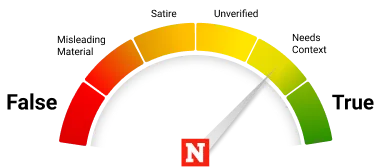
Needs Context.
Whilst a Goldman Sachs report did come out in favor of Harris, the investment bank's CEO David Solomon subsequently said that she had exaggerated its findings.
"That report which was mentioned [at the debate between Harris and Trump] came from an independent analyst," Solomon said, speaking to CNBC.
"A lot more has been made of this than should be. What the report did is, it looked at a handful of policy issues that have been put out by both sides and it tried to model their impact on GDP growth.
"The reason I say a bigger deal's been made of it is, what it showed is the difference between the sets of policies that they put forward was about two-tenths of one percent."
"I think this blew up into something that's bigger than what it was intended to be," Solomon added.
Harris is on somewhat firmer ground with her claim about the laureates. While they credited the polices specifically of President Joe Biden, describing them as "vastly superior", Harris could reasonably point out that she is a part of that administration and therefore represents some degree of continuity here.
Additionally, Mark Zandi, chief economist of Moody's Analytics, told Newsweek that Harris' comments were consistent with its research.
"Assuming Harris and Trump are able to fully implement the policies they have proposed when they take office, the economy will perform better under Harris than under Trump in their terms. That is, real economic growth will be stronger, inflation and interest rates lower and budget deficits and debt lower under Harris' policies than under Trump's policies," said Zandi.
However, the findings of Wharton School of Business were far more nuanced than Harris implied.
Primary deficits would increase more under Trump, the report noted, but while low and middle-income households would fare better under Harris, the wealthiest 5% of families would "fare worse". Under Trump, low, middle, and high-income households "all fare better".
When contacted for comment, a spokesperson for the University of Pennsylvania's Penn Wharton Budget Model (PWBM) told Newsweek: "We did not find a positive impact on the economy from her plan in any future year. The Trump plan does increase GDP for a few years but lowers by the end of the 10-year budget window."
FACT CHECK BY Joe Edwards
Do you have a story we should be covering? Do you have any questions about the 2024 presidential election? Contact LiveNews@newsweek.com
View 0 Comments
Submit Correction
View Editorial & AI Guidelines