
...


By Khaleda Rahman and Amanda Castro
0
Share
Newsweek is a Trust Project member
See more of our trusted coverage when you search.Prefer Newsweek on Googleto see more of our trusted coverage when you search.
Dr. Anthony Fauci, who helped lead the nation’s COVID-19 pandemic response, could trigger a new round of litigation and even expose himself to prosecution despite the sweeping pardon issued by former President Joe Biden.
Republican Senator Rand Paul of Kentucky subpoenaed Fauci to testify before the Senate Homeland Security and Governmental Affairs Committee, which Paul chairs, on Wednesday. But at the session, Fauci repeatedly pleaded the Fifth Amendment, accusing Paul of being obsessed with prosecuting him.
Paul closed the hearing by saying lawmakers will vote next week on whether to hold Fauci in contempt for refusing to testify.
Read More
Map Shows Where US COVID Cases Are Rising4 min read

Tulsi Gabbard Drops Documents She Says Relate to COVID, Fauci—View in Full5 min read

Fauci’s Diary of a Simpy Kid6 min read

Paul has long accused Fauci, the former director of the National Institute of Allergy and Infectious Diseases (NIAID), of lying about the pandemic, a charge Fauci has repeatedly denied.
...
Over the weekend, Paul released more than 1,000 pages of Fauci’s personal diary covering the pandemic years. Pointing to some notes about early efforts at understanding how the virus emerged, Paul wrote on X that what Fauci "wrote privately and what he told the country are two different stories."
In an earlier letter to Paul, Fauci’s attorneys called his allegations "absolutely baseless" and part of an "obsessive and groundless vendetta."
In another post on X on Tuesday, Paul said if Fauci "comes before my committee tomorrow and perjures himself, his preemptive pardon from former President Joe Biden will not protect him."
Biden issued the pardon for Fauci and others before leaving office last year, as a guard against potential attacks by the incoming Trump administration.
Newsweek has contacted representatives for Fauci and Paul for further comment via emails sent outside regular business hours.
Related Story
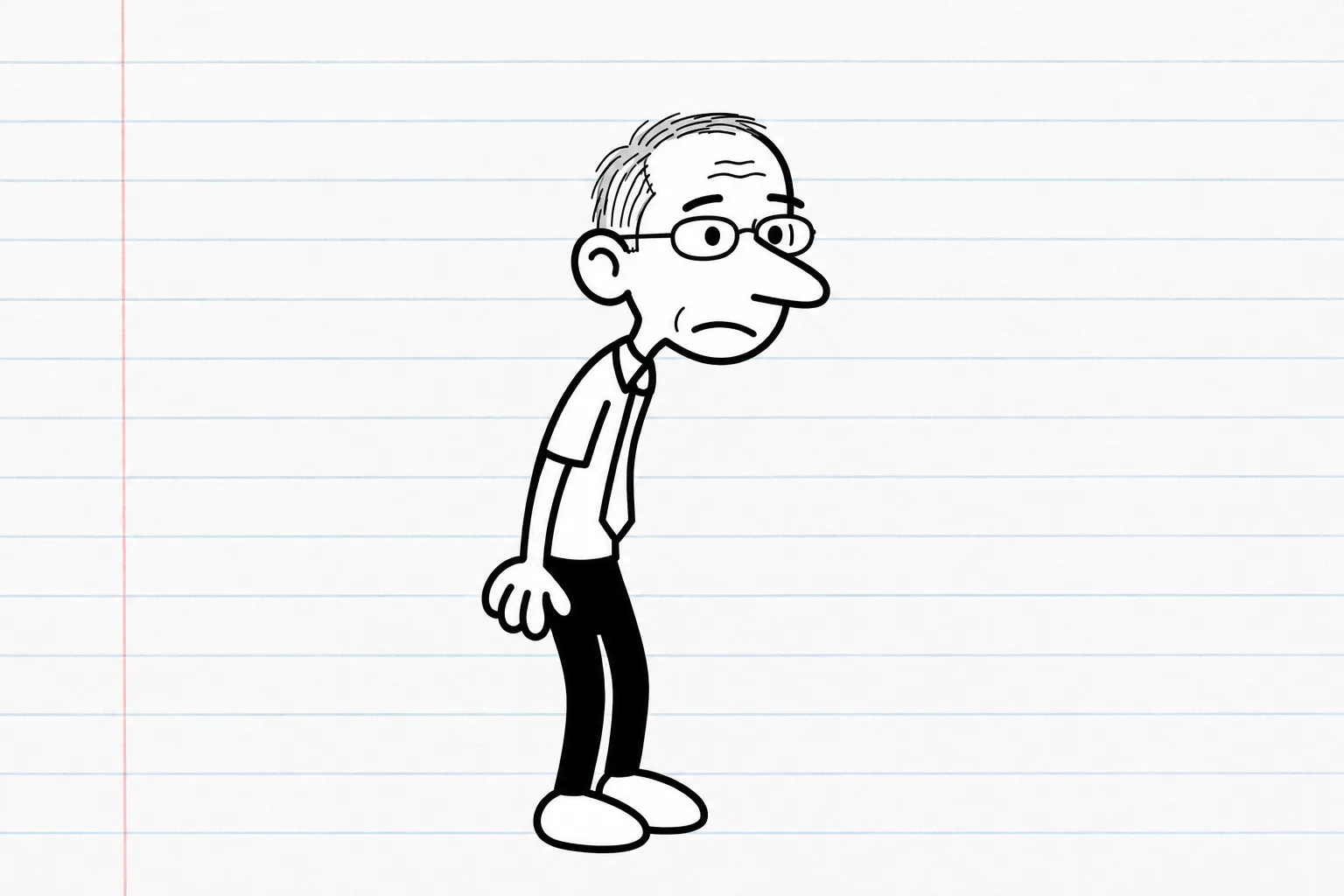
Fauci’s Diary of a Simpy Kid
Fauci's Attorney Hits Back
Fauci's attorney, David Schertler, has hit back at Paul's push to hold Fauci in contempt.
"We are completely confident that Dr. Fauci has a valid Fifth Amendment privilege here and is on solid legal ground in asserting it," he said in an email to CBS News. "Rand Paul may be a doctor, but he is not a lawyer."
In an earlier statement provided to Newsweek, Schertler said the circumstances surrounding Fauci's appearance at the hearing "regrettably made his continued cooperation impossible. For that reason, on the advice of his legal counsel, Dr. Fauci asserted his right under the Fifth Amendment to the U.S. Constitution to decline to answer questions.
"Chairman Paul’s groundless but incessant calls for Dr. Fauci’s prosecution also have included repeated challenges to the validity of the pardon issued by President Joseph Biden in January 2025 to protect Dr. Fauci against the very kind of unjustified and politicized prosecutions that Chairman Paul is calling for.
"Chairman Paul’s public crusade against Dr. Fauci can only be described as an obsessive vendetta. It triggers what the Supreme Court has called a “basic function” of the Fifth Amendment—“to protect innocent men...‘who otherwise might be ensnared by ambiguous circumstances.’”
In a heated moment during the hearing, Paul ejected Schertler from the room after he tried to speak without being recognized. In a statement, Schertler said the removal was “outrageous and demonstrates the completely biased and baseless nature of this proceeding.”
Why Fauci Could Be in Trouble
Constitutional attorney Ross Garber noted in a post on X that the Fifth Amendment applies only when a witness faces a "reasonable fear of prosecution."
Because Biden granted Fauci a full federal pardon for conduct through early 2025, Garber said the Senate could argue that Fauci has no valid basis to invoke the privilege for matters covered by that pardon. According to Garber, the committee has two potential avenues: pursue civil litigation to compel Fauci’s testimony or issue a criminal‑contempt referral to the Justice Department, which could seek an indictment.
Politico legal reporter Kyle Cheney said on X that Fauci’s strategy carries significant risk. While the pardon shields him from prosecution for past conduct, it does not protect him from future crimes—including perjury or contempt. Cheney said relying on the Fifth Amendment to avoid all questioning could itself become grounds for a contempt case.
Barbara McQuade, former U.S. attorney, told Newsweek via email on Wednesday in part that: "Yes, Fauci could still face prosecution for any conduct that occurs after the granting of the pardon. For example, if he were to say something in his testimony today that was different from prior testimony, he could be prosecuted for perjury. In light of the way he has been treated by Rand Paul in the past and this DOJ's penchant for charging political rivals, his concern about prosecution, even if it is unfounded, is a reasonable fear.
"The Senate could compel testimony from Fauci by granting him immunity. That would mean that his statements cannot be used against him, even in a criminal prosecution."
When asked if Fauci’s refusal to answer any questions could expose him to civil litigation or a criminal‑contempt referral, McQuade said: "No, he has a constitutional right to assert his Fifth Amendment privilege against self-incrimination as long as he has a reasonable fear of prosecution. In light of the conduct of Rand Paul and Trump's DOJ, his fear seems reasonable."
Neama Rahmani, a former federal prosecutor and the president of West Coast Trial Lawyers, told Newsweek that invoking his Fifth Amendment right was the "right legal move" for Fauci.
Related Story

America’s Cyclospora Outbreak Foreshadows a Biosecurity Nightmare
Fauci can’t be prosecuted on the federal level "for anything that happened before Biden's presidential pardon, and him pleading the Fifth to every question today prevents him from being prosecuted for perjury related to his Senate testimony," Rahmani said.
He said that Congress could "theoretically grant Fauci immunity to compel his testimony, but politically that is highly unlikely because he is so unpopular.
"By showing up to the hearing, Fauci avoided being in contempt of Congress," he said. "And by refusing to answer any questions, he can't be charged with false statements, obstruction, or perjury. It was the right legal move, even though it's a bad look politically because people think he has something to hide."
Investigative correspondent Catherine Herridge reported on X that former senior Justice Department officials believe there are multiple ways to challenge the validity of Biden’s preemptive pardon.
One approach would involve charging Fauci with a new offense and forcing a court to test the pardon’s scope. Another centers on Congress: because Fauci has theoretically been pardoned for past and future criminal exposure tied to his National Institutes of Health (NIH) work, Herridge said lawmakers could argue he has no plausible Fifth Amendment claim at all—and move to compel testimony. A contempt finding could follow.
Herridge also highlighted pressure surrounding Dr. David Morens, Fauci’s longtime senior adviser, who has been indicted on conspiracy and obstruction charges, including destruction and alteration of federal records.
Prosecutors allege Morens used personal email accounts to evade federal transparency laws. Herridge reported that Morens’ legal jeopardy—he has pleaded not guilty—could make him a potential cooperating witness if prosecutors seek leverage in the broader inquiry. During Wednesday’s hearing, GOP Florida Senator Rick Scott raised the Morens case as Fauci continued to invoke the Fifth.
Paul said in an interview with Fox Business earlier this month that if Fauci "lies during the hearing, that’s a new lie, and the pardon won’t cover that."
Fauci's Pardon Under Biden Explained
In one of his final acts as president, Biden issued a preemptive pardon for Fauci in January 2025.
The pardon said it covered any offenses Fauci "may have committed or taken part in during the period from January 1, 2014, through the date of this pardon arising from or in any manner related to his service as director of the National Institute of Allergy and Infectious Diseases, as a member of the White House Coronavirus Task Force or the White House COVID-19 Response Team, or as chief medical adviser to the president."
At the time, Biden said the preemptive pardons for Fauci and others should not be "mistaken as an acknowledgment that any individual engaged in any wrongdoing" or that acceptance of them should be "misconstrued as an admission of guilt for any offense."
He said those who were issued pardons "have served our nation with honor and distinction and do not deserve to be the targets of unjustified and politically motivated prosecutions."
Fauci was director of the NIAID at the NIH for nearly 40 years, including during President Donald Trump’s first term in office, and later served as Biden’s chief medical adviser until his retirement in 2022.
Fauci Quizzed Over Why Pardon Was Dated Back to 2014
Republican Senator Ashley Moody of Florida quizzed Fauci over why his pardon dated back to 2014, asking if he requested that start point.
She pointed out it was the same year that NIH began awarding grants to New York non-profit EcoHealth Alliance, which used some of the funds to work with a Chinese lab studying coronaviruses commonly carried by bats.
A second phase of the project, starting in 2019, was canceled under the Trump administration in April 2020.
Challenging Fauci, she said: "Did it have anything to do with the fact that 2014 was also the year that the NIAID/NIH began funding EcoHealth Alliance's understanding the risk of bat coronavirus emergence grant?
"This is the same grant that funded the work on bat coronaviruses at the Wuhan Institute on virology. Millions of Americans are questioning what happened during COVID. Why we were given misleading information, misleading advice, why you gave conflicting statements based on, I guess, how you were feeling that day."
Senator Rand Paul and Dr. Fauci’s History
Paul’s subpoenaing of Fauci is the latest episode in a series of clashes between the pair over the origins of the virus that caused the COVID-19 pandemic.
Paul has long called for Fauci to be indicted and accused him of lying to Congress about whether the NIH funded "gain-of-function" research in Wuhan, China, and of helping cover up the origins of COVID-19.
Fauci has denied both claims and said he has testified truthfully multiple times before Congress on the issues.
"I have not lied before Congress. I have never lied. Certainly not before Congress. Case closed," Fauci told Paul during a 2021 hearing.
"Gain of function" research is the practice of enhancing a virus in a lab to study its potential real-world impact. NIH for years gave grants to a New York nonprofit called EcoHealth Alliance that used some of the funds to work with a Chinese lab studying coronaviruses commonly carried by bats.
But the definition of "gain of function" covers general research and especially risky experiments to "enhance" the ability of potentially pandemic pathogens to spread or cause severe disease in humans. Fauci has previously stressed he was using the risky experiment definition and that "it would be molecularly impossible" for those bat virus experiments to have turned into the pandemic virus.
Fauci's Diary Entries
The diary entries released by Paul provide a behind-the-scenes account of the pandemic's earliest months, revealing private debates about the origins of the virus, concerns about Trump's public messaging and sharp disagreements inside the government response.
Some of the diary entries express uncertainty about the origins of COVID-19. The leading theories are that the virus jumped from animals to humans at a market in Wuhan or leaked in a lab incident.
Fauci wrote in an entry on January 26, 2020, that "we know the market was not the source, it was the amplifier," though he added that "somewhere the virus jumped from animals to humans."
In a January 31, 2020, entry, Fauci wrote that Jeremy Farrar, then director of the Wellcome Trust, and several scientists had raised concerns about parts of the virus they believed warranted closer scrutiny.
Fauci wrote that some researchers were focusing on the furin cleavage site—a feature of the virus that helps it infect human cells—as they explored whether the virus could have arisen naturally.
"They bring up the possibility that this could have been deliberately inserted and either accidentally released or deliberately released by a crazy person in the lab," Fauci wrote.
He also noted that during a February 1, 2020, call with U.S. and international health experts, there was disagreement about the origins of the virus.
Some of the entries—including Fauci’s uncertainty in the pandemic’s earliest days as scientists around the world raced to understand the new virus—already were reflected in Fauci’s 2024 memoir and in interviews at the time.
Likely Flashpoints
The crux of Wednesday’s hearing was expected to be whether NIH-funded research in China may have played any role in how the pandemic started.
Many scientists believe the virus most likely emerged in nature and jumped from animals to people, coming to light when it spread at a wildlife market in Wuhan, China.
There’s no new scientific information supporting the theory that the virus might instead have leaked from a laboratory, a theory Paul champions.
Fauci has long said publicly that he was open to both theories but that there’s more evidence supporting COVID-19’s natural origins, the way other deadly viruses including coronavirus cousins SARS and MERS jumped into people.
COVID Origins Remain Inconclusive
Official investigations into the origins of the virus responsible for the pandemic remain inconclusive.
An expert group charged by the World Health Organization to investigate the pandemic said in its final report last year that scientists were not sure how the pandemic began. It said most scientific data supports the hypothesis that the virus jumped to humans from animals, though it acknowledged that it was unable to get the necessary data to evaluate whether or not COVID-19 was the result of a lab accident.
The FBI said in 2023 that the virus "most likely" spread after a leak from a lab in Wuhan, which China dismissed. The CIA in 2025 said it believes the virus most likely originated from a laboratory, though the agency acknowledged it has "low confidence" in its assessment.
Four other U.S. intelligence agencies and the National Intelligence Council believe the virus most likely emerged via natural transmission, although that assessment was also made with low confidence.
Contact Newsweek editors on this story: John Fitzpatrick, Robert Greenall and Anna Commander.
View 0 Comments
Submit Correction
View Editorial & AI Guidelines