10
Loading video...


By Khaleda Rahman, Amanda Castro, and Leonardo Feldman
0
Share
Newsweek is a Trust Project member
See more of our trusted coverage when you search.Prefer Newsweek on Googleto see more of our trusted coverage when you search.
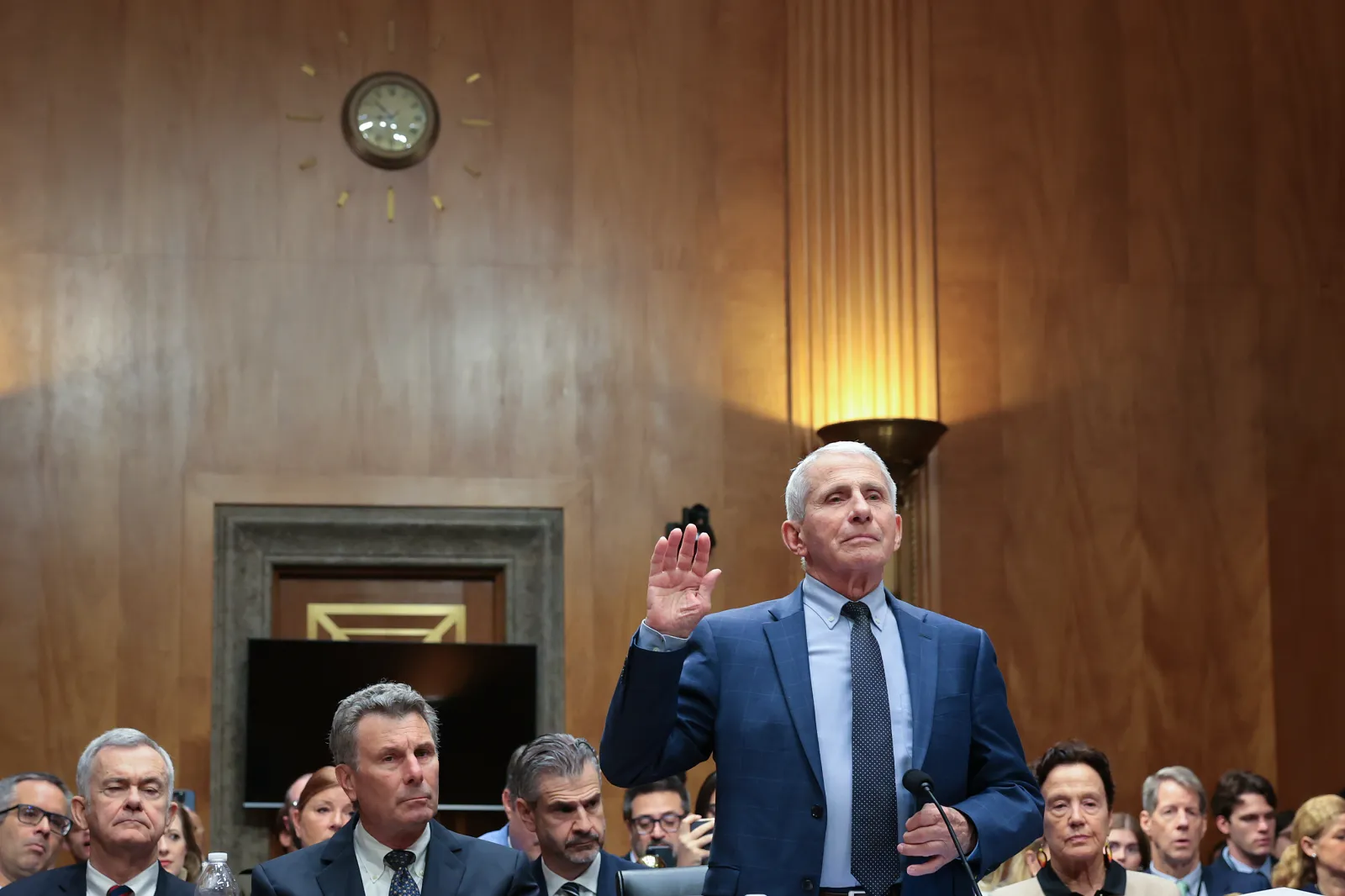
Dr. Anthony Fauci repeatedly invoked the Fifth Amendment during Wednesday’s Senate hearing, declining to answer any of Senator Rand Paul’s questions about his handling of the COVID‑19 pandemic. Paul, who subpoenaed Fauci to appear, has long accused the former NIAID director of lying about the origins of the virus—allegations Fauci has consistently denied.
Fauci opened the hearing by accusing Paul of an “obsession with calling for my prosecution,” saying the senator released his personal diary entries to intimidate him and was attempting to provoke a misstep that could put him “behind bars.” He said he would follow his attorney’s advice and take the Fifth.
Paul had warned ahead of the hearing that Fauci could face prosecution if he lied, saying former President Joe Biden’s preemptive pardon “will not protect him.” As Paul pressed him, Fauci responded to every question with the same line: “On the advice of counsel, I respectfully decline to answer based upon my rights under the Fifth Amendment.”
Read More on News
Paul said Fauci’s refusal could carry consequences. “It’s against the law to obstruct an investigation of Congress,” he said. “There will be repercussions.”
Fauci’s attorney, David Schertler, told Newsweek that the circumstances “made his continued cooperation impossible,” calling Paul’s accusations “false and disgraceful” and saying they would consider options to hold the senator accountable.
The testimony is among Fauci's highest-profile public appearances since leaving government in 2022 and is expected to draw renewed scrutiny of some of the pandemic's most contentious debates.
...
Trump Weighs In on Fauci’s Fifth Amendment Plea
Trump said he watched Fauci’s entire appearance before the Senate Homeland Security Committee and sharply criticized his decision to invoke the Fifth Amendment. “It’s terrible,” Trump said when asked about Fauci’s refusal to answer questions.
Trump noted that Fauci had served in government since the 1980s, saying he “inherited Fauci” and frequently disagreed with him during the pandemic. “I would’ve had to close down the whole country if I listened to him,” Trump said, adding that Fauci “wasn’t a big factor” in his own administration’s COVID‑19 response.
Trump also slammed Fauci in a post on Truth Social shortly before the hearing began.
In the post, Trump contrasted Fauci’s influence under Biden with his role during the Trump administration, claiming that “far fewer people died in the Trump administration than in the Biden administration.”
He also pointed to the presidential commendation he awarded Fauci in January 2021 for work on Operation Warp Speed, the federal program to accelerate development of COVID‑19 vaccines.
It "was a SPECTACULAR SUCCESS, in fact, many say, one of the most successful things ever done by an American President. I overrode Fauci on this. His ideas were CRAZY!" Trump wrote. "Also, I said from the beginning that the Virus came from the Wuhan Laboratory in China. Fauci strongly disagreed, always trying to protect China. I Inherited Fauci, who was there since the 1980s, but with each passing day, relied less and less on him."
The president said that Fauci “made too many bad calls, like on MASKS.”
He added: “In any event I didn’t let him shut the Country down, although he wanted to. I went the Federalist way, and let the governors decide. The Republican governors did a much better job than the Dumocrats. Fauci was largely taken out of play, and then along came Sleepy Joe Biden, who made Fauci a ‘King!'”
Trump also mocked Fauci's baseball skills ahead of Wednesday's hearing.
"Fauci told everyone he was a great basketball player, so I assumed that he would be easily able to throw a ball to Home Plate," Trump wrote on Truth Social on Tuesday night, alongside a clip of Fauci’s errant ceremonial first pitch at Major League Baseball’s season opener in July 2020.
Trump, 80, added that Fauci, 85, "was a terrible ‘athlete,’ and this is, by far, the worst throw I have ever seen in years of watching first pitches!"
Former Director of National Intelligence, Tulsi Gabbard, also reacted to Fauci's testimony, saying on Truth Social Wednesday night, "Fauci’s 'performance' today made me sick. Smug arrogance. Zero remorse. Zero accountability. He refused to answer a single question. Sharing this again as a reminder: He used your tax dollars to fund the coronavirus lab research in Wuhan—and worked with the IC to cover it up. We deserve the truth and accountability."
Senators React to Fauci’s Fifth Amendment Plea
In comments to Newsweek, several senators offered sharply different reactions to Fauci’s refusal to answer questions. Senator Rick Scott said the testimony spoke for itself. “He’s not answering any questions,” Scott told Newsweek, adding that Biden’s preemptive pardon left “a lot of questions people have” about what accountability is still possible.
Senator Roger Marshall said he was unsurprised by Fauci’s decision to plead the Fifth. “I think he agrees that that pardon is probably a fake pardon,” Marshall said, arguing that Fauci “had no way he could counter Rand Paul’s arguments today.”
Marshall added that he hopes the committee’s findings will be turned over to a special counsel. “They need to get it out of Washington, get the politics out of it, and figure out exactly what happened so we can learn from this mistake.”
Senator John Fetterman offered a different view, saying the hearing unfolded largely as expected. “There wasn’t a surprise,” he told Newsweek. “I expected it was just gonna be a lot of theater on both sides.”
Fetterman noted the stark divide in media attention surrounding Fauci, pointing to recent coverage metrics he had seen. He said the broader conversation about the pandemic response remains important, even if the hearing itself was dominated by political tension.
Separately, Florida Attorney General James Uthmeier added to the mounting political pressure following the hearing, writing on X, “Fauci’s lack of candor to Congress is unbelievable.”
Uthmeier said his office is launching an investigation into Fauci, arguing it is “past time we get the truth of what happened during COVID.”
Questions Fauci Faced During the Hearing
During the hearing, Paul pressed Fauci with a rapid series of pointed questions about his past decision‑making, oversight responsibilities, and interactions with U.S. intelligence agencies. Fauci declined to answer each one, invoking the Fifth Amendment.
Paul asked:
- Fauci to explain his “reasoning” and “rationale” for approving NIH‑supported coronavirus research in Wuhan, including why he believed a BSL‑2 laboratory in China was capable of safely conducting such work.
- Whether Fauci had funded gain‑of‑function research “in other biolabs around the world.”
- Whether Fauci still stood by past comments defending high‑risk virology experiments, including a controversial avian‑flu study that produced a mammal‑transmissible strain.
- If Fauci was aware of gain‑of‑function research on monkeypox at Fort Detrick’s National Biodefense Analysis and Countermeasure Center.
- Whether the CIA ever transferred funds to NIH through an interagency agreement.
- If NIH had ever conducted research “for or in coordination with” the CIA or ODNI.
- Whether Fauci had ever been read into any classified Department of Homeland Security program or special‑access program involving gain‑of‑function work.
- Whether scientists at the Wuhan Institute of Virology were capable of inserting a furin cleavage site into a coronavirus.
- Whether any American lab inspectors had ever visited the Wuhan facilities to verify safety conditions.
- If Fauci was aware that Dr. Shi Zhengli reportedly possessed more than 100 unpublished coronaviruses that could have been close relatives of SARS‑CoV‑2.
- Whether Fauci had refused President Biden’s 2025 pardon or believed the pardon required him to invoke the Fifth Amendment.
- Whether Fauci had changed his view on whether the benefits of gain‑of‑function research outweigh the risks.
Fauci responded to each question with the same statement, pleading the Fifth.
Senator Josh Hawley, during his questioning, hammered Fauci for declining to answer questions.
He asked a series of mocking questions which went viral after the hearing, including one post on X which was shared millions of times. The questions included:
- What day of the week is it today?
- What color tie are you wearing?
- What color is the carpet in front of you?
Hawley then asked a series of questions that accused Fauci of misconduct in his government role, including accusing Fauci of directing government staff to pursue cash awards on his behalf.
Rand Paul and Dr. Fauci’s History
Paul’s subpoenaing of Fauci is the latest episode in a series of clashes between the pair over the origins of the virus that caused the COVID-19 pandemic.
Paul has long called for Fauci to be indicted and accused him of lying to Congress about whether the National Institutes of Health (NIH) funded "gain-of-function" research in Wuhan, China, and of helping cover up the origins of COVID-19.
Fauci has denied both claims and said he has testified truthfully multiple times before Congress on the issues.
"I have not lied before Congress. I have never lied. Certainly not before Congress. Case closed," Fauci told Paul during a 2021 hearing.
"Gain of function" research is the practice of enhancing a virus in a lab to study its potential real-world impact. For years, NIH awarded grants to a New York nonprofit called EcoHealth Alliance, which used some of the funds to work with a Chinese lab studying coronaviruses commonly carried by bats.
But the definition of "gain of function" covers both general research and especially risky experiments to "enhance" the ability of potentially pandemic pathogens to spread or cause severe disease in humans. Fauci has previously stressed that he was using the definition of "risky experiment" and that "it would be molecularly impossible" for those bat virus experiments to have resulted in the pandemic virus.
Related Story
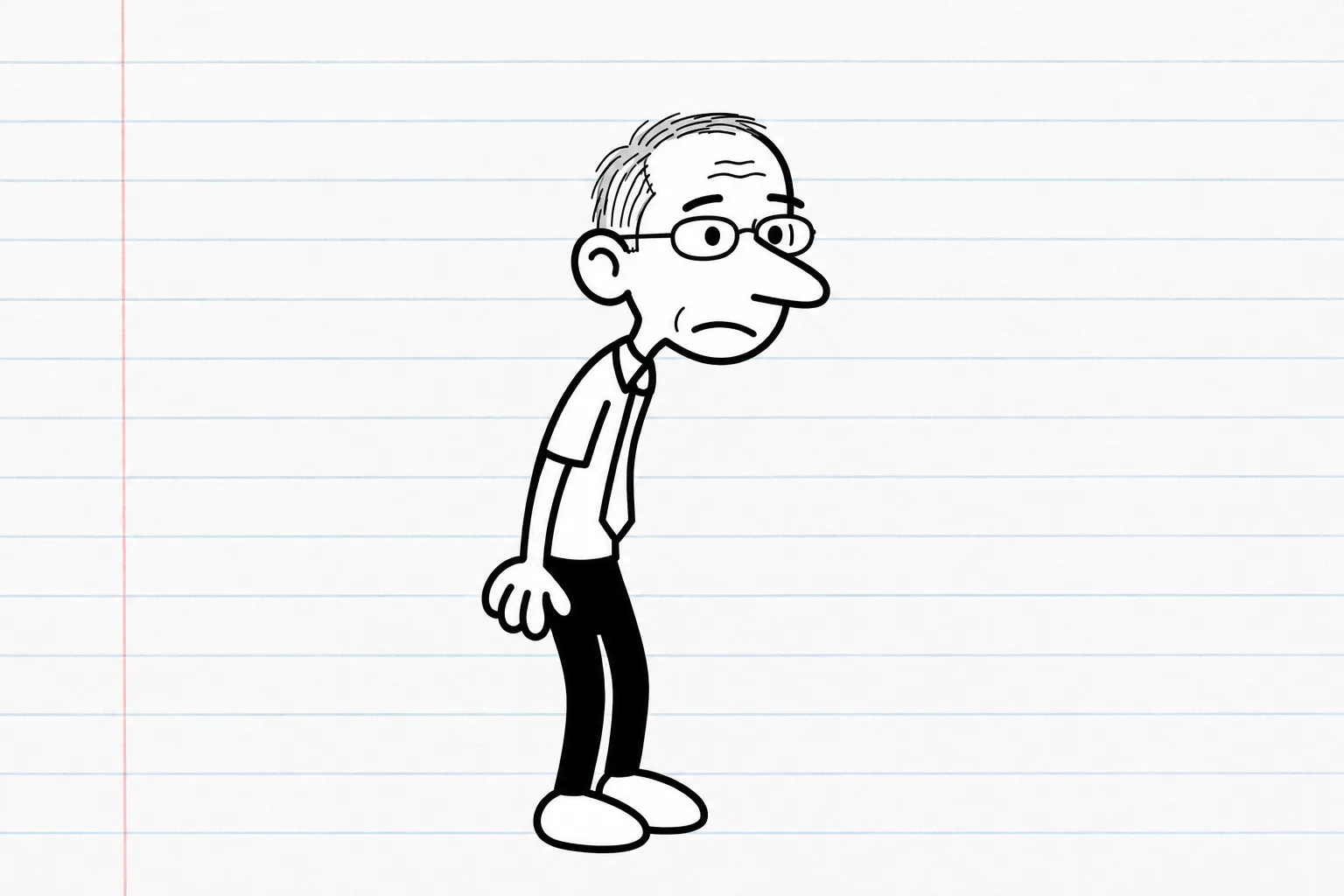
Fauci’s Diary of a Simpy Kid
What The Diary Entries Show
The thousands of pages of diary entries released by Paul provide a behind-the-scenes account of the pandemic's earliest months, revealing private debates about the virus's origins, concerns about Trump's public messaging, and sharp disagreements within the government response.
Some of the diary entries express uncertainty about the origins of COVID-19. The leading theories are that the virus jumped from animals to humans at a market in Wuhan or leaked from a lab.
Fauci wrote in an entry on January 26, 2020, that "we know the market was not the source, it was the amplifier," though he added that "somewhere the virus jumped from animals to humans."
In a January 31, 2020 entry, Fauci wrote that Jeremy Farrar, then director of the Wellcome Trust, and several scientists had raised concerns about parts of the virus they believed warranted closer scrutiny.

...
Fauci wrote that some researchers were focusing on the furin cleavage site—a feature of the virus that helps it infect human cells—as they explored whether the virus could have arisen naturally.
"They bring up the possibility that this could have been deliberately inserted and either accidentally released or deliberately released by a crazy person in the lab," Fauci wrote.
He also noted that during a February 1, 2020 call with U.S. and international health experts, there was disagreement over the virus's origins.
Paul on Tuesday said Fauci "told the world COVID came from a wet market, but his own diary says otherwise. He lied to the public while knowing the truth. Time to hold Fauci accountable."
COVID Origins Remain Inconclusive
Official investigations into the origins of the virus responsible for the COVID-19 pandemic remain inconclusive.
An expert group charged by the World Health Organization to investigate the pandemic said in its final report last year that scientists were unsure how it began.
It said most scientific evidence supports the hypothesis that the virus jumped to humans from animals, though it acknowledged it lacked sufficient data to evaluate whether COVID-19 resulted from a lab accident.
Scientists think the most likely scenario is that the virus circulated in bats, then infected another species, which in turn infected humans who handled those animals at a market in Wuhan, where the first human cases appeared in late 2019. Wuhan is home to several research laboratories involved in collecting and studying coronaviruses, fueling debate over whether the virus may instead have leaked from one of them.
The CIA believes the virus most likely originated from a laboratory, though the agency acknowledged it has "low confidence" in its assessment.
2021 Files Show NIH Hid Risks in Wuhan Virus Research
A 2021 tranche of federal documents released through Freedom of Information Act requests shed new light on how U.S. health officials handled coronavirus research conducted at the Wuhan Institute of Virology, years before the COVID‑19 pandemic began. The records show that the National Institutes of Health funded experiments involving engineered SARS‑like viruses, work that some experts argued could meet the government’s definition of gain‑of‑function research. Internal correspondence included in the FOIA release indicates that NIH staff had questioned whether the project crossed federal boundaries for high‑risk virology work.
The grant, administered by EcoHealth Alliance, supported the creation of chimeric coronaviruses and their testing in humanized mice. EcoHealth assured NIH that any virus showing significantly enhanced growth would trigger an immediate pause and notification. But one engineered virus replicated far more efficiently than expected, and EcoHealth did not report the result as required. NIH later acknowledged the lapse, saying the organization failed to follow the grant’s conditions.
The documents also highlighted EcoHealth’s broader role in collecting bat samples across Asia and transferring them to Wuhan, including from regions where viruses closely related to SARS‑CoV‑2 have since been identified. Although the engineered viruses described in the grant were too distantly related to be linked to COVID‑19, the FOIA release intensified scrutiny of how NIH monitored the project and why key information remained undisclosed until litigation forced its release.
Contact Newsweek editors on this story: Tobias Meyjes, Tony Phillips, Gray R. Thomas, Anna Commander
View 0 Comments
Submit Correction
View Editorial & AI Guidelines