
Photo-illustration by Newsweek/Getty/Courtesy of Lauren Doll

By Lauren Doll
0
Share
Newsweek is a Trust Project member
See more of our trusted coverage when you search.Prefer Newsweek on Googleto see more of our trusted coverage when you search.
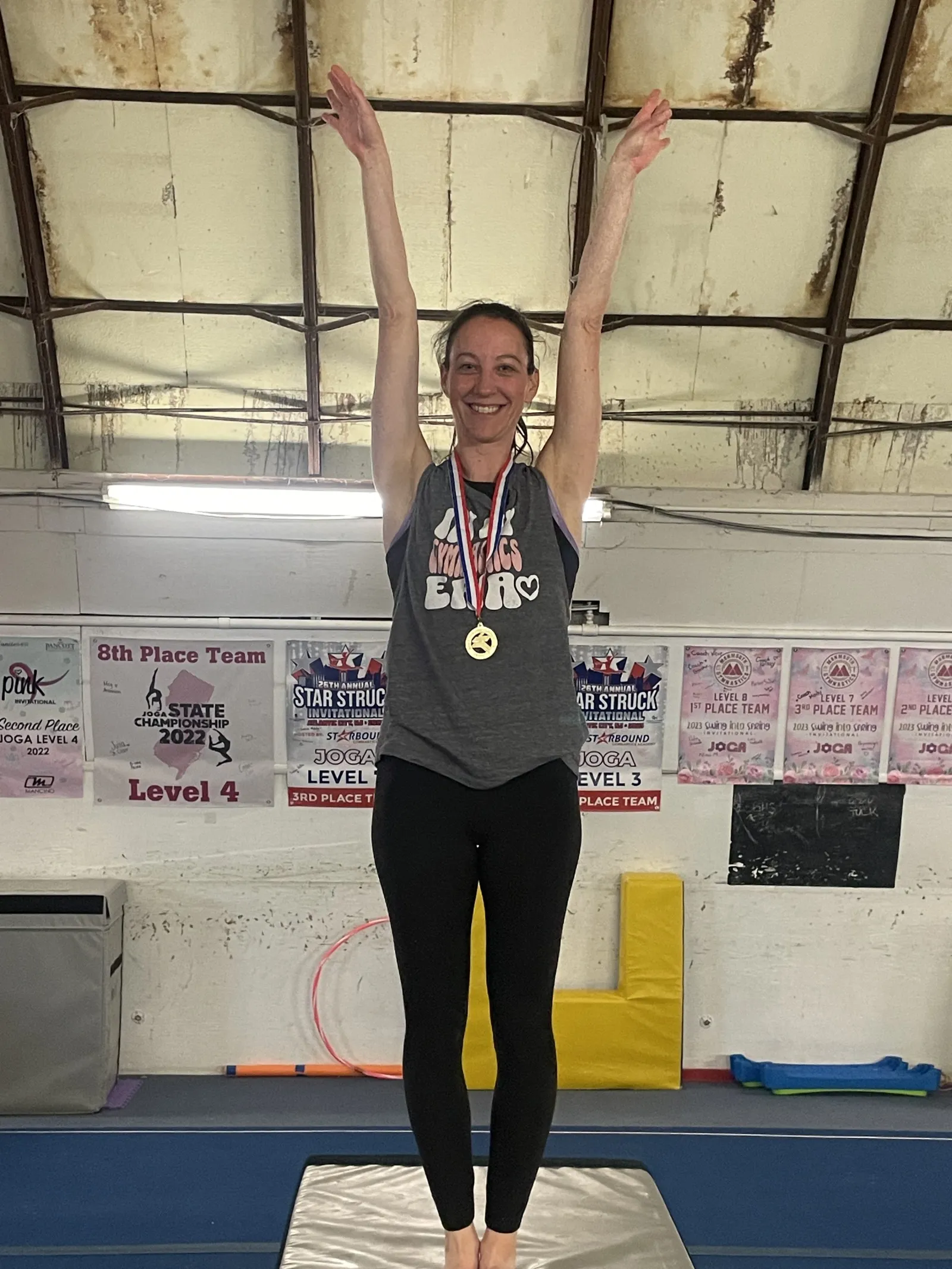
It’s a warm day in May, and I’m at the last gymnastics class of the season at my local gym. I’m a middle-aged mom of three about to attempt a back handspring, by myself, for the first time in my life. I feel what I can only describe as electric shocks of bravery pulsing through my body. I’m invincible. My coach reminds me that I’m ready, and I finally believe her. Physically empowered like never before, I stand tall atop the incline mat and plant my feet in the center. I steady my eager body, deliberately raise my arms, and jump.
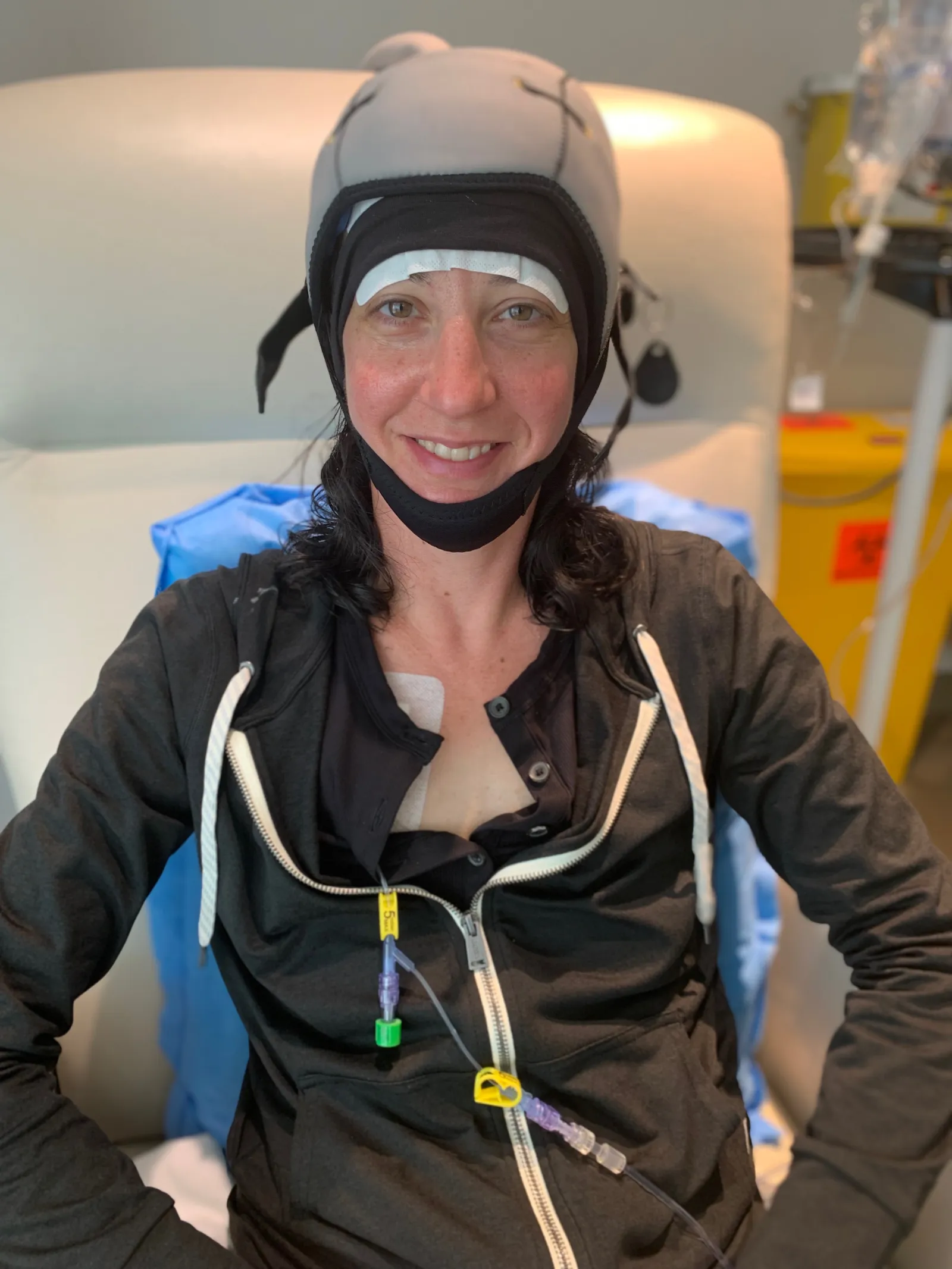
It’s four months later. Another warm day, this time in September. I’m anxiously waiting in an infusion room at Memorial Sloan Kettering Cancer Center, preparing for my first chemotherapy treatment. I feel what I can only describe as pangs of fear slicing through my body. I’m vulnerable. My husband reminds me that I can do this, but I can’t believe I have to. Powerless like never before, I silently watch the nurse count to three, and through the needle in my implanted port, the infusion begins.
To me, these two experiences will always be fused.
Read More on My Turn
I Thought He Was Too Dorky to Date. Years Later, He Was the One by My Hospital Bed8 min read

I Begged My Sister Not to Try Ibogaine. I Never Spoke to Her Again9 min read

My Husband Tried To Tough It Out. Then Came a Devastating Diagnosis10 min read

...
The year I turned 40, there was no midlife crisis. More like a midlife joyfest. I experienced a profound connection with myself and others in a way I hadn’t yet in adulthood. I owe a lot of that to adult gymnastics.
As background, I spent most of my childhood right-side-up in sports. There was ballet and tap in early childhood, and I found running in middle school. I competed at a high level throughout high school, and even walked on to the Division 1 cross-country and track and field teams in college. I always loved watching gymnastics on television as a kid, but my experience was mostly limited to cartwheeling with my girlfriends during recess.
When my then 2-year-old daughter flipped herself on her toddler trampoline in the summer of 2024, I looked into gymnastics classes—for her. A few weeks later, we went to our first parent-and-child class at a local gym. We both loved it, especially the bubbly coach who led the class.
Soon after, during an Instagram scroll, I saw the gym announce a new adult gymnastics class. “Drills, skills, strength and flexibility—we’ll cover it all in our weekly sessions!” I felt my heart soar like the “Magnificent Seven” did at the 1996 Summer Olympics. I went to my daughter’s class the next week and nonchalantly mentioned to her coach that it sounded like fun. Her eyes twinkled when she said, “You’re perfect for it.” As fate would have it, she would eventually become my coach and one of my closest friends. I registered for a drop-in class, and what I thought would be casual quickly became commitment.
...
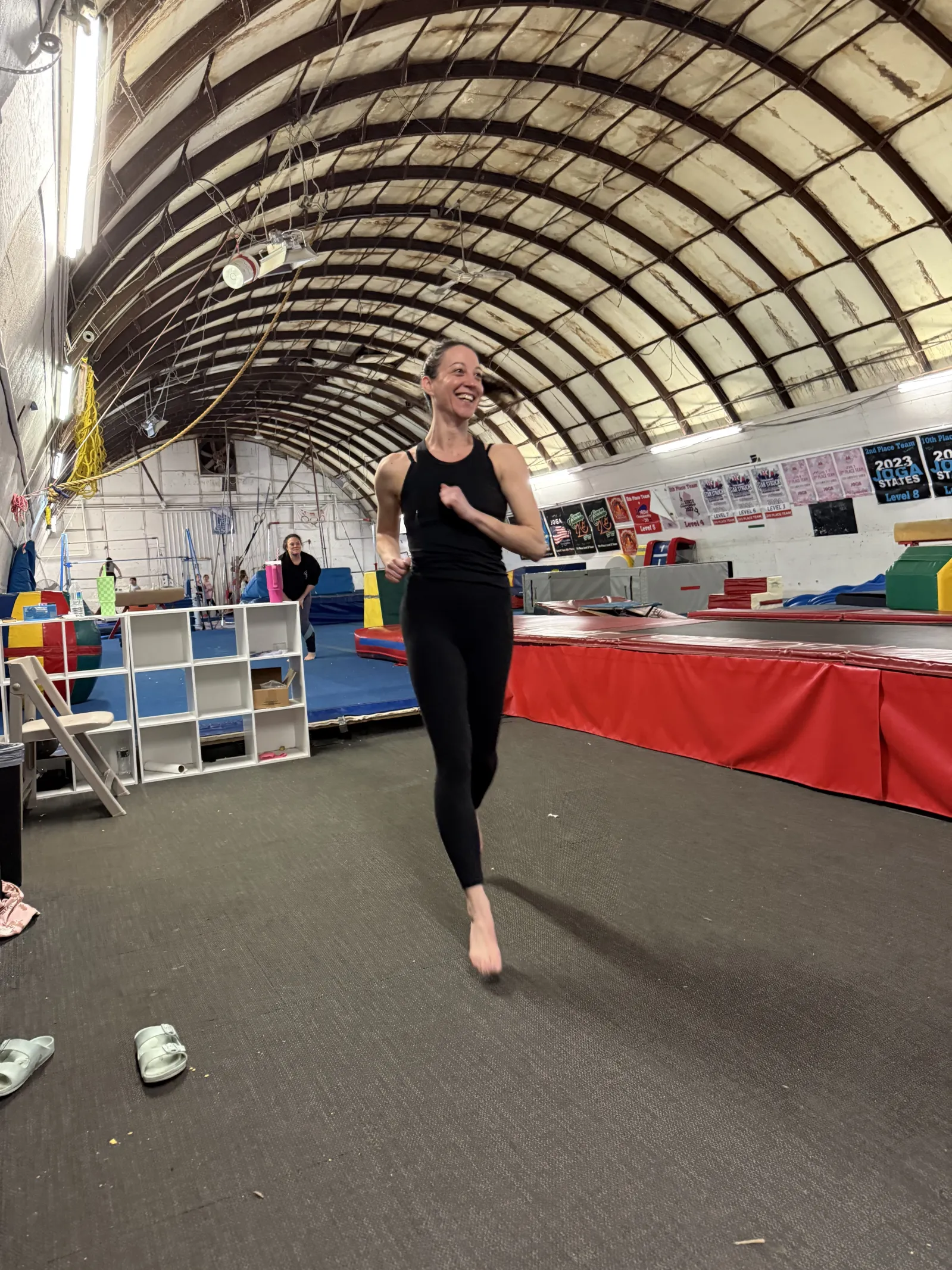
There was a small group of women who invariably showed up every week. A stay-at-home supermom, a scientist, a school psychologist, and even employees of the hospital I would later be treated at, though I didn’t know it at the time. We began as strangers and, after a few months of tumbling and laughing together, truly became teammates and friends. Our equally dedicated coach had a separate full-time job, but poured her whole heart into the adult class.
We spent an hour and a half together every Tuesday night jumping, flipping, twisting and inevitably falling. Our cheers for each other would ricochet off the gym walls. We’d scream so loud that we’d lose our voices for work meetings the next day. We’d end the night with a game where we ran around the gym like kids at recess. Our group chat would ping well into midnight, then throughout the week. We’d share photos and videos of each other’s successes and bloopers and build anticipation toward the next class. The encouragement—in the gym and the group chat—floored me. I never thought so much about how the word “courage” is found within “encouragement.” I had found a sense of community unlike anything else I’d experienced in adulthood. My new upside-down life ironically made me feel so right-side-up.
I grew physically stronger, but learned my true strength was vulnerability. Every time I showed up for class, I felt out of my comfort zone and scared. But I kept showing up because I also felt protected and brave. In retrospect, the vulnerability and fear —alongside the protection and bravery—that I felt at gymnastics paralleled my cancer diagnosis. It’s as if one had to come before the other.
...
After months of going upside down with joy, the real upside-down came when I was diagnosed with breast cancer, 11 months after starting gymnastics, and 4 months after that first back handspring by myself. I was in the best shape of my adult life. Life had felt like a “perfect 10,” until it didn’t. One day at home, I felt a lump on my chest. My first reaction was that it was a new muscle from gymnastics. My husband, who is a nurse at the cancer center where I would later be treated, suggested I get it looked at, so I made an appointment with my OB/GYN. After a brief exam and being told not to worry, one of the nurse practitioners wrote me a script for my first mammogram and an ultrasound, which were scheduled for about a week later. Once the scans were done, my husband was brought into my exam room, followed by the radiologist. I remember her worried eyes and pursed lips. She introduced herself, then said, “I’m very concerned.” I blurted out, “Concerned that I have breast cancer?” She nodded, sadly. That was a Friday. The weekend was a blur of feeling like I was falling apart while trying to hold myself together for my kids. The next Monday, I had biopsies done. It was the gravest week of my life, riddled with anxiety and despair, waiting for the results. Soon, came the confirmation: breast cancer.
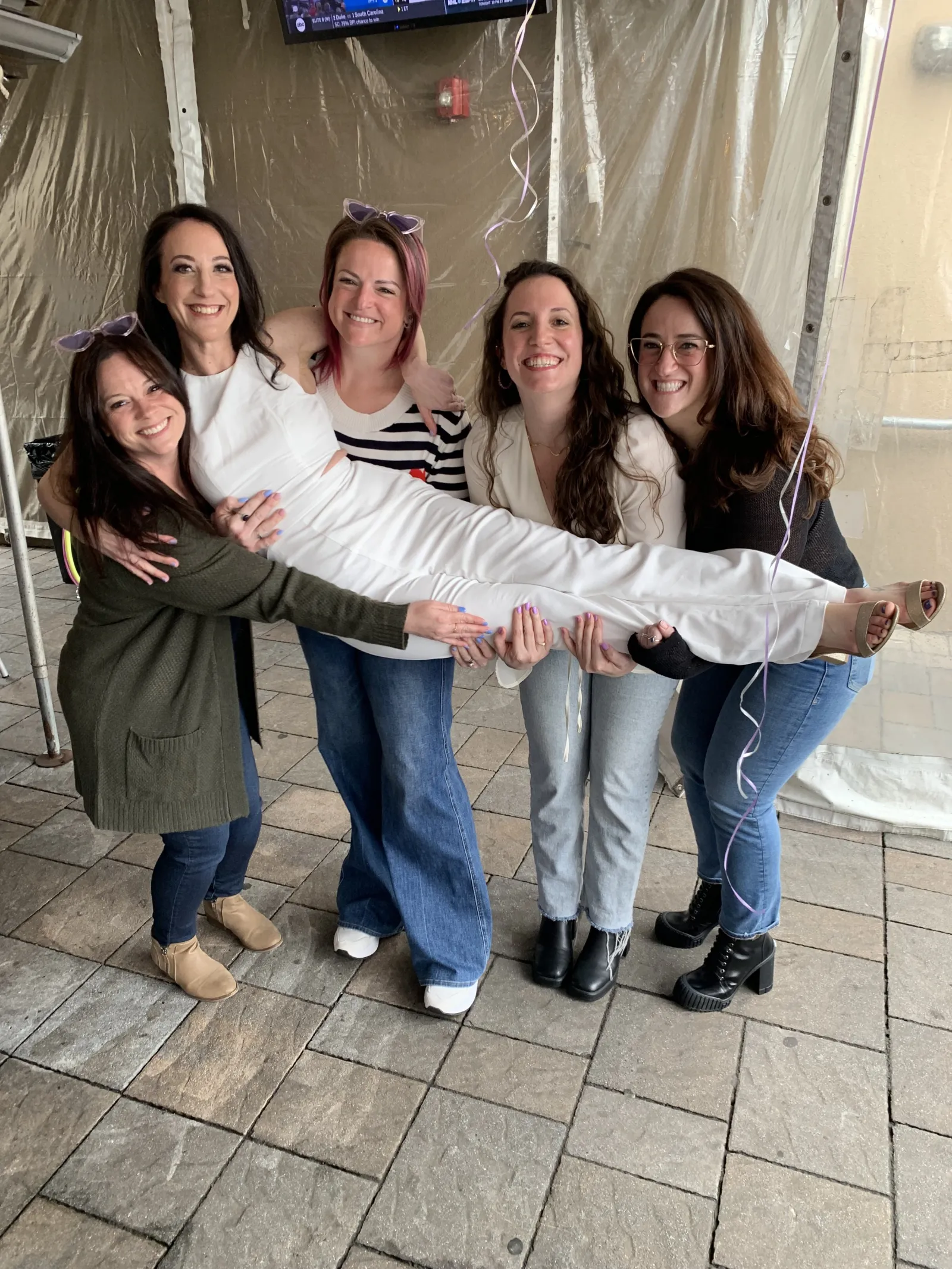
My newfound community showed up for me, just like we did for each other in the gym. They were everywhere. At my cancer treatments. At my house. At my kids’ sports games. They showed up to bring me to appointments, to a massage, to play with my kids. To take care of me.
...
The physical effects of chemotherapy were a stark contrast to the physical effects of gymnastics. I lost weight and most of my hair. I was fatigued, nauseous and couldn’t remember who I told what to because of “chemo brain.” But my teammates were as unfazed as they were watching a mom of three giddily squeal while swinging from uneven bars, mere months earlier. The cheers for a landed flip were replaced with cheers for each completed chemotherapy cycle. They showed up with treats, tambourines, bubbles and a kindness that felt like it transcended human capabilities. Their support meant the world to me. It provided me with joy, comfort and confidence, and I’ll carry that with gratitude into what’s next.
I’m cautiously optimistic after recently completing six cycles of chemotherapy. I’ll continue with immunotherapy cancer treatments for a year, and my first surgery—a double mastectomy—is scheduled for early March. I feel strong, especially on days that I have the energy to go for a run or practice my handstand against my bedroom wall, like I used to. My old gymnastics gym has since closed, but there are still opportunities for adult gymnastics nearby. Once I get the go-ahead post-surgery, you’ll find me upside down, but feeling right-side-up, alongside my friends. What began as a new sport as an adult truly turned into a new community. It was always, and yet never, about the adult gymnastics.
Lauren Doll is a wife, mom of three, recreational gymnast and breast cancer fighter who works for a nonprofit organization in New York City.
Do you have a personal essay you want to share with Newsweek? Send your story to MyTurn@newsweek.com.
View 0 Comments
Submit Correction
View Editorial & AI Guidelines