...

By Melissa Fleur Afshar
Reporter
0
Share
Newsweek is a Trust Project member
See more of our trusted coverage when you search.Prefer Newsweek on Googleto see more of our trusted coverage when you search.
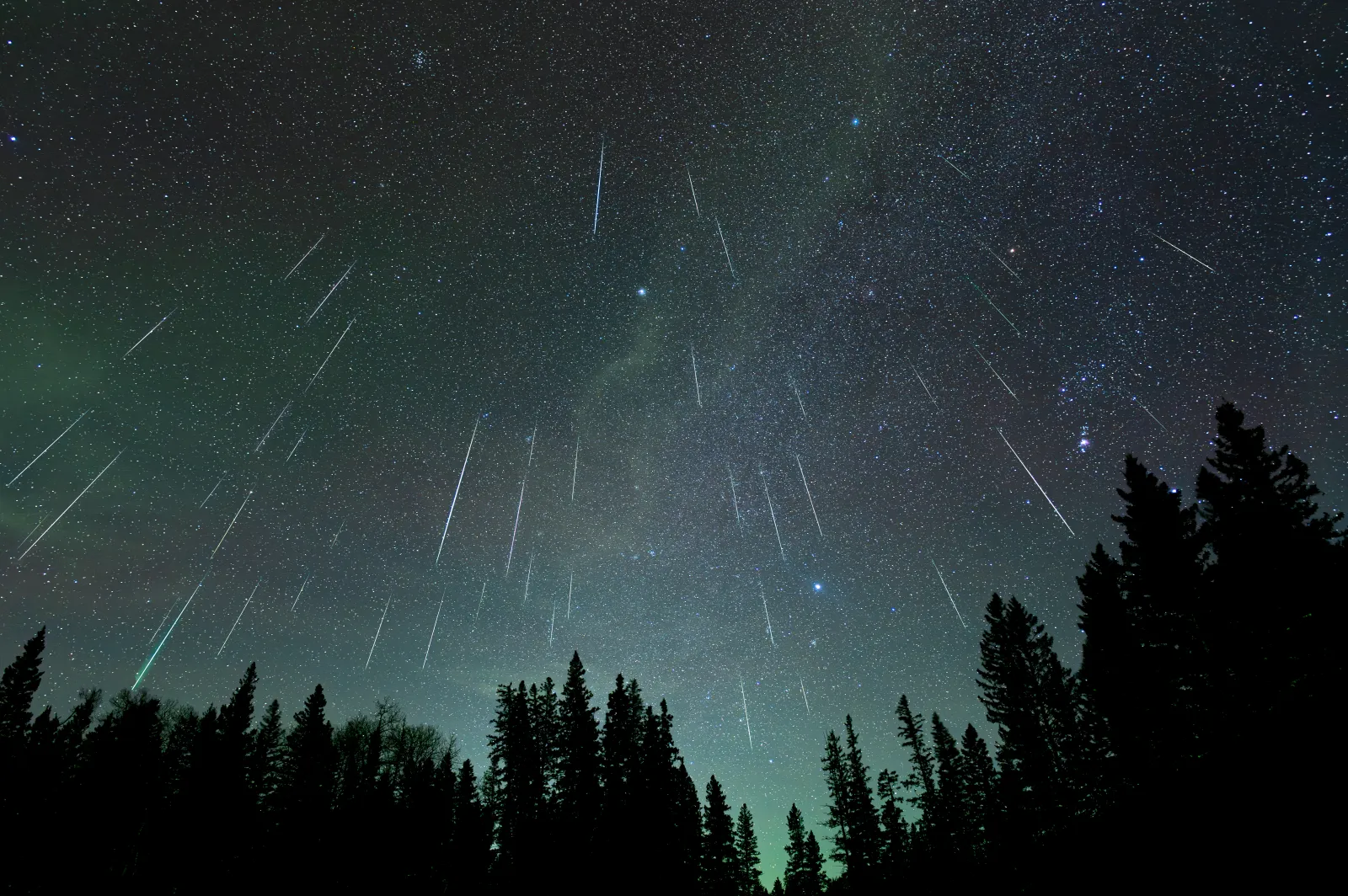
Skywatchers have a prime opportunity this week to catch one of the year's last major celestial events.
The Geminid meteor shower will peak overnight on December 14 at around 2 a.m. EST (11 p.m. PST), meaning that the best time for viewing from the U.S. will be during the pre-dawn hours of Thursday.
Meteors are chunks of space rock that enter our planet’s atmosphere at speeds typically between 25,000–160,000 mph. As they burn up, they produce streaks of light in a "shooting star."
Read More on Science
The meteoroids that create the Geminid meteor shower are known to be dazzlingly bright, fast, and even multi-colored. This is because of their complex chemical composition, being made up of sodium, calcium oxygen, magnesium and nickel.
First observed in 1862, the Geminids can produce as many as 120 meteors per hour under ideal conditions; along with the quantrandids they are among the only well-documented meteor showers that do not stem from a comet, but the break up of a rocky body known as asteroid 3200 Phaethon.
The radiant—the point in the sky from which the meteors appear to spread out from—is near the bright star Castor in the constellation Gemini.
At mid-northern latitudes, this point will rise the eastern horizon by about 9 p.m. local time on December 13 and will reach its highest point around 2 a.m.
...
How Can You See the Meteor Shower?
For those planning to view the event, experts advise heading to a dark location away from city lights and allowing at least 20 to 30 minutes for eyes to adjust to the darkness. No special equipment is needed, though a reclining chair and warm clothing are recommended considering the late and wintery conditions!
“The great thing about a meteor shower, including the Geminids, is that the naked eye is the best way to see them,” Dr. Robert Massey, Deputy Executive Director at the Royal Astronomical Society, said in a video guide for hopeful viewers.
“If you get a telescope or a pair of binoculars, you're automatically restricting your view of the sky, and with a meteor shower what you want is the widest possible view.
"You want to be lying down, looking up at the broad panoply of stars, and watching for meteors."
This year’s Geminid display is expected to extend beyond the peak night. While the highest rates will occur overnight from Wednesday to Thursday and skywatchers are advised to keep an eye out then, meteors will remain visible until December 20, with the evenings immediately before and after the peak still offering a glittering show.
The evening of December 14 in particular may prove favorable for those unable to observe the peak night.
With favorable conditions expected, this week’s Geminid meteor shower offers one of the best opportunities in 2025 to witness a natural light show from space. The Moon is expected to not be visible to the naked eye the time and will not obstruct plans for new and seasoned skywatchers.
Do you have a tip on a science story that Newsweek should be covering? Do you have a question about meteor showers? Let us know via science@newsweek.com.
View 0 Comments
Submit Correction
View Editorial & AI Guidelines