...

By Billal Rahman
Immigration Reporter
0
Share
Newsweek is a Trust Project member
See more of our trusted coverage when you search.Prefer Newsweek on Googleto see more of our trusted coverage when you search.
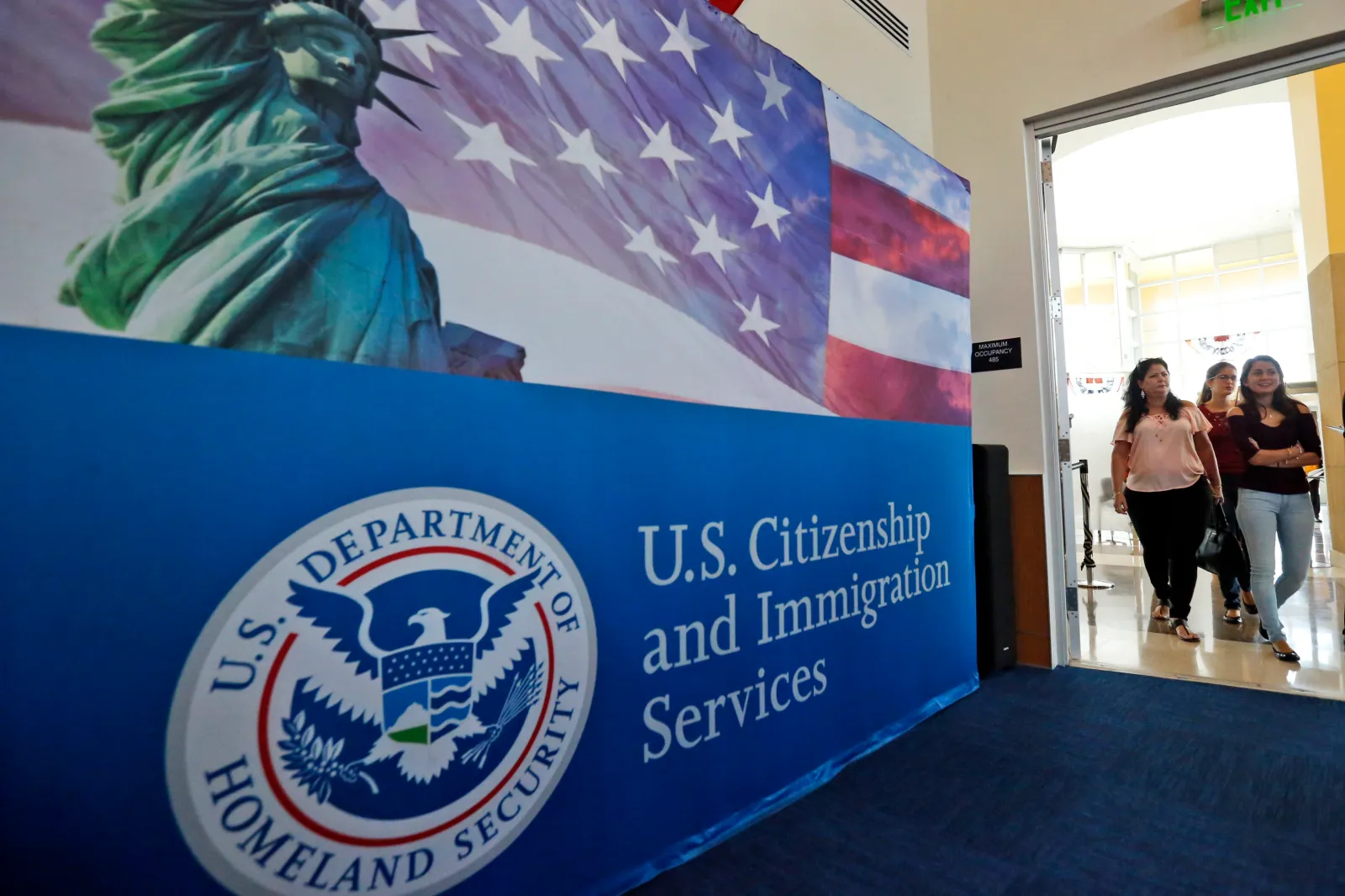
H-1B visa applicants are facing tougher obstacles under changes implemented by the Trump administration that raise costs for some employers and shift selection toward higher-wage positions, while increasing scrutiny throughout the application process, experts told Newsweek.
Together, the new rules—including a $100,000 fee and a wage‑weighted lottery—are dramatically shrinking the applicant pool, reducing chances for entry‑level and overseas workers and forcing companies to rethink whether sponsoring an H‑1B is worth the risk.
What Is The H-1B Visa and Why Are We Talking About It?
The H-1B visa program, long one of the most contentious parts of the U.S. immigration system, allows employers to hire foreign workers in specialty occupations such as healthcare, engineering, and tech roles requiring at least a bachelor’s degree or equivalent experience.
Read More on News
While supporters argue it fills critical labor shortages, critics say it undercuts American wages and jobs. The visa is typically granted for three years and can be extended to six, and although temporary, it can also serve as a pathway to permanent residency. Federal law caps most H-1B visas at 85,000 annually, though higher education institutions are exempt from that limit.
"Recent graduates of undergraduate degree programs and those applying with lower-wage roles faced tougher odds this fiscal year," Düden Freeman, a former consular officer at the State Department, told Newsweek.
The Trump administration has slapped a $100,000 fee on certain new H-1B petitions filed after September 21, 2025, and moved toward a wage-weighted selection system that gives preference to higher-paid roles.
At the same time, the Department of Labor has launched “Project Firewall,” an initiative focused on holding employers accountable for H-1B program violations. The changes are reshaping who gets selected in the annual visa lottery and how employers approach sponsorship decisions.
Why The $100,000 H-1B Fee Is a Game-Changer
One of the most consequential changes is the introduction of a $100,000 fee, which applies to petitions for workers outside the United States seeking to enter the United States under H-1B status, while many in-country status adjustments are generally exempt.
Experts say the fee has already reduced participation in the program and altered employer behavior.
Sam Peak, policy manager at the Economic Innovation Group, said the financial barrier has discouraged many employers from sponsoring foreign applicants abroad.
"The $100,000 fee only applies to H-1Bs coming to the U.S. from abroad, not to people who arrive on a different visa and then switch to an H-1B. This means people entering the U.S. on visas for international students, multinational employees, or other lesser-known visas can bypass the fee by applying for H-1B status after entry," Peak told Newsweek.
"Because of the fee, the pool of H-1B lottery applicants has dramatically shrunk. Historically, roughly one-third of successful H-1B lottery applicants arrived from outside the U.S. This year, only 85 applicants paid the $100,000 fee--suggesting that the vast majority of H-1B applicants from abroad were deterred from applying."
U.S. Citizenship and Immigration Services Spokesman Matthew J. Tragesser said in a statement, “American workers must come first. The $100,000 H-1B fee sends a clear message: we must prioritize hiring American talent before hiring foreign labor.”
A DHS court filing said USCIS had received 85 payments under the new $100,000 H-1B fee by February 15, 2026, totaling $8.5 million; the filing also said external applications fell 87 percent and USCIS lost about $19.5 million in fee revenue.
Meanwhile, a bipartisan group of lawmakers in Congress is pushing forward with a bill that would exempt healthcare workers from the steep fee.
How the H-1B Lottery Now Favors Higher-Paid Jobs
At the same time, USCIS has introduced a wage-weighted selection system. Under this model, applicants are no longer selected purely through a random lottery. Instead, selection odds are tied to the wage level assigned to the job by the Department of Labor.
Higher-wage positions have better odds, while lower-wage roles, often entry-level or early-career positions, face reduced chances.
"Candidates in higher wage levels, including those with advanced degrees and more experienced profiles, had improved selection chances," Freeman said.
"Selection is only the first hurdle: employers still need to prove that the job, wage, and beneficiary all satisfy H-1B requirements."
Taken together, the higher fees, wage‑weighted lottery and stepped‑up enforcement are turning the H‑1B visa from a broad hiring pipeline into a high‑cost, high‑risk gamble—one many employers are deciding is no longer worth taking.
Why H-1B Employers Are Facing More Investigations
Alongside changes to selection and fees, federal enforcement activity has increased, adding another layer of scrutiny for both employers and applicants.
The Department of Labor said it had launched nearly 200 investigations into companies suspected of abusing the H-1B program under Project Firewall.
The agency listed four disqualified employers on the H-1B debarred/disqualified list.
Peak pointed to a 48 percent increase in Labor Department H-1B investigations since September and said employers are facing more frequent site visits and inquiries from federal agencies. The Department of Homeland Security has also expanded fraud detection efforts, increasing workplace inspections to verify compliance with visa conditions.
Experts say this has created a higher-risk environment even for employers who follow regulations, as procedural errors can now carry greater consequences.
"Even employers fully complying with the law might avoid the program because worksite visits and government inquiries are too cumbersome," Peak said.
Why H-1B Policy Is Tightening Nationwide
The federal changes introduced by the government come as several Republican-led states move to restrict H-1B use in public institutions.
Florida’s Board of Governors has approved a one-year ban on new H-1B hires at public universities following direction from Governor Ron DeSantis. In a news conference in October of 2025, he asked in reference to an H-1B visa holder, "Are you kidding me? We can't produce an assistant swim coach in this country?" The H-1B visa-holding swim coach was from Spain.
In Texas, Governor Greg Abbott has ordered public universities and state agencies to pause new H-1B hires through May 2027. In Iowa, House File 2513, aimed at restricting certain H-1B hires in higher education, has advanced through the legislature and is pending further Senate action. “State government must lead by example and ensure that employment opportunities — particularly those funded with taxpayer dollars — are filled by Texans first,” Abbott said in a news release in January
What This Means For H-1B Applicants and Employers
What are the biggest mistakes H1-B visa applicants and companies are making?
One of the biggest mistakes applicants and companies are making right now is treating the H-1B process as a routine filing rather than a high-scrutiny compliance exercise that now carries financial, procedural, and legal risks at multiple stages, experts warned.
Experts say this includes failing to account for new enforcement realities, inconsistent documentation, and misunderstanding how selection weight and eligibility interact under the revised system.
Samantha Wolfe, partner at Holland & Hart, warned that employers are often underestimating procedural pitfalls, noting issues such as “inconsistency between registration and petition” and failing to understand how wage levels can affect selection outcomes, including that “the wage level, job classification, and worksite listed at registration must match the final petition exactly.”
"The old assumption that timely filing during the 60-day grace period after job termination provided a safety net is no longer reliable. USCIS is now issuing removal notices in those situations. Workers and employers both need contingency plans," Wolfe said.
Tips for H-1B visa applicants
Experts say applicants and employers must adopt a more strategic and compliance-focused approach as the system becomes more selective and heavily enforced.
"Don't rely solely on your employer's lawyer. Seek input from other lawyers specializing in H-1B cases. Never assume you are guaranteed a visa," Peak said.
Freeman and Wolfe both pointed to the importance of consistency and documentation across all filings, particularly under wage-weighted selection rules.
"With removal proceedings now being initiated in cases where workers fall out of status, there is no room for gaps. File petitions as early as possible and consider premium processing," Wolfe said.
Experts recommend that applicants and employers take a more careful, compliance-focused approach throughout the H-1B process, starting with ensuring that job duties clearly meet the definition of a specialty occupation.
They also advise aligning wage-level classifications consistently across all filings and avoiding discrepancies between registration and the final petition, as inconsistencies can now pose significant risks under increased scrutiny.
Planning for consular processing delays and other administrative requirements has also become more important, alongside maintaining strict attention to legal status throughout the entire application.
Experts say employers are increasingly reassessing whether to use the H-1B system at all.
Freeman said companies are now comparing multiple visa pathways rather than relying on the H-1B lottery as a default option.
"Cap-exempt employers are largely unaffected by the annual lottery, while cap-subject employers are comparing H-1B with other options such as L-1 transfers, O-1 cases, STEM OPT, and, in some situations, J-1 programs. That being said, not all alternatives fit all roles," she said.
There is bipartisan support in Congress for reform of the H-1B visa system, while some hardline Republicans are pushing forward legislation to scrap the program entirely.
While some experts see the changes as tightening oversight and shifting the system toward higher-skilled roles, others argue the reforms are fundamentally reshaping, but not improving, the program.
Kevin Lynn, Executive Director of the Institute for Sound Public Policy and founder of U.S. Tech Workers, said the major changes implemented by the Trump administration are less about reducing immigration overall and more about redistributing who benefits from it.
He argued that the $100,000 fee primarily affects workers entering from abroad while leaving major pipelines largely intact, including international students transitioning from F-1 visas and large tech firms hiring domestically within the U.S. system.
Lynn said this creates what he called a “substitution effect,” where the composition of workers changes, but overall visa volumes remain stable.
"The system is shifting toward workers already in the U.S. Whether that helps American workers is another question. In places like Silicon Valley, it likely doesn’t," Lynn told Newsweek.
Without meaningful legislative changes in Congress, the H-1B program is unlikely to change in any fundamental way, with most shifts continuing to come through administrative rules and enforcement rather than structural reform.
"There’s no reform that will fix the H-1B visa program because it is fundamentally flawed from the start. Each time Congress has tried to “reform” it, the problem has only gotten worse. The program should be gutted, and policymakers should instead focus on more selective pathways like the O-1 visa," Lynn said.
...
View 0 Comments
Submit Correction
View Editorial & AI Guidelines