...

By Brendan Cole
Senior Reporter
0
Share
Newsweek is a Trust Project member
See more of our trusted coverage when you search.Prefer Newsweek on Googleto see more of our trusted coverage when you search.
President Donald Trump has called on several countries to send ships to help unblock the Strait of Hormuz from Iran—a demand rejected thus far by Germany, China, Japan and Australia and met with reluctance by other traditional U.S. allies.
"Hopefully China, France, Japan, South Korea, the U.K., and others, that are affected by this artificial constraint, will send Ships to the area so that the Hormuz Strait will no longer be a threat by a Nation that has been totally decapitated," Trump wrote on social media on Saturday.
He also told the Financial Times that countries which received oil through the strait should help "make sure that nothing bad happens there" after Iran blocked the waterway in fighting back against U.S. and Israeli strikes that began late last month.
Read More on News
Trump warned that if those countries rejected his demands, "it will be very bad for the future of NATO."
But on Monday, many in the coalition said no.
"This is not our war, we have not started it," Germany's Defense Minister Boris Pistorius said. "What does...Trump expect from a few European frigates that the powerful U.S. Navy cannot do?"
Luxembourg’s deputy prime minister Xavier Bettel said his country would not give in to Trump's "blackmail," adding that Luxembourg was "happy to be useful. But don’t ask us with troops and with machines."
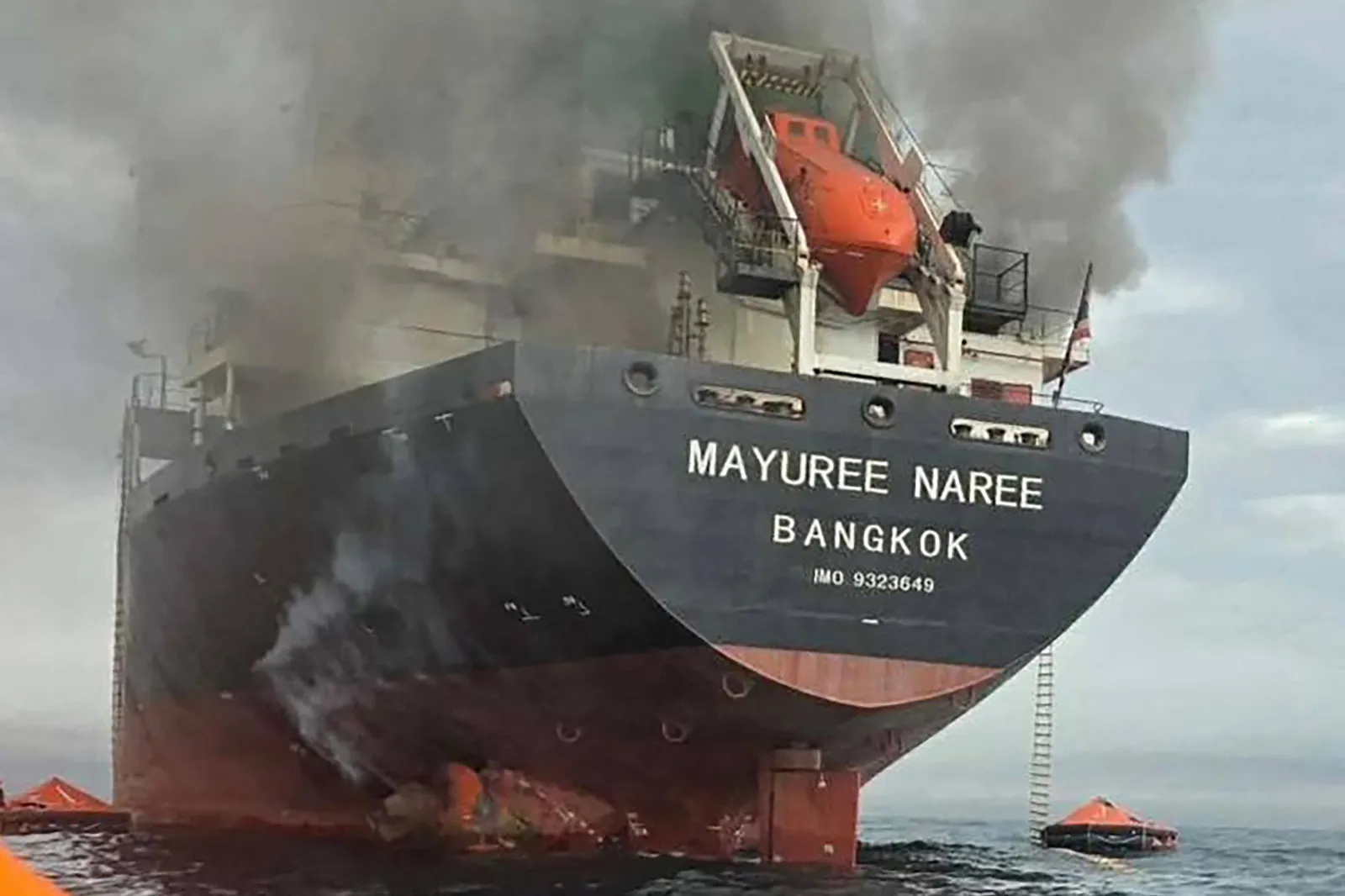
The Trump administration has itself declined to commit to sending out naval assets into the waterway where at least 20 commercial ships were attacked by Iran last week.

...
Initially, the president and his officials had said they could send a naval escort to shield tankers making their way through the strait. They also said they had destroyed 16 of Iran's mine-laying vessels after reports emerged that Tehran could embed the sea explosives to further shut down the critical oil passage.
But U.S Energy Secretary Chris Wright admitted last week the U.S. was not yet ready to mount such a naval guard operation. Newsweek has reported previously on why it is a complicated endeavour.
British Prime Minister Sir Keir Starmer said Monday the United Kingdom was working with allies on a plan to reopen the strait but would not be drawn into a wider war. Starmer also said there was the possibility of using mine-hunting drones that the U.K. has in the region, but the country is unlikely to dispatch a warship.
Starmer has spoken with Canadian Prime Minister Mark Carney about the impact of the strait’s continued closure creating an energy crisis.
Trump has criticized Starmer for a perceived lack of support for the war after he initially refused to allow the U.S. to use British bases to strike Iran. The U.K. has since allowed U.S. access to some bases and sent ships to Cyprus after its military base there was attacked in the first days of the war.
Starmer said Monday his country had deployed RAF Typhoon and F‑35 fighter jets across the region to intercept Iranian drones and missiles and protect U.K. personnel and allies.
HMS Dragon, a Type 45 air‑defense destroyer, has been deployed to the Eastern Mediterranean as missile and drone defense for Cyprus and U.K. assets, Reuters reported.
Meanwhile, France has deployed 10 additional warships to the region, tasked with escort duties for commercial ships attempting to cross the Strait of Hormuz, Naval News reported.
Ahead of a meeting of European Union foreign ministers, the bloc’s foreign policy chief Kaja Kallas said Brussels was weighing two types of naval missions to help reopen the strait.
She said that Brussels EU could expand its Aspides naval mission to protect shipping in the Red Sea up into the Persian Gulf or form a "coalition of the willing" with countries contributing military capacity.
Italy's Foreign Minister Antonio Tajani said Rome backs reinforcing EU naval missions in the Red Sea but: "I don’t think these missions can be expanded to include the Strait of Hormuz, especially since they are anti-piracy and defensive missions."
Among non-NATO members, China dismissed Trump's appeal for countries with capable navies to deploy warships.
China, a key diplomatic partner of Iran and the buyer of most of its crude oil, has repeatedly condemned the U.S.-Israeli offensive, which has killed more than 1,400 people in Iran, local officials say.
"We once again call on all sides to immediately cease military actions, avoid tensions from further spiraling and escalation, and prevent regional turbulence from having a large impact on global economic growth," Foreign ministry spokesperson Lin Jian said on Friday when asked about Trump's appeal.
Catherine King, a member of Australian Prime Minister Anthony Albanese's Cabinet, said that for Canberra, sending ships to assist in reopening the Strait of Hormuz was "not something that we've been asked or that we're contributing to."
Japan’s Prime Minister Sanae Takaichi also said Tokyo did not currently plan to dispatch naval vessels to escort ships in the Middle East but added that "we are continuing to examine what Japan can do independently and what can be done within the legal framework."
Iran's Foreign Minister Abbas Araghchi said the Strait of Hormuz will remain closed "to our enemies" and that "from our perspective it is open."
"It is only closed to our enemies, to those who carried out unjust aggression against our country and to their allies," he added.
Correction 3/16/26, 12:02 p.m. ET: This article has been updated to correct the spelling of Trump's and Pistorius' last name.
Update 3/16/26, 12:02 p.m. ET: This article has been updated with additional information.
In a polarized era, the center is dismissed as bland. At Newsweek, ours is different: The Courageous Center—it's not "both sides," it's sharp, challenging and alive with ideas. We follow facts, not factions. If that sounds like the kind of journalism you want to see thrive, we need you.
When you become a Newsweek Member, you support a mission to keep the center strong and vibrant. Members enjoy: Ad-free browsing, exclusive content and editor conversations. Help keep the center courageous. Join today.


View 0 Comments
Submit Correction
View Editorial & AI Guidelines