...

By Steve Mollman
News Editor
0
Share
Newsweek is a Trust Project member
See more of our trusted coverage when you search.Prefer Newsweek on Googleto see more of our trusted coverage when you search.
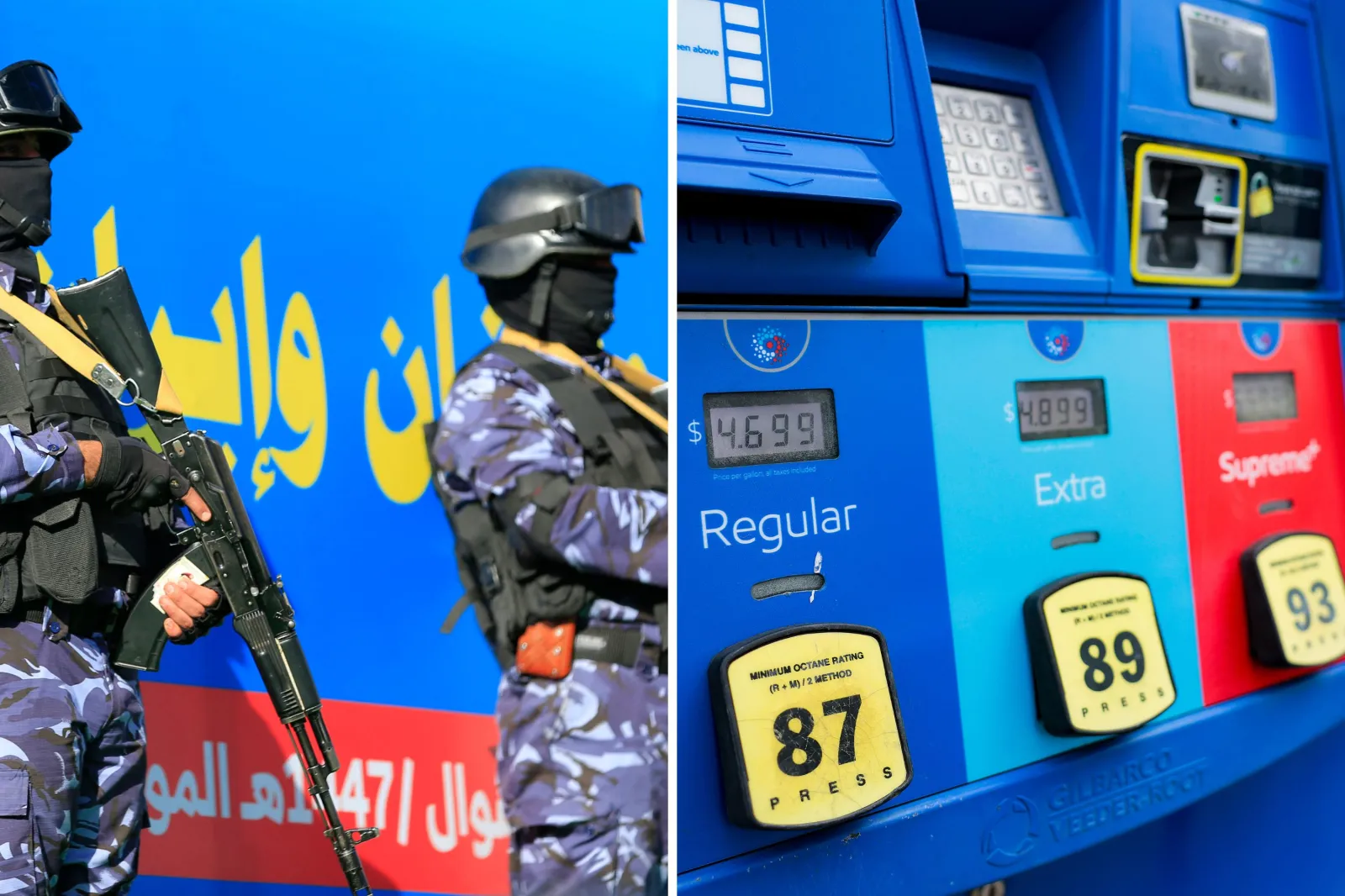
The Iran war expanded again this weekend after Yemen’s Houthi movement announced it had entered the conflict, firing ballistic missiles toward Israel in what officials described as a major escalation. While the strike itself was intercepted, analysts say the Houthis’ involvement carries economic risks that could be felt far beyond the Middle East—including at U.S. gas pumps.
Energy markets have already been rattled by weeks of fighting involving Iran, Israel, and the United States. The Houthis’ entry adds a new threat to global oil flows by raising the possibility of renewed attacks on shipping routes that are critical to world energy supplies.
What This Means for U.S. Drivers
The Iran‑aligned Houthi movement said it launched ballistic missiles at Israeli military targets on Saturday, marking its first direct participation in the war. Israel’s military confirmed it detected the launch from Yemen and said air defenses intercepted the missile.
Read More on World
The move follows repeated Houthi warnings they would enter the conflict if what they described as “red lines” were crossed, including the use of regional waterways to support military operations against Iran. The Houthis, who control large parts of Yemen, have long been considered one of Tehran’s most disruptive regional partners.
Their involvement opens a new front in a conflict that has already drawn in multiple countries and destabilized energy markets worldwide.
The Houthis sit astride one of the world’s most important maritime chokepoints: the Bab el‑Mandeb Strait, which connects the Red Sea to the Gulf of Aden.
That narrow waterway is a vital corridor for oil and gas shipments traveling between the Middle East, Europe, and North America. In past conflicts, Houthi attacks on commercial vessels forced shipping companies to reroute around southern Africa—adding time, cost, and uncertainty to global energy supply chains.
The stakes are particularly high at Yanbu, a major Saudi‑controlled industrial port on the Red Sea that has emerged as a critical outlet for the kingdom’s oil exports as traffic through the Strait of Hormuz has been severely disrupted by Iran. Yanbu’s crude export terminals are operated by Saudi Aramco, with shipments fed via the kingdom’s East‑West pipeline, which carries oil from Saudi Arabia’s eastern fields to the Red Sea coast.
...
Since late February, Saudi Arabia has increased crude exports from Yanbu, diverting oil that would normally transit Hormuz in order to bypass Iranian threats to shipping in the Gulf. That shift has made Red Sea routes—and by extension nearby chokepoints such as the Bab el‑Mandeb—far more consequential to global energy markets than in previous crises, heightening concerns that renewed Houthi attacks could disrupt a key alternative lifeline for oil supplies.
Even the threat of renewed Houthi attacks can push oil prices higher as traders price in the risk of supply disruptions.
“I have no doubt in my mind that eventually the Houthis will enter and they will do two things—first, block the Bab el-Mandeb Strait, and second, try to prevent the Saudis from having tankers in [its] Yanbu port taking oil, Danny Citrinowicz, a former Iran researcher for the Israeli Defense Forces, told Politico.
The impact of Houthis attacking vessels would push up oil prices but "not be limited to the energy market," as it would destabilize "all of maritime security," Ahmed Nagi, a senior Yemen analyst at the International Crisis Group, told the Associated Press.
How Americans Could Feel the Impact at the Pump
When oil shipments face delays or detours, global crude prices tend to rise. That increase eventually filters down to consumers in the form of higher gasoline prices.
The U.S. is one of the world’s largest oil producers, but it remains tightly connected to global energy markets. American refineries buy and sell crude on international exchanges, meaning price spikes abroad can quickly affect domestic fuel costs.
If tankers avoid the Red Sea due to security concerns, transportation costs rise. Those higher costs are passed along the supply chain—from refiners to distributors to gas stations. This dynamic has already been playing out since the war began, with oil prices climbing amid fears that Iran or its allies could disrupt key shipping lanes.
While much attention has focused on the Strait of Hormuz, the Bab el‑Mandeb is increasingly seen as a second pressure point.
During previous conflicts, the Houthis targeted merchant vessels using drones, missiles, and small boats, forcing shipping companies to suspend Red Sea transits. That earlier campaign disrupted global trade and raised energy prices, even without a broader regional war.

...
That campaign began in November 2023, when the Iran‑backed group launched a sustained wave of attacks on commercial shipping transiting the Red Sea and the Bab el‑Mandeb Strait, initially claiming it was targeting vessels linked to Israel amid the Gaza war. Over the following months, the Houthis expanded their operations, using anti‑ship missiles, explosive‑laden drones, and fast attack boats to strike or harass merchant vessels from a growing list of countries.
By early 2024, major shipping firms had begun diverting traffic around southern Africa to avoid the Red Sea, sharply increasing transit times and costs. The attacks continued intermittently into 2024 as well as last year, including high‑profile incidents that damaged or sank commercial vessels and prompted repeated U.S.‑ and allied‑led airstrikes on Houthi positions. The Houthis’ Red Sea campaign disrupted a shipping corridor critical to global trade and energy flows, forcing widespread rerouting and contributing to higher freight and fuel costs worldwide.
Now, with the Houthis openly joining the Iran conflict, a renewed campaign against shipping could have a similar—or greater—impact, especially given the already strained energy market.
Nate Swanson, former director for Iran on the White House National Security Council from 2022-25, told Politico that he's surprised Iran has not worked to close the Bab-el Mandeb strait.
“It could be strategic patience, it could be diminished capabilities, or it could be some kind of side deal with the Saudis,” said Swanson, who is now a senior fellow at the Atlantic Council.
What Happens Next for Gas Prices
Gasoline prices in the U.S. tend to respond rapidly to geopolitical shocks. Even short‑lived supply fears can drive price spikes, particularly during periods of high demand.
If oil prices continue to climb due to fears of Red Sea disruptions, drivers could see higher prices within days or weeks, depending on how long tensions persist.
While no immediate supply cutoff has occurred, markets often move ahead of events—reacting to risk rather than confirmed shortages.
Much depends on whether the Houthis expand their involvement beyond missile strikes and begin targeting commercial shipping again.
Shipping companies and governments are closely monitoring the situation, weighing whether to reroute vessels or deploy additional naval protection. Any escalation at sea would likely intensify market volatility.
For U.S. consumers, the key question is whether the conflict stabilizes—or whether additional regional actors become involved, pushing energy prices even higher.
Update 3/30/26 8:10 am ET: This article was updated with additional information.
In a polarized era, the center is dismissed as bland. At Newsweek, ours is different: The Courageous Center—it's not "both sides," it's sharp, challenging and alive with ideas. We follow facts, not factions. If that sounds like the kind of journalism you want to see thrive, we need you.
When you become a Newsweek Member, you support a mission to keep the center strong and vibrant. Members enjoy: Ad-free browsing, exclusive content and editor conversations. Help keep the center courageous. Join today.


View 0 Comments
Submit Correction
View Editorial & AI Guidelines