...

By Peter Aitken
Politics Weekend Editor
0
Share
Newsweek is a Trust Project member
See more of our trusted coverage when you search.Prefer Newsweek on Googleto see more of our trusted coverage when you search.
Prediction market site Polymarket on Sunday reported that U.S. officials and Wall Street analysts have begun preparations for oil to top $200 a barrel as the Iran war continues and shows signs of possible escalation.
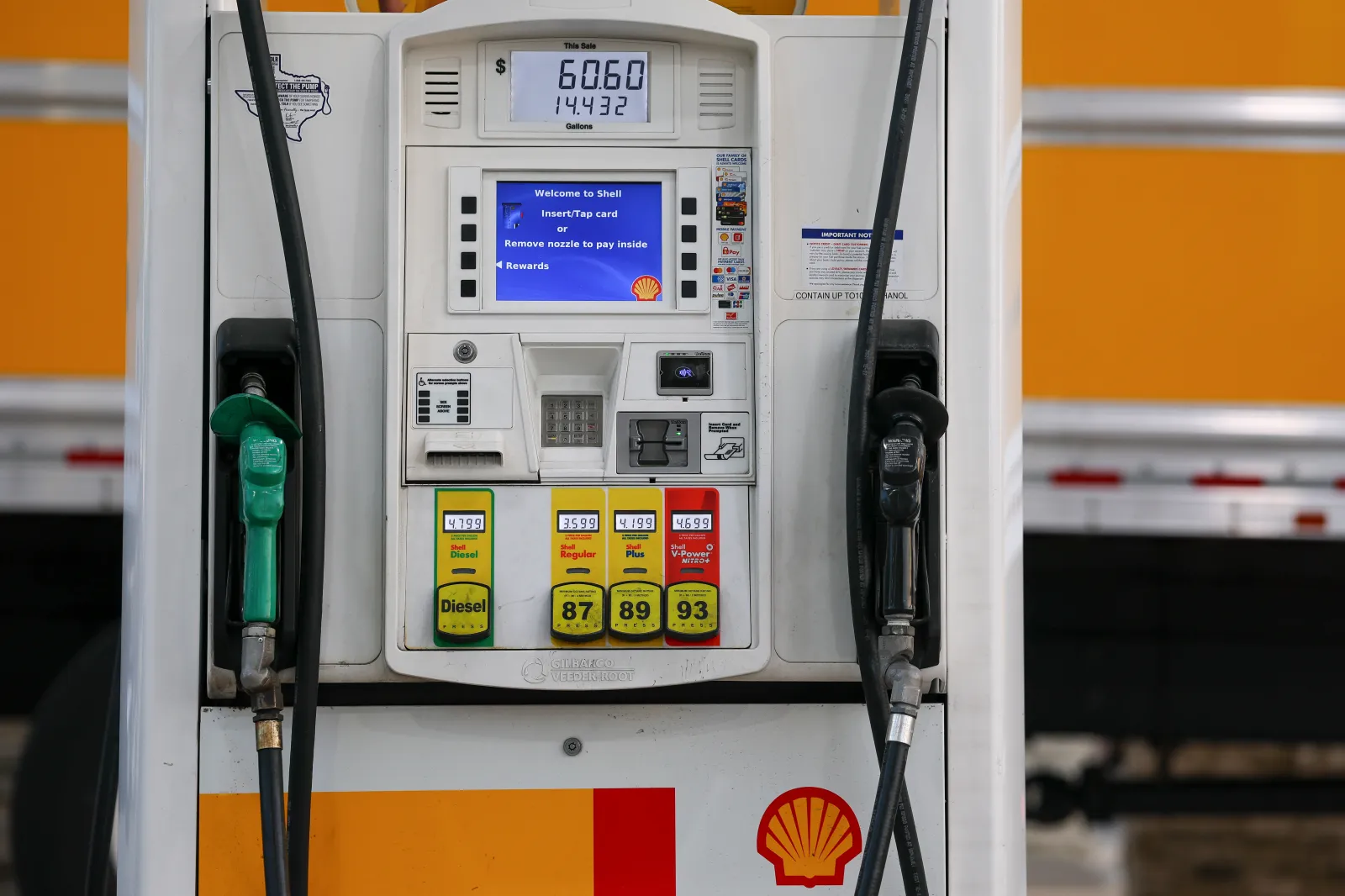
This occurs as the average price of gas across the United States remains just under $4 a gallon, but in some cities, such as San Francisco, is about to top $6 a gallon, according to data from crowdsourced gas app GasBuddy.
Newsweek reached out to the White House by email on Sunday afternoon for comment.
Read More on U.S.
Why It Matters
President Donald Trump returned to the White House with the promise of lowering the cost of living—including gas prices—for all Americans, bashing his predecessor Joe Biden for higher inflation during his pledges. Only four days before the U.S. and Israel launched their joint strikes against Iran on February 28, the White House touted recent declines in gas prices, attributing them to “American energy dominance.”
But being the world’s leading oil producer did not shield the U.S. from the global rise in prices that has followed the onset of the war in the Middle East and restriction on travel through the Strait of Hormuz, where one fifth of the world’s oil usually transits.
While gas prices remain below the pandemic peak of over $5 reached in June 2022 under Biden, Trump and the Republican Party risk facing a backlash from disgruntled voters during this year’s midterms because of higher prices at the pump.
...
What To Know
Oil has periodically topped $100 a barrel since the start of the Iran war, and on Friday, March 27, traded at around $101 by the close of business after hovering around $90 to $95 for most of the previous week.
The fresh warning has trickled down from Australian investment firm the Macquarie Group, which said that prices could reach that level if the war drags on until June - something that analysts previously determined was only 40 percent likely to happen, while Macquarie analysts believe it is 60 percent likely.
“If the strait were to stay closed for an extended period, prices would need to move high enough to destroy an historically large amount of global oil demand,” Macquarie’s analysts wrote in a report.
“The timing of the re-opening of the straits, and physical damage to energy infrastructure, is the main determinant of the longer-term impact on commodities,” the analysts added.
That has translated to a higher price at the pump, too: Fuel prices, according to AAA, average $3.980 per gallon as of Sunday, March 29, with west coast states seeing average prices upwards of $5.869 per gallon. The national average for premium is $4.867, and diesel hit $5.406 per gallon -- all of these prices marking around a dollar more per gallon compared to prices before Operation Epic Fury started.
GasBuddy showed that San Francisco's cheapest prices were between $5.27 a gallon and the most expensive gas at $6.29 a gallon for an average of $5.99 - indicating only a few stations holding that lower price.
Los Angeles is not far behind with an average of $5.95 a gallon, although there are gas stations at - within this context of elevated prices - a shockingly low $4.29 a gallon; and San Diego is seeing a low of $4.99 with an average of $5.89 a gallon.
Trump in recent weeks has dismissed concerns about energy prices as “some temporary short-term disruption" that “people will understand.”
"Short term oil prices, which will drop rapidly when the destruction of the Iran nuclear threat is over, is a very small price to pay for U.S.A., and World, Safety and Peace," Trump wrote on Truth Social earlier this month.
What People Are Saying
President Donald Trump last week on Truth Social: "Going to make a big speech on economics in Miami. Our Military Operation in Iran is going GREAT!"
Senator Andy Kim of New Jersey, a Democrat, on X: "You deserve a government focused on lowering the cost of gas, groceries, and healthcare. Instead they're focused on an illegal war in Iran that you're paying for."
Senator Rand Paul of Kentucky, a Republican, on X: "Same excuses. Same spending. Same “compassion” funded with borrowed money. We are not just overspending – we are spending money we do not have and leaving the bill with the next generation."
In a polarized era, the center is dismissed as bland. At Newsweek, ours is different: The Courageous Center—it's not "both sides," it's sharp, challenging and alive with ideas. We follow facts, not factions. If that sounds like the kind of journalism you want to see thrive, we need you.
When you become a Newsweek Member, you support a mission to keep the center strong and vibrant. Members enjoy: Ad-free browsing, exclusive content and editor conversations. Help keep the center courageous. Join today.


View 0 Comments
Submit Correction
View Editorial & AI Guidelines