...

By Kate Plummer
Senior US News Reporter
0
Share
Newsweek is a Trust Project member
See more of our trusted coverage when you search.Prefer Newsweek on Googleto see more of our trusted coverage when you search.
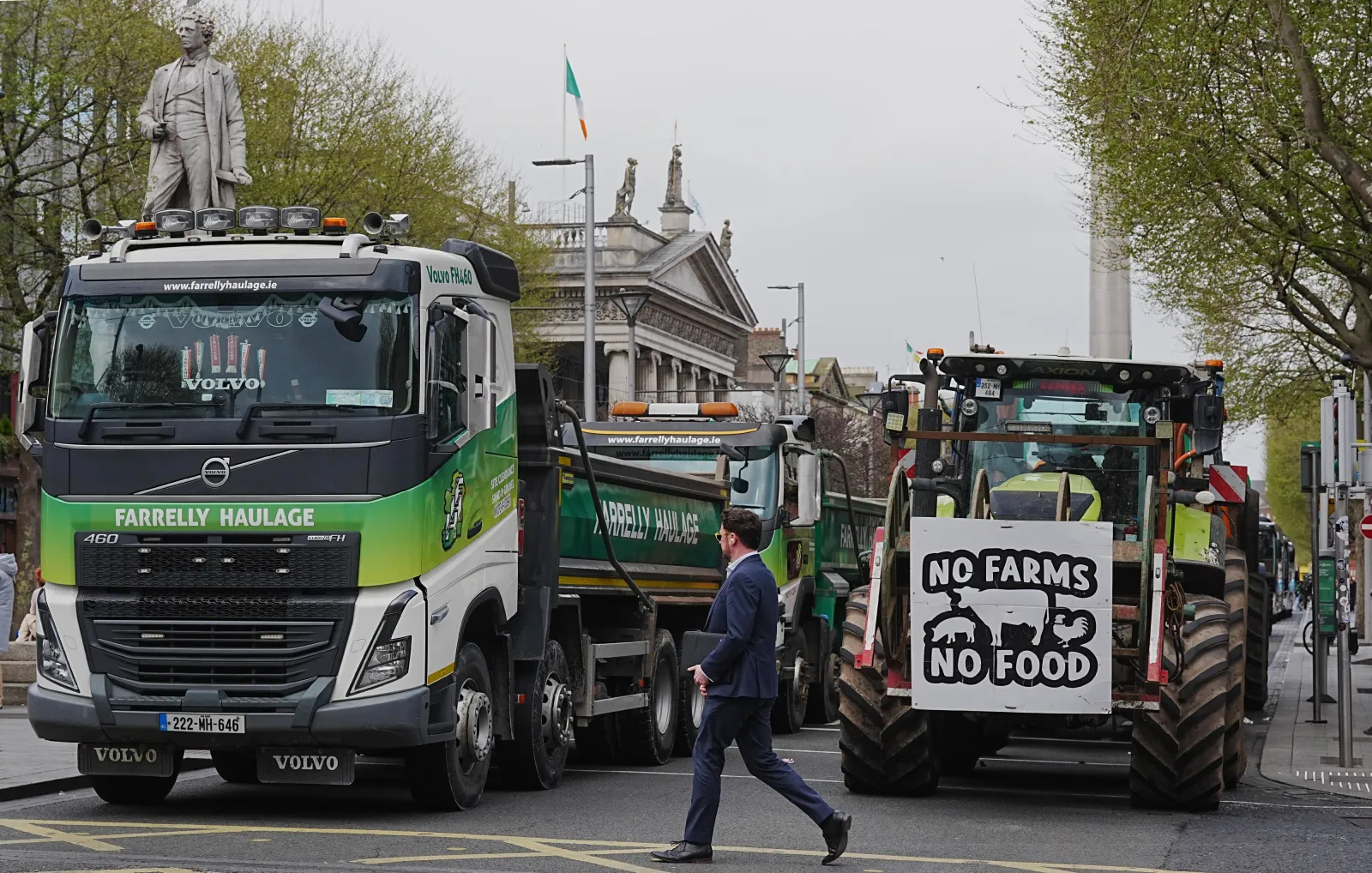
Irish protesters have said they will "close the country down," blockading roads in Dublin amid fuel price protests.
For the past four days, protesters have taken to the streets of Ireland's capital and other areas to protest high fuel prices caused by the U.S. and Israel's ongoing war with Iran. They are calling for the carbon tax on green diesel to be removed and the price of fuel to be capped.
Speaking to RTE, John Dallon, one of the protest leaders in Dublin, said the protest could continue "for another week, maybe two weeks. If it takes a month, we are prepared to sit here."
Read More on World
"If it takes to close the country down. We'll close the country down," he continued.
...
Why It Matters
Oil prices have risen globally after Iran closed the Strait of Hormuz, which handles about a fifth of global oil and liquefied natural gas shipments. The announcement of a ceasefire this week was contingent on the Islamic Republic reopening the strait, but reports have indicated ships are still being blocked from crossing the waterway, so fuel prices continue to fluctuate.
As some countries have begun rationing fuel or introducing measures such as four-day workweeks to alleviate oil and gas use, the ongoing protests highlight another example of the effects of the global energy crisis and the subsequent rise in fuel prices on everyday people.
What To Know
Dallon said the number of people involved in the protests was "growing every day," and that the protests were likely to continue.
"This problem is not going away, and the only people can put this to bed is the government, and it's up to the government. And how dare they come out and say that these people that are protesting are holding the country to ransom. It's the government that's holding the country to ransom," he told RTE.
Ireland is using the army to deploy recovery trucks to help the police remove vehicles involved in the blockades.
Protesters are blocking roads and have gone to fuel terminals in Foynes, a town in County Limerick, as well as Galway Port and the Whitegate oil refinery in east Cork. This protests have created traffic disruptions and delays for passengers traveling to Dublin Airport.
Meanwhile, in the U.S., the national average price of gas exceeded $4 a gallon for the first time in four years on Wednesday.
What People Are Saying
Dara Calleary, Ireland's minister for rural and community development, told RTE that resolving the blockades was "the most important thing" ahead of a meeting with farmer representatives.
"The focus of the mission is that we get a resolution to the blockades. We can't have a situation where we have enough fuel in the country and that fuel isn't getting to our citizens."
Taoiseach Micheál Martin told RTE that blocking roads was "not a fair form of protest."
John Dallon, a protest leader in Dublin, told the outlet: "Government is going to have to listen because this protest is escalating. The people of Ireland, of the island of Ireland, have had enough, and what I'm hearing all around here is we need to bring the government down or at least bring them to their senses, and we need to take some of that power back off of government."
U.S. President Donald Trump wrote on Thursday on Truth Social: "There are reports that Iran is charging fees to tankers going through the Hormuz Strait—They better not be and, if they are, they better stop now!"
View 0 Comments
Submit Correction
View Editorial & AI Guidelines