...

By Anna Skinner
Associate News Editor
0
Share
Newsweek is a Trust Project member
See more of our trusted coverage when you search.Prefer Newsweek on Googleto see more of our trusted coverage when you search.
Thousands of people were warned of dangerous conditions at Lake Mead on Monday.
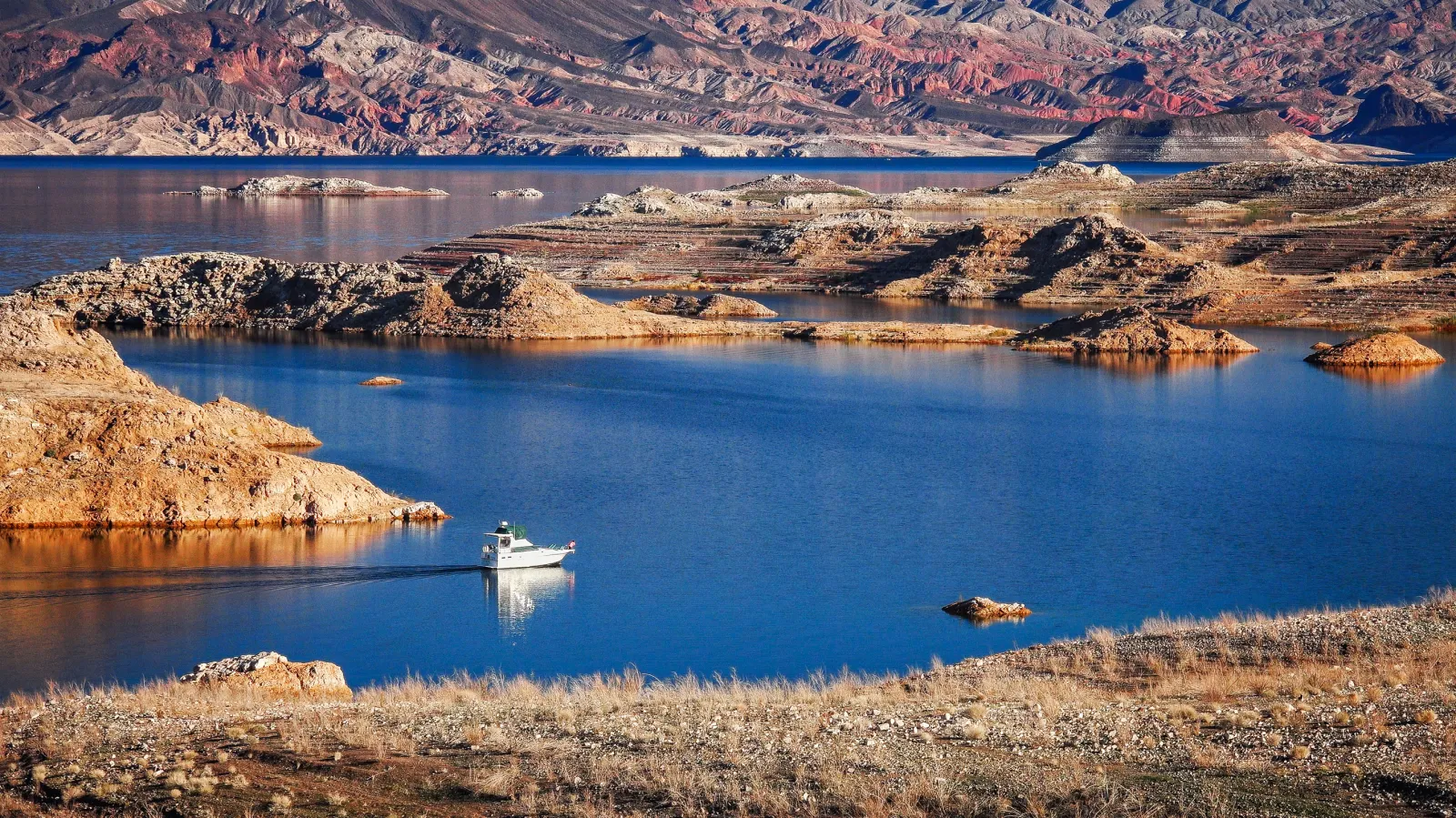
The National Weather Service (NWS) issued a lake wind advisory for the Nevada-Arizona border, including Lake Mead and Lake Mohave, as conditions became hazardous for boaters in the area. The weather alert comes as water officials have issued repeated warnings about the state of Lake Mead's water levels, which have become so low they could mean breaching a 104-year-old water contract between seven states.
Low water levels at Lake Mead likely won't influence the extent of the waves during the lake wind advisory, NWS meteorologist Matt Woods told Newsweek. The winter and spring months are the region's windiest, and he advised boaters to use caution if out on the lake as the waves could become hazardous.
Read More on U.S.
Who is At Risk at Lake Mead?
Increasing winds over the lake are expected to produce rough and choppy waters, making conditions especially dangerous for small craft, NWS Las Vegas said in the lake wind advisory. Officials caution that sudden gusts can quickly overwhelm boats, even for experienced operators, and increase the risk of capsizing or taking on water.
...
The waves could reach up to 3 feet high, NWS Las Vegas warned. The alert will go into effect Tuesday morning and remain in place all day.
The Lake Mead Recreation Area is included in the warning area, as are the cities of Hoover Dam, Mohave Valley, Bullhead City, Oatman, and Laughlin.
The advisory highlights that wind‑driven waves can develop rapidly on large reservoirs such as Lake Mead, particularly when winds align with the lake’s long fetch. These conditions can make navigation difficult and reduce a boater’s ability to safely return to shore. The NWS urges boaters to closely monitor weather conditions and reconsider plans that involve open water travel during advisory periods.
People driving on roads near the lake may also feel the effects of the strong winds, which can gust up to 35 mph at times.
"Winds this strong can make driving difficult, especially for high profile vehicles. Use extra caution," NWS Las Vegas said in the alert.
Lake Mead Water Levels
Lake Mead's water levels have recovered slightly from dangerously low marks in 2022, after yearslong drought depleted the reservoir and other important water sources across the region. However, despite the slight recovery, current conditions highlight continued pressure on the system. As of Monday, the reservoir stood at 1,065.92 feet above sea level, more than 160 feet below full pool, according to lake-level monitoring data.
The current water level is roughly a foot below what levels were at this time last year and nearly 10 feet below its levels at this time in 2024. However, despite the concern over Lake Mead's fragile state, the reservoir is in much better condition than this time in 2023, when water levels were at only 1,046 feet above sea level. In early February 2022, the lake's levels were higher, at about 1,067 feet, before they endured a steep plummet from March through August of that year, dropping nearly 30 feet in five months.
Despite its slight improvement over the past few years, Lake Mead still remains at low capacity. U.S. Bureau of Reclamation data shows the lake has a capacity of 26 million acre-feet of water. Recent data from the USBR shows the lake is currently only storing 8.86 million acre-feet, roughly 34 percent of its capacity.
View 0 Comments
Submit Correction
View Editorial & AI Guidelines