10
Loading video...

By Matthew Robinson
News Editor
0
Share
Newsweek is a Trust Project member
See more of our trusted coverage when you search.Prefer Newsweek on Googleto see more of our trusted coverage when you search.
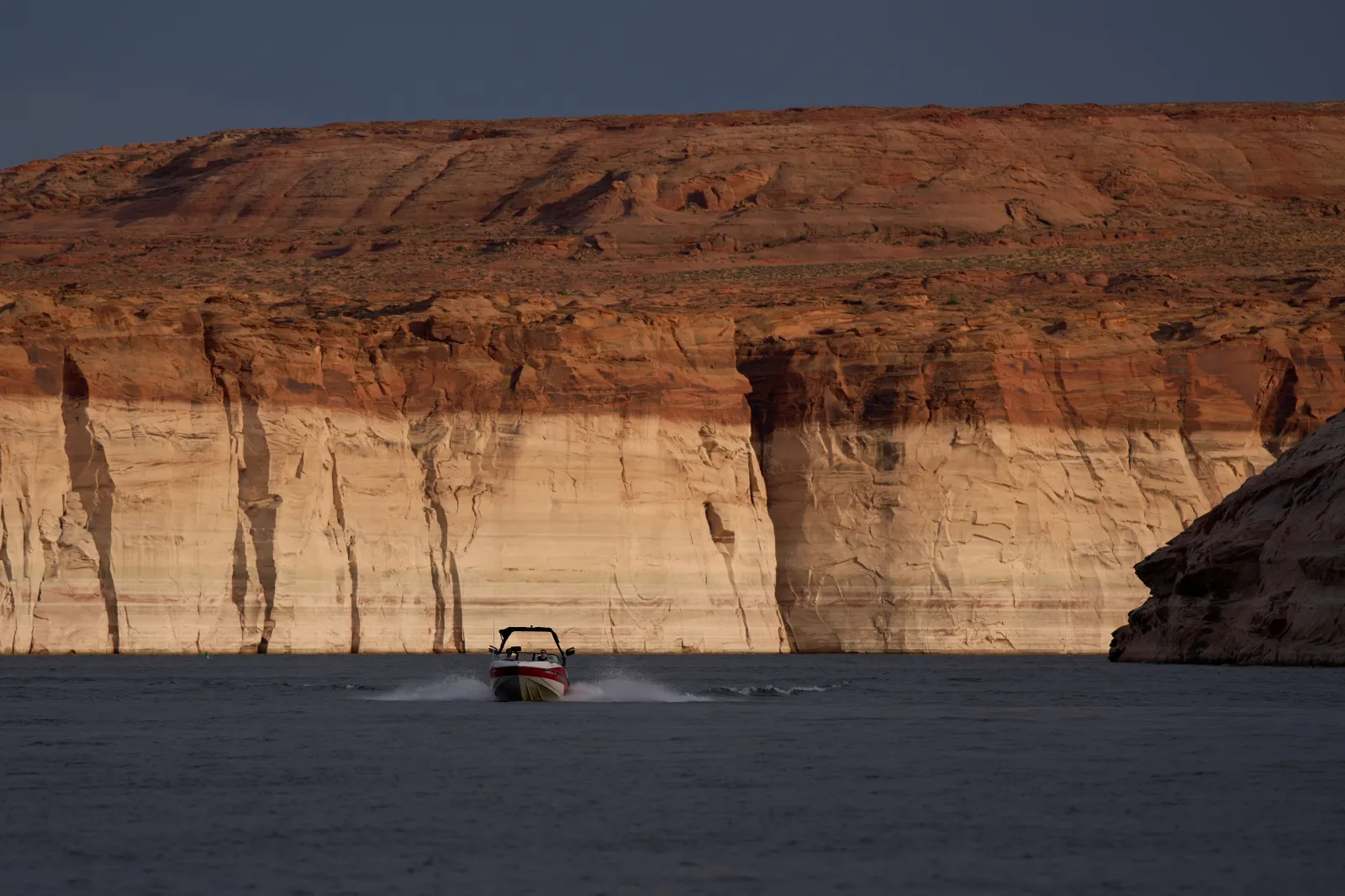
Lake Powell has fallen to its lowest water level ever recorded, raising concerns for millions of Americans who rely on the Colorado River system.
Water levels in the lake—the second largest reservoir in the United States—fell to 3,519.91 feet above sea level on Saturday, surpassing a previous record set in April 2023, according to the U.S. Bureau of Reclamation (USBR). The lake has now lost more than 20 feet in elevation since the start of the year.
A week prior, Lake Mead—the nation's largest reservoir—also fell to its lowest-ever level, surpassing a previous record set in July 2022.
Read More on News
Newsweek contacted the USBR for comment by email outside regular working hours.
...
What Low Water Levels Mean for Americans
Lake Powell's plummeting water levels could have far-reaching consequences for millions of Americans who depend on the Colorado River system for water, hydropower, recreation, fish and other benefits.
The Colorado River supports seven states—Arizona, California, Colorado, Nevada, New Mexico, Utah and Wyoming. The U.S. is also treaty bound to deliver water from the river to Mexico.
Agricultural uses account for about 70 percent of Colorado River water, while between 35 million and 40 million people rely on it for at least part of their municipal supply, according to the USBR.
Electricity
One of the most urgent concerns is hydropower creation. Lake Powell is now about 30 feet above the level at which the Glen Canyon Dam's eight turbines would shut down due to a lack of water depth needed to run safely.
The dam has a maximum electricity production capacity of 1,320 megawatts, which provides power for roughly 5 million people across Wyoming, Utah, Colorado, New Mexico, Arizona, Nevada and Nebraska.
Water
The Colorado River provides water to about 40 million people across the seven Western states. Federal officials and the states sharing the river are already considering major reductions in water deliveries due to shrinking supplies.
Cities in the area are having to seek more creative solutions to guarantee water security. In Arizona, Phoenix is investing millions into turning treated wastewater back into drinking water.
Meanwhile in June, California, Arizona and Nevada signed a memorandum of understanding to explore a first-of-its-kind interstate water exchange from San Diego's desalination plants.
Agriculture
Record-low water levels can have a major impact on agriculture because the Colorado River supplies irrigation water to farms.
Water managers are facing increasing pressure to reduce water deliveries, which for farmers can result in lower yields, increased costs to secure alternative water sources and greater uncertainty surrounding planting decisions.
Tourism and recreation
As water levels fall, boat ramps can become unusable, forcing authorities to close, relocate or extend them into deeper water.
Low water levels can also make navigation more difficult as previously submerged rocks, sandbars and canyon features emerge.
At the Antelope Point Marina on Lake Powell, there is an $81 million plan to extend a ramp to allow lake access when water levels are as low as 3,520 feet. Meanwhile, a marina at Bullfrog Bay is also being moved, and a new ramp and marina access are expected to cost about $73.4 million.

...
What Happens Next
On July 31, the USBR released a 10-year adaptive framework through 2036 to control and protect Lake Powell and Lake Mead amid historic low water levels and drought.
The framework allows annual releases from Lake Powell of between 5 million and 12 million acre-feet and envisages mandatory water shortage reductions of up to 3 million acre-feet per year from Arizona, California and Nevada.
Jack Schmidt, the director of the Center for Colorado River Studies at Utah State University, previously told Newsweek that reservoirs were so low that "very large cuts" would have to be made come spring. "Even a wet winter doesn't eliminate the immediate crisis," he said.
Andrea Travnicek, the assistant secretary of the interior for water and science, said in April: "Given the severity of the risks facing the Colorado River system, it is imperative that we take action quickly to protect a resource that supplies water to 40 million people and supports vital agricultural, hydropower production, tribal, wildlife, and recreational uses across the region.
"As we weigh current conditions and prepare for future operations by working with states, tribal nations and stakeholders, the Department of the Interior and Reclamation remain fully committed to taking the actions necessary to reduce impacts on water deliveries, safeguard critical infrastructure, and preserve as much operational flexibility as possible."
Contact Newsweek editors on this story: John Fitzpatrick and Shakeema Edwards.
View 0 Comments
Submit Correction
View Editorial & AI Guidelines