...

By Thomas Westerholm
Life & Trends Reporter
0
Share
Newsweek is a Trust Project member
See more of our trusted coverage when you search.Prefer Newsweek on Googleto see more of our trusted coverage when you search.
The price of laptops might spike in the coming year, but Apple may be one of the few companies well-positioned to avoid the worst of the increases.
A report cited by MacRumors from TrendForce found that rising memory and processor costs could push mainstream laptop prices up by nearly 40 percent in 2026.
Why it Matters
Higher laptop prices would arrive at a time when consumers are already facing rising costs for many electronics products.
Read More on Tech
Tariffs and supply chain pressures could push prices higher across the tech sector. Laptops and tablets could see some of the biggest increases.
...
A report by the Consumer Technology Association, cited by MarketWatch, predicted laptop prices could increase by roughly 45 percent, or about $357 on average, under some tariff scenarios.
The association warned the tariffs would lead to, “significant price increases for U.S. consumers,” affecting a wide range of consumer electronics.
What to Know
Research firm TrendForce found that memory components such as DRAM and SSD storage have surged in price, growing from about 15 percent of a laptop’s bill of materials to more than 30 percent after several quarters of increases.
At the same time, processor prices are also climbing. Intel has raised prices on some laptop central processing units (CPUs) by more than 15 percent, with additional increases expected later this year.
Together, those two components could account for roughly 58 percent of total laptop component costs, up from around 45 percent previously.
However, Apple may have a strategic advantage that shields it from some of these pressures.
Because the tech giant designs its own processors rather than relying on Intel or other third-party suppliers, the company has more control over its chip costs, according to MacRumors.
The company’s chips are produced by the Taiwan Semiconductor Manufacturing Company (TSMC) under Apple’s supply agreements, insulating its Macs from some of the volatility affecting traditional PC makers.
TrendForce noted that “tier-one brands” with strong supplier relationships are best positioned to weather the pricing squeeze.
What People Are Saying
Commentators on Reddit's r/apple forum were generally impressed with the company's planning.
"Apple has a real opportunity to try and capture a much larger portion of the laptop market," one pundit pointed out.
"I hope this translates into Microslop making better decisions which in turn forces Apple to innovate more."
Elsewhere, "Apple Silicon was one of the best business moves in the last 50 years," another added, referring to the processors developed by Apple for its ecosystem.
"It's wild to me that Apple Silicon has led to Apple products being the budget-friendly computers," a fellow commenter shared.
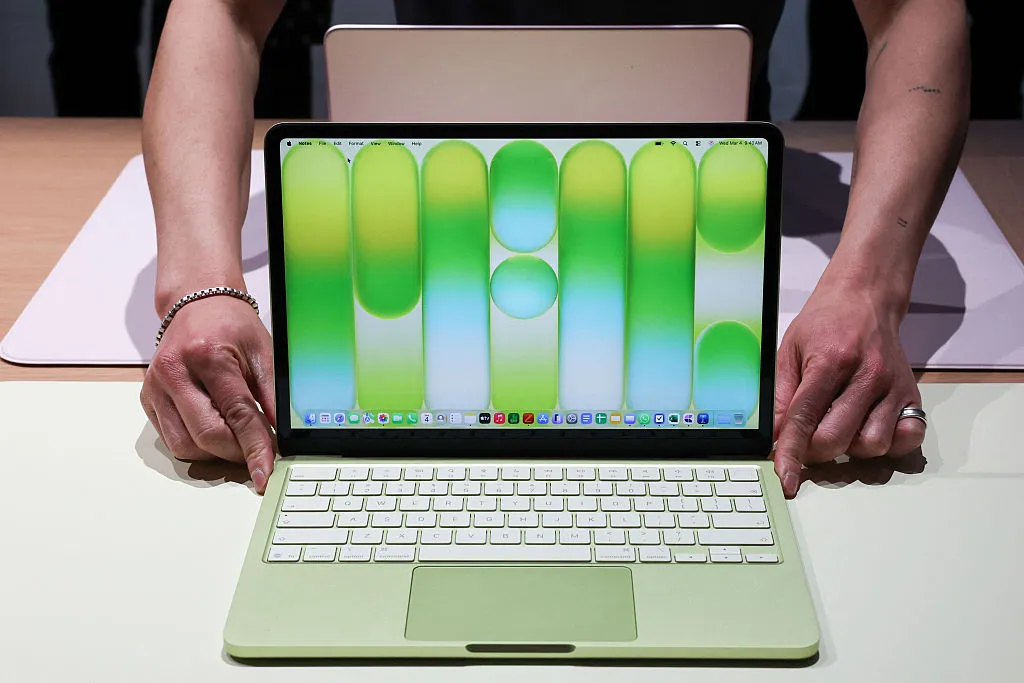
"I have a few family members looking at the MacBook Neo as their next purchase. It's really the perfect computer for day-to-day use for 90 percent of people. Browsing the Web, looking at photos and email."
Finally, one individual said: "I think the MacBook Neo couldn't have come at a better time. People are getting tired of... shall I say the Windows UX, to put it politely?"
What’s Next
Even companies with strong supply chains are unlikely to escape the rising cost pressures entirely, but Apple’s control over its processor supply could help soften the blow.
Newsweek has reached out to Apple for comment via email.
View 0 Comments
Submit Correction
View Editorial & AI Guidelines